
Solid hardwood floors · London
Hardwood Floor Restoration in London
Worn oak, marked walnut or a hardwood floor with an uneven finish? Start with an assessment of the timber already in your home. Discuss repairs, surface preparation and finish options with London Marble Stone, then request a quotation for the work your floor needs.
Prefer to talk? 07888 526686
Check the timber before choosing the treatment
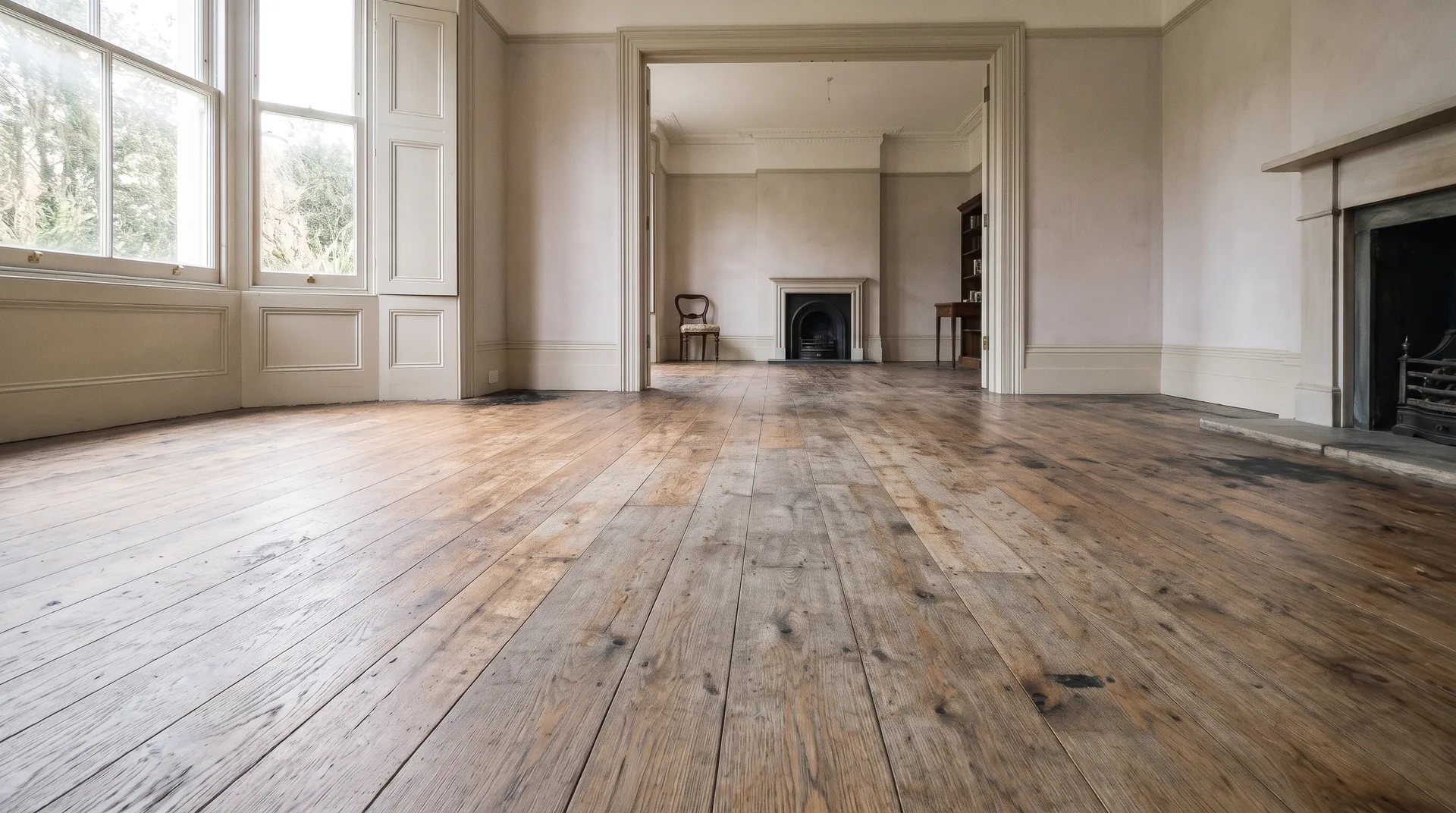
A hardwood appearance does not establish how a floor was made. Solid boards, engineered boards and thin real-wood veneers need different assessments. For a solid floor, usable timber depth, earlier sanding, exposed fixings and the condition around joints all influence the options. Share any product details or installation records you have. An inspection can then establish whether the floor needs surface renewal, more extensive preparation or repairs first.
Work with the character of oak and walnut
Timber species, grain, age and existing colour affect how a restored surface will look. An oak floor should not be expected to respond exactly like walnut, and a photograph cannot establish the final shade. Discuss whether you want to retain the present tone or explore a change. A finish sample on suitable timber, viewed in the room's lighting, helps make that decision before the wider floor is treated.
A closer look at the finish
Explore the change in appearance
Resolve loose boards and damaged areas
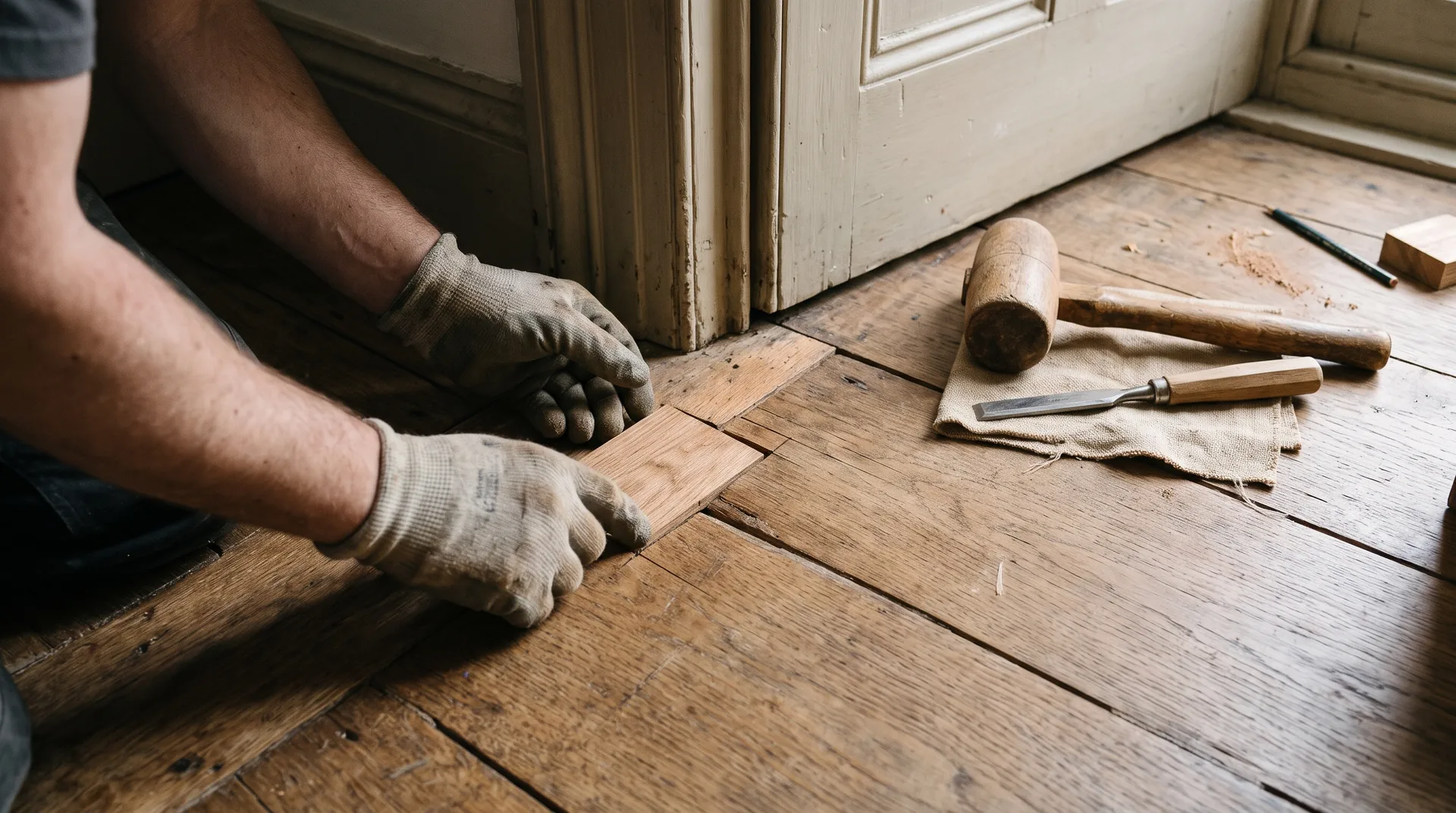
A new finish cannot correct an unstable floor. Movement, damaged edges, local splits and previous patch repairs need to be considered before the surface work is specified. Where replacement timber is necessary, the aim is a practical match in dimensions and appearance. New and older boards may still differ in grain or colour. Agree the visible repair areas and any matching limitations as part of the quotation.
Choose the least extensive suitable restoration
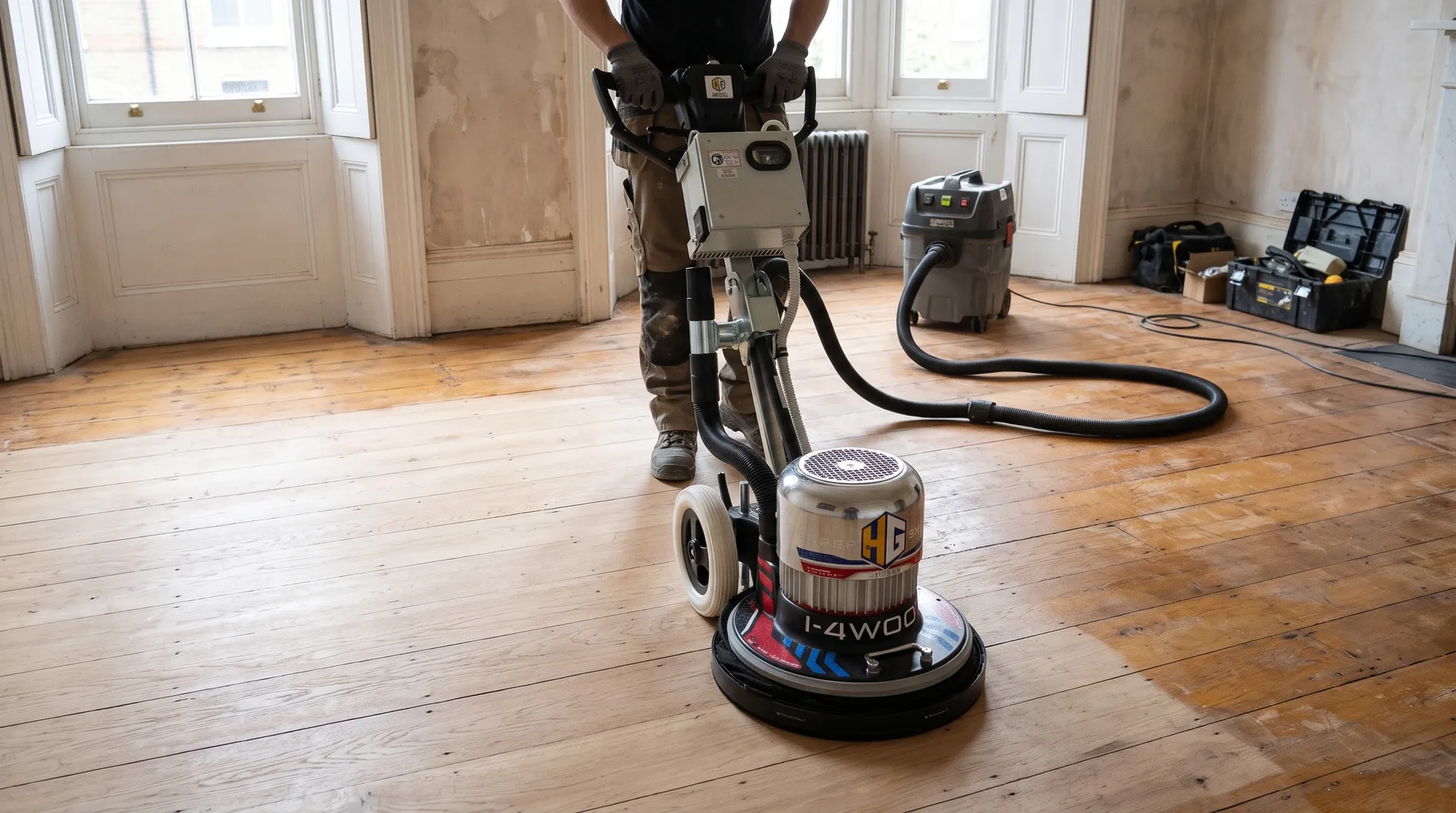
A tired surface does not always require full sanding. Where the existing coating and condition allow, cleaning and compatible recoating may be an option. Deeper wear, unsuitable coatings or damage within the timber may require a different approach. The specification should explain what will be removed, what will be retained and why. Finish choice follows the floor assessment and intended use, with compatibility checked before application.
Plan for furniture, access and the finish
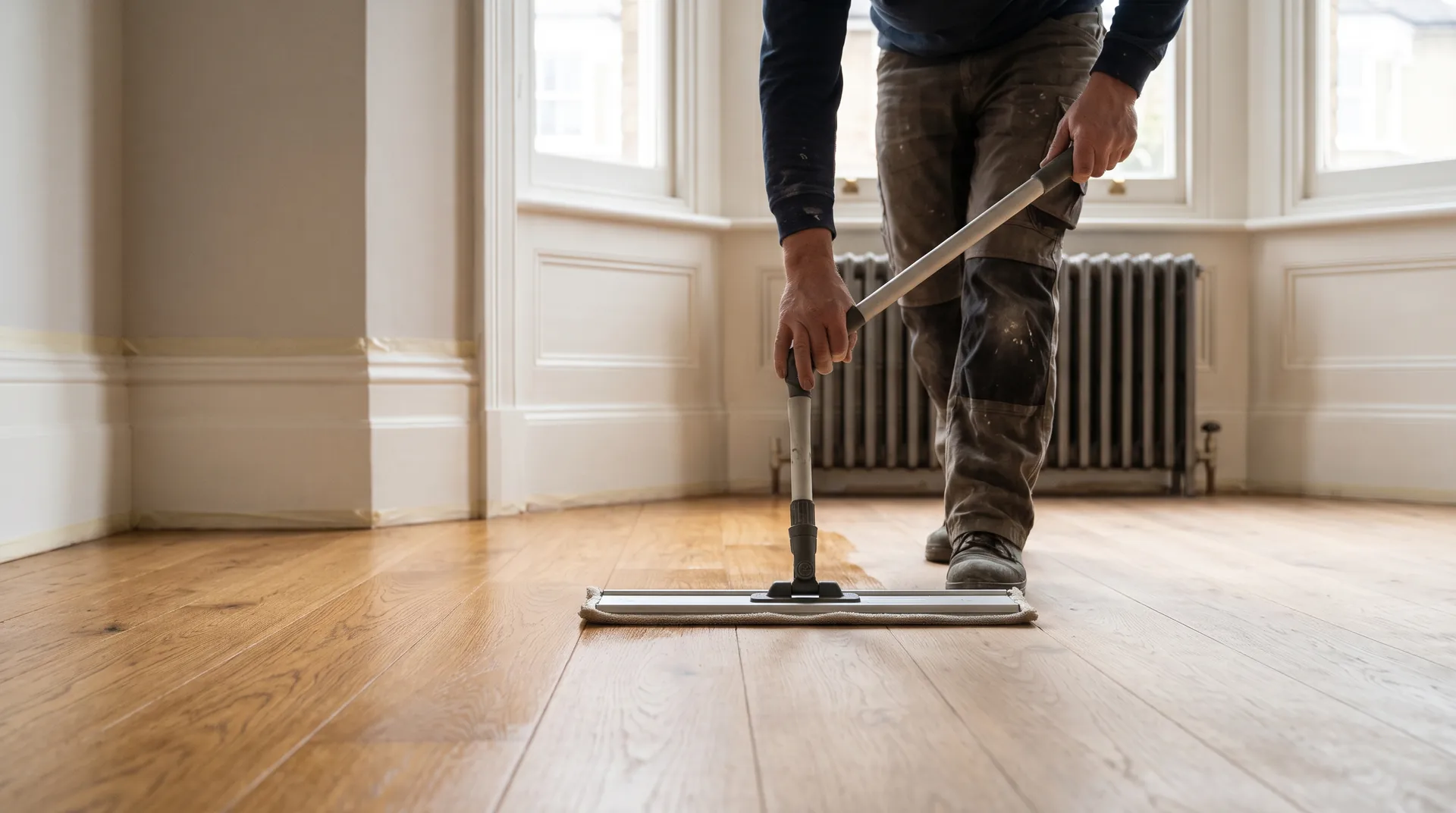
Tell us how the room is used and whether it connects to areas you need to keep accessible. Large furniture, fitted joinery, thresholds and adjoining floor finishes can affect the work. Agree protection and furniture arrangements beforehand. Drying enough for limited access is different from reaching the finish's full cure. The handover should explain when furniture and rugs can return, alongside cleaning instructions for the selected system.
Build a quotation around your actual floor
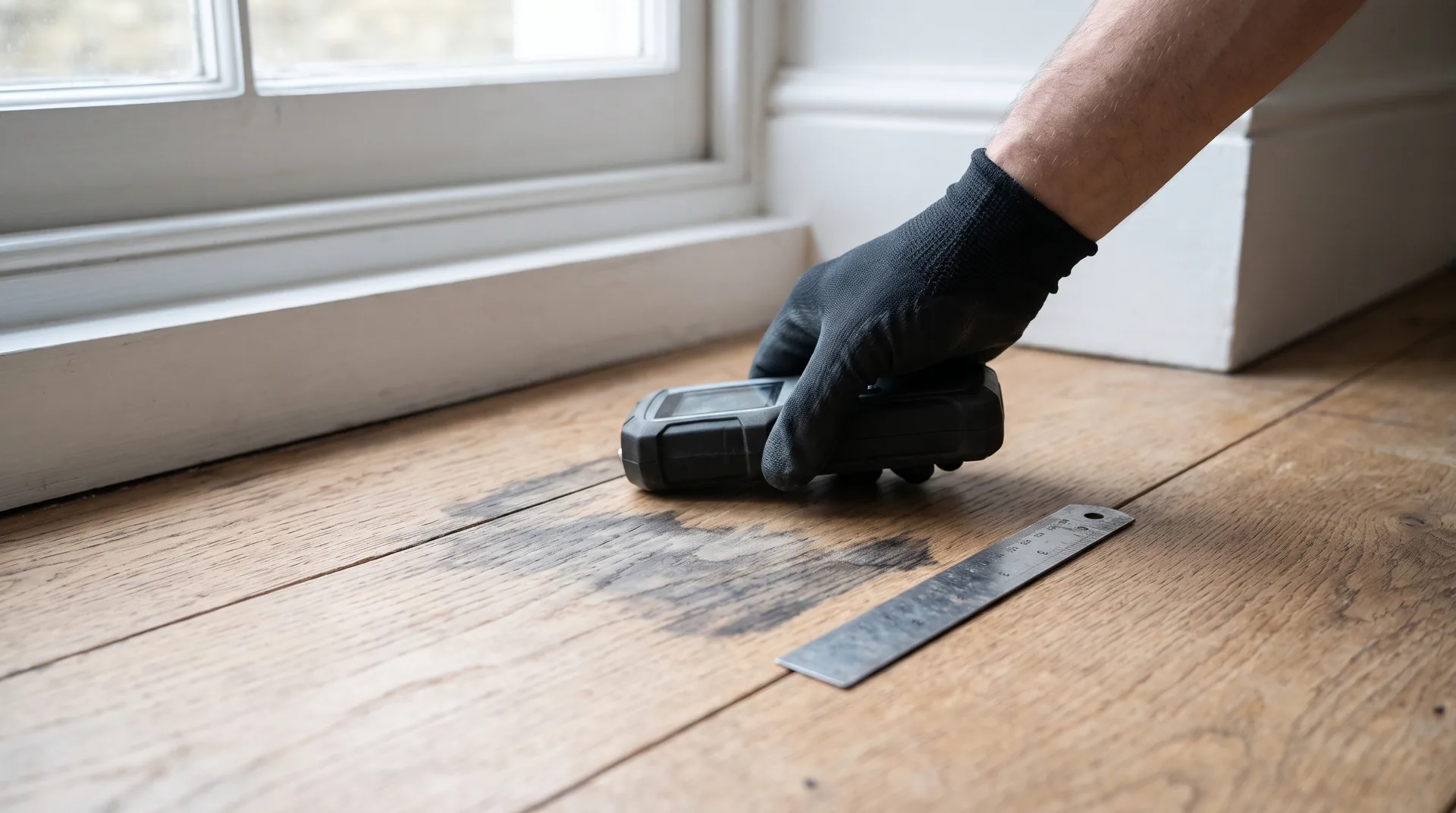
Send your London postcode, approximate floor area and photographs showing the whole room, the worn surface and any damaged joints. If possible, include a visible board edge or the product name to help identify construction. Mention previous sanding, known leaks and the finish you hope to achieve. These details help define the initial scope; timber depth, coating suitability and repair requirements may still need checking on site.
Before you decide
Your questions, answered
Every floor is different. If your question is about a particular mark, board or finish, send us a photograph.
Can a solid hardwood floor always be sanded again?
No. Solid construction alone does not confirm that further sanding is suitable. Remaining usable depth, previous sanding and the condition of joints or fixings need assessment before material is removed. Some floors are better suited to a more limited intervention.
Can you restore both oak and walnut floors?
Enquiries for oak, walnut and other hardwoods start with the floor's construction and condition. The proposed treatment should reflect the particular timber and existing finish. Share photographs and any product information so suitability can be discussed.
Will restoration remove every mark?
It may reduce surface wear, but deep staining, old repairs and damage within the timber can remain visible. Assessment and sample work help establish the likely result. Local replacement may be considered where retaining a damaged board is impractical.
What if my hardwood floor is engineered?
Use the engineered wood floor restoration service for a more specific assessment. Its real-wood surface layer and previous treatment history determine the options. Some thin-veneer products cannot be sanded, even though the visible surface is genuine timber.
Can I request a quote through WhatsApp?
Yes. Send wide room photographs, close-ups of the main defects, your postcode and approximate area. Include any information about the timber and previous work. An initial discussion can identify the details that still require an inspection.
Find the right approach for your hardwood floor
Send your floor photographs and postcode to discuss the timber, repairs and finish you have in mind. Request a quotation with a clear scope and an explanation of any condition checks needed before work can be agreed.
Prefer to send photos? Message us on WhatsApp or call 07888 526686.