RAKU Marble Protection in London
Advanced marble protection designed to resist acid etching and everyday stains while retaining the beauty of natural stone. RAKU is developed in Italy by Lantania and applied following a professional assessment of your surface.
- Fully insured
- 20+ years experience
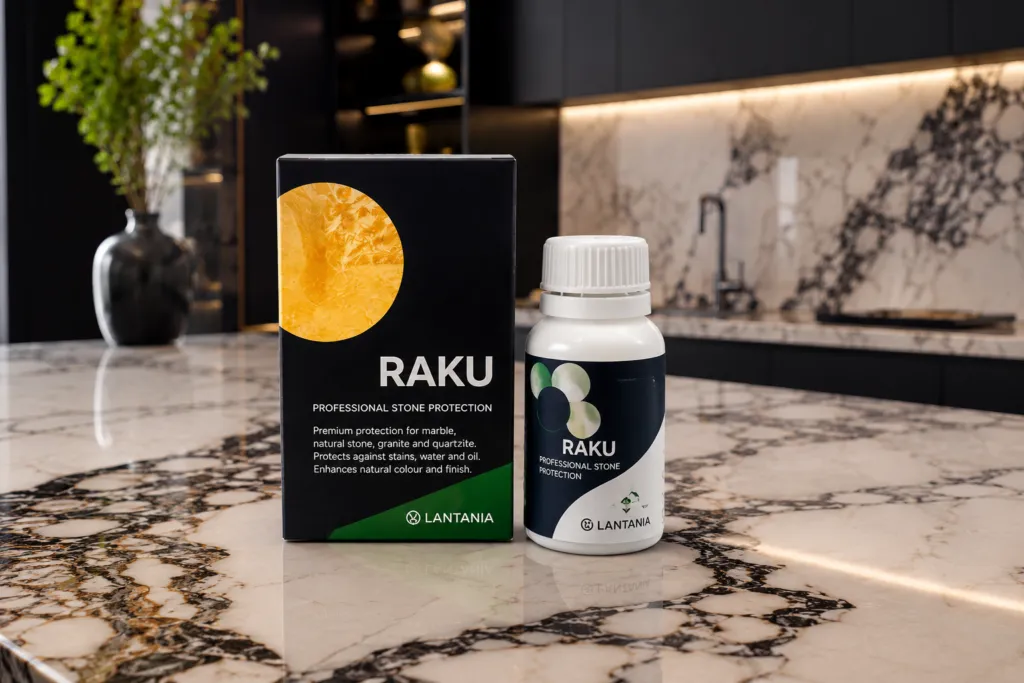
A nearly invisible defence against marble etching
Marble contains calcium carbonate, which can react with acidic substances such as lemon juice, vinegar and wine. The result is often a dull mark called acid etching — different from an ordinary stain.
RAKU is a specialist protective treatment by Italian manufacturer Lantania. It forms an exceptionally thin, transparent surface layer designed to prevent acids from etching the underlying marble while also improving resistance to common stains.
It is not simply a conventional water-repellent stone sealer. The material, existing finish and surface condition must be assessed to determine whether the treatment is appropriate.
What RAKU protection is designed to do
Lantania describes several benefits of its marble protection system. Results and suitability depend on the surface, finish, application and care.
Acid-etch resistance
Designed to resist etching from everyday contact with lemon, vinegar, wine and other acidic substances.
Stain resistance
Helps protect marble against common household stains, including oil and coffee.
Natural appearance
A very thin transparent layer designed to preserve the colour, depth and brilliance of polished marble.
Heat resistance
Lantania describes high thermal resistance for kitchen use, including near hobs. Continue to use normal heat precautions.
UV stability
Designed to resist yellowing from UV exposure; outdoor suitability should be assessed for the specific installation.
Everyday wear
The harder protective surface is less sensitive to light micro-scratches, but is not scratch-proof.
Protection tailored to your marble
The appearance after treatment depends on the finish of the stone. We discuss the expected outcome before proceeding.
Common marble applications: kitchen islands and worktops, bathroom vanity tops, tables, decorative pieces and marble furnishings in homes, hotels, restaurants and hospitality settings.
How we approach a RAKU marble treatment
Lantania specifies application by trained operators. Every enquiry begins with a surface assessment so that preparation and expected results can be discussed.
- 01
Assess the marble
Identify the stone, polish or honed finish, existing coatings, use and any previous damage.
- 02
Prepare the surface
Discuss the cleaning, honing, polishing or repairs needed before any protective treatment.
- 03
Specialist treatment
Plan the RAKU application in line with manufacturer guidance, site conditions and the agreed finish.
- 04
Explain aftercare
Provide suitable cleaning advice. Lantania recommends neutral SANIMAR detergent and a soft microfibre cloth.
Real marble protection projects
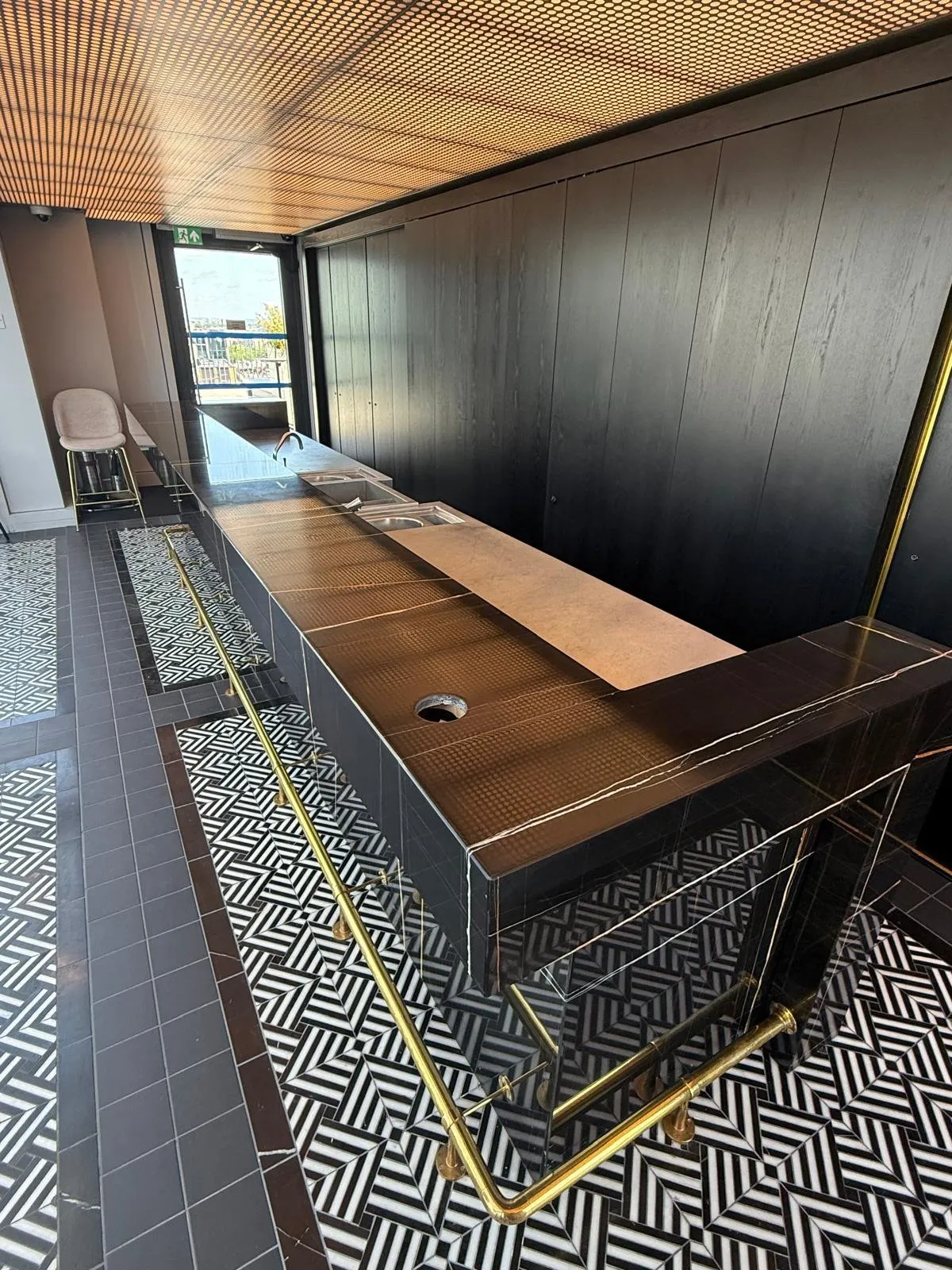
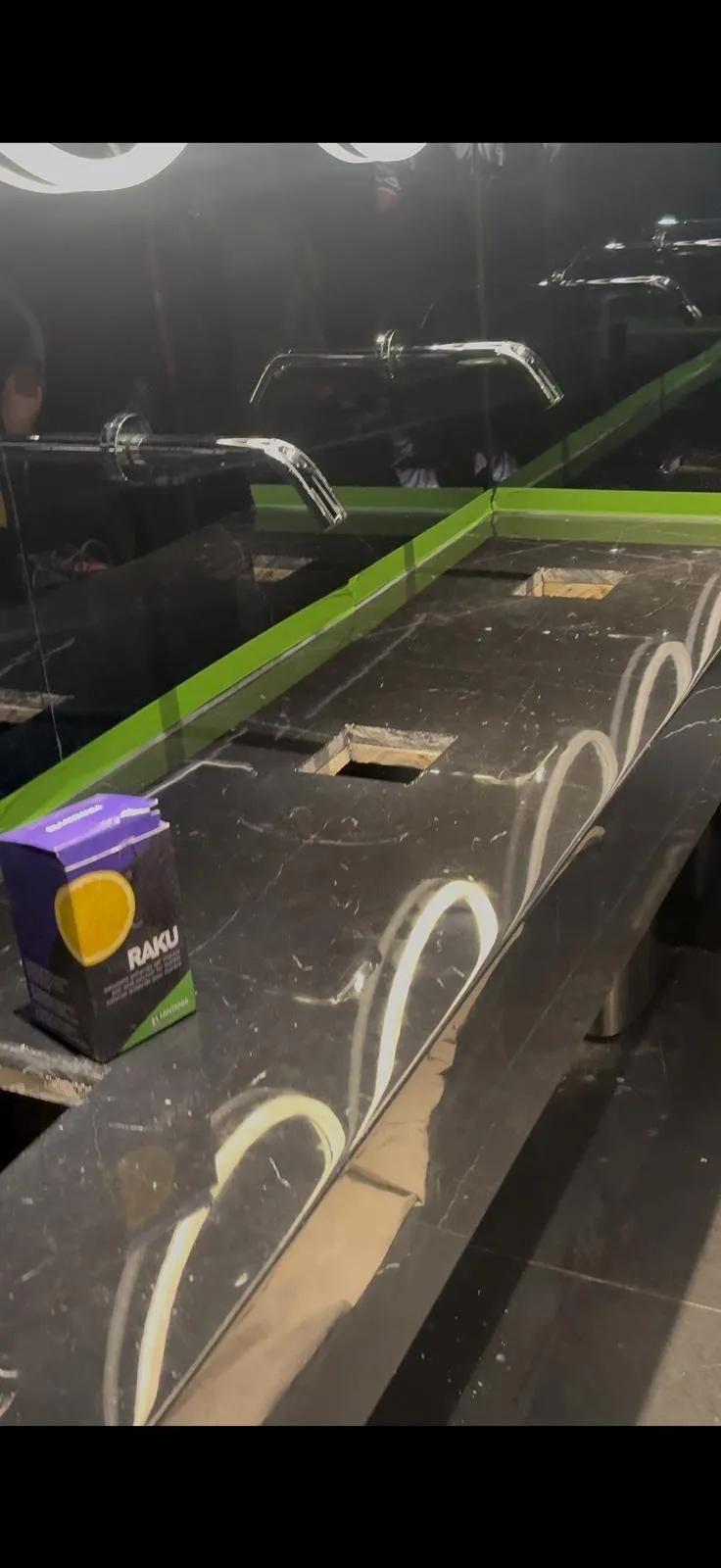
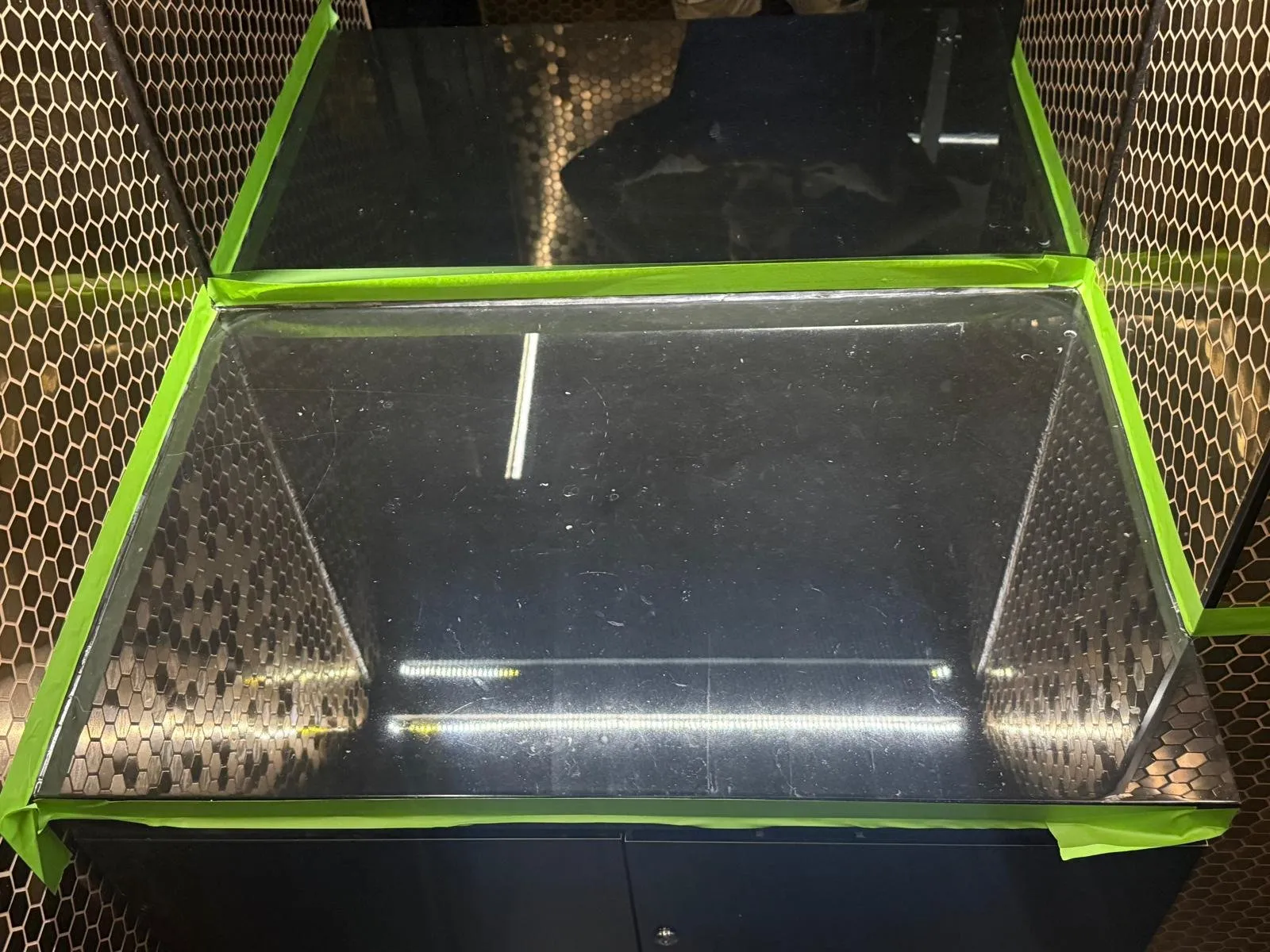
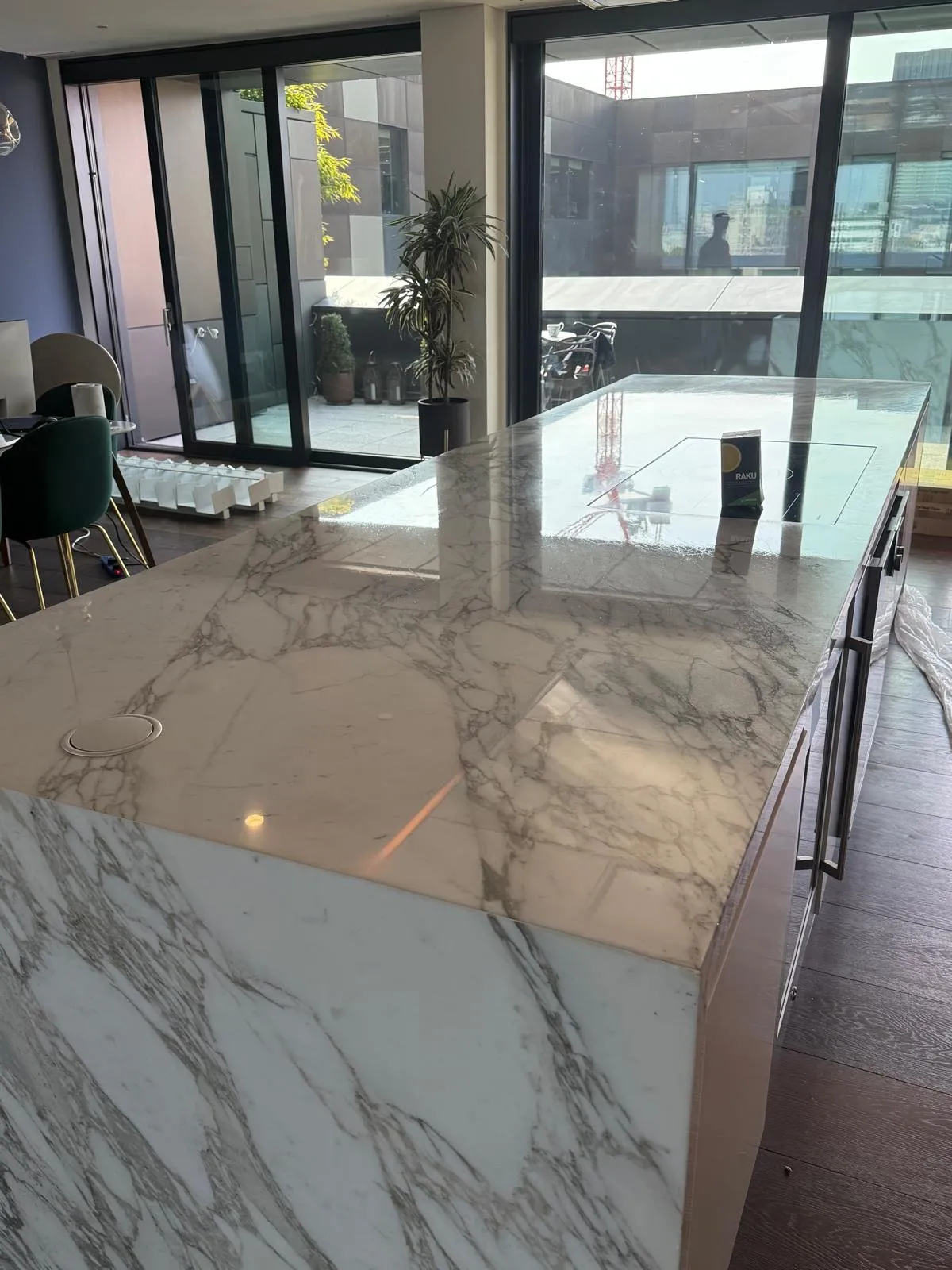
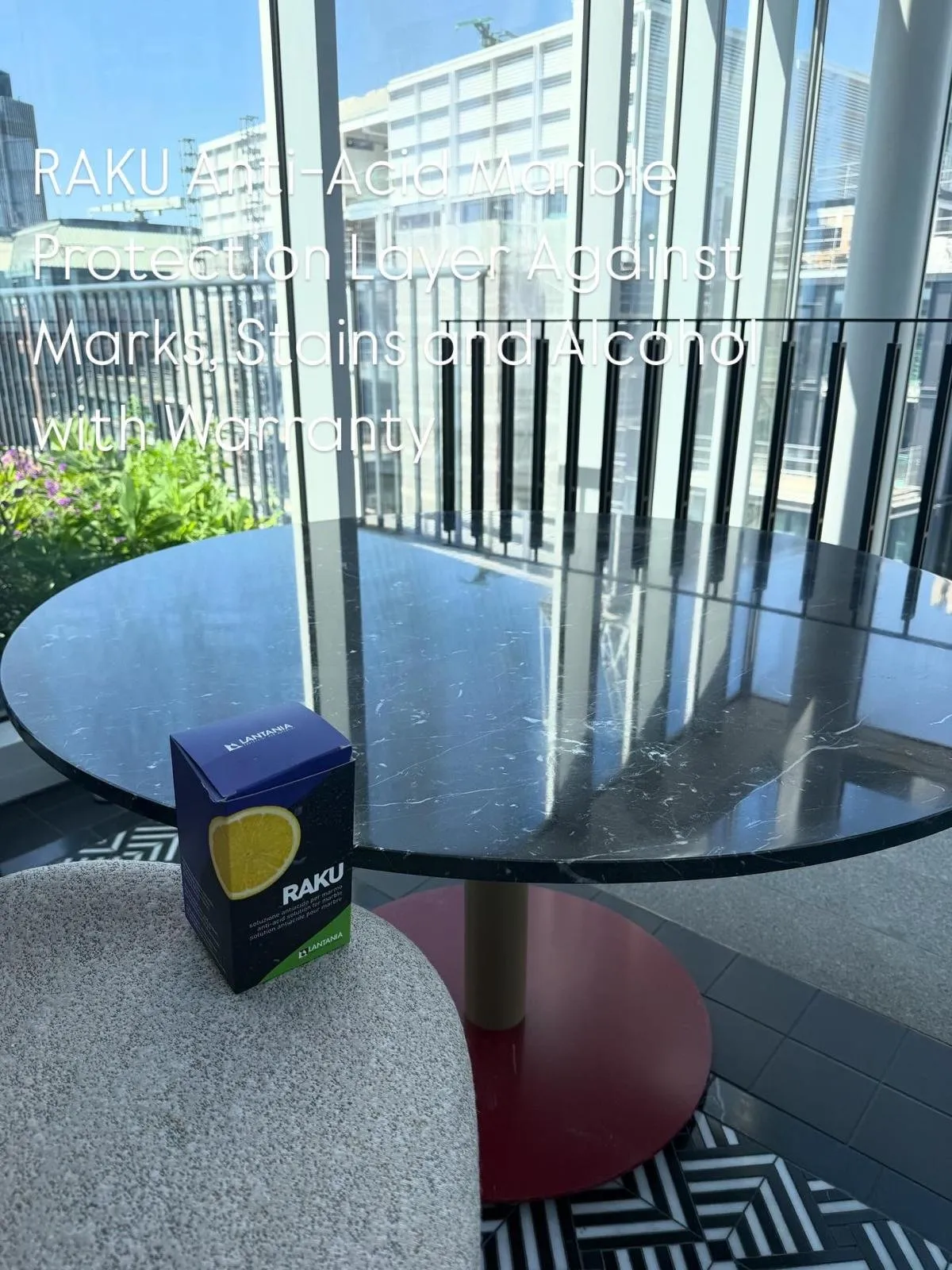
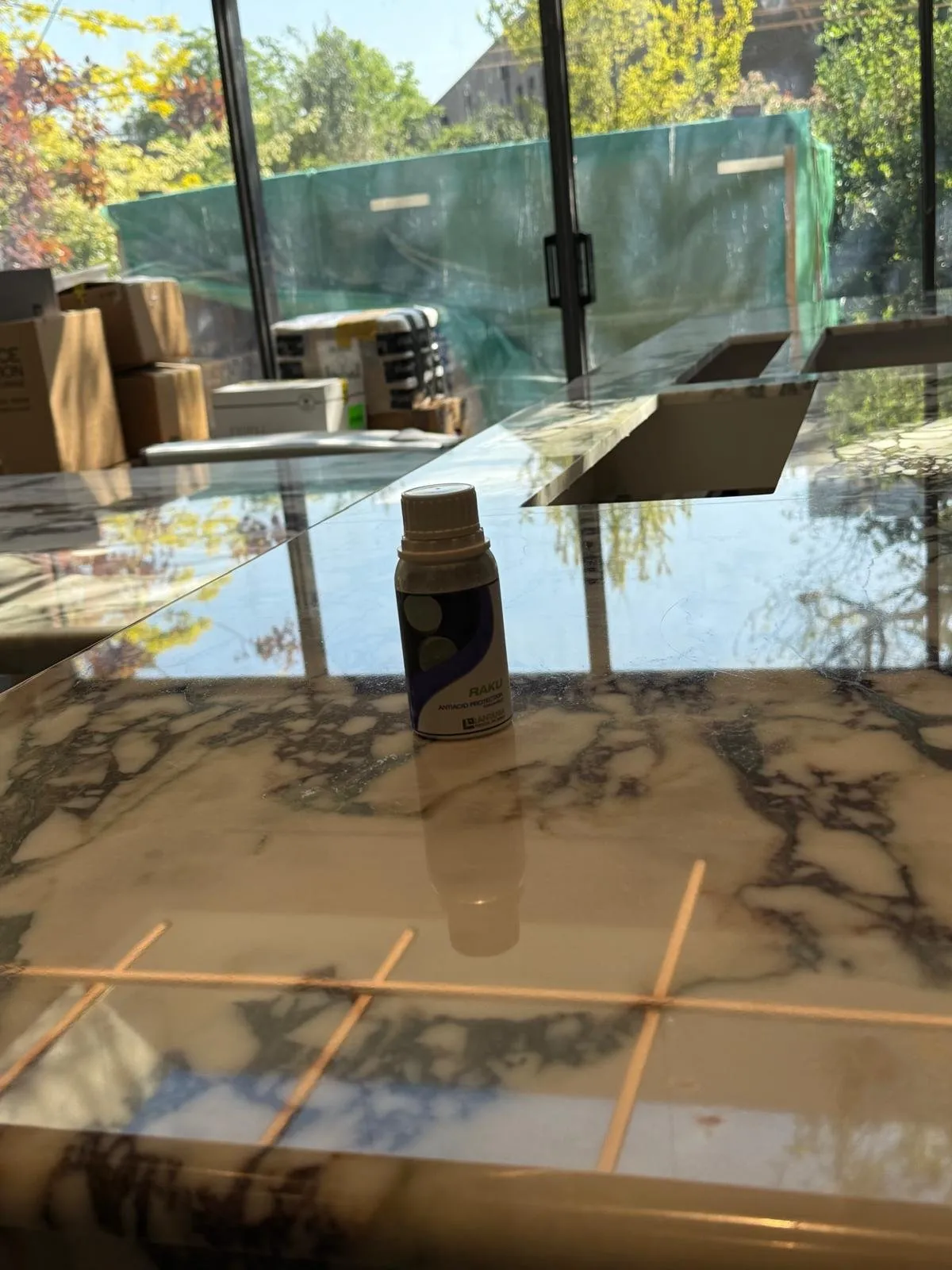
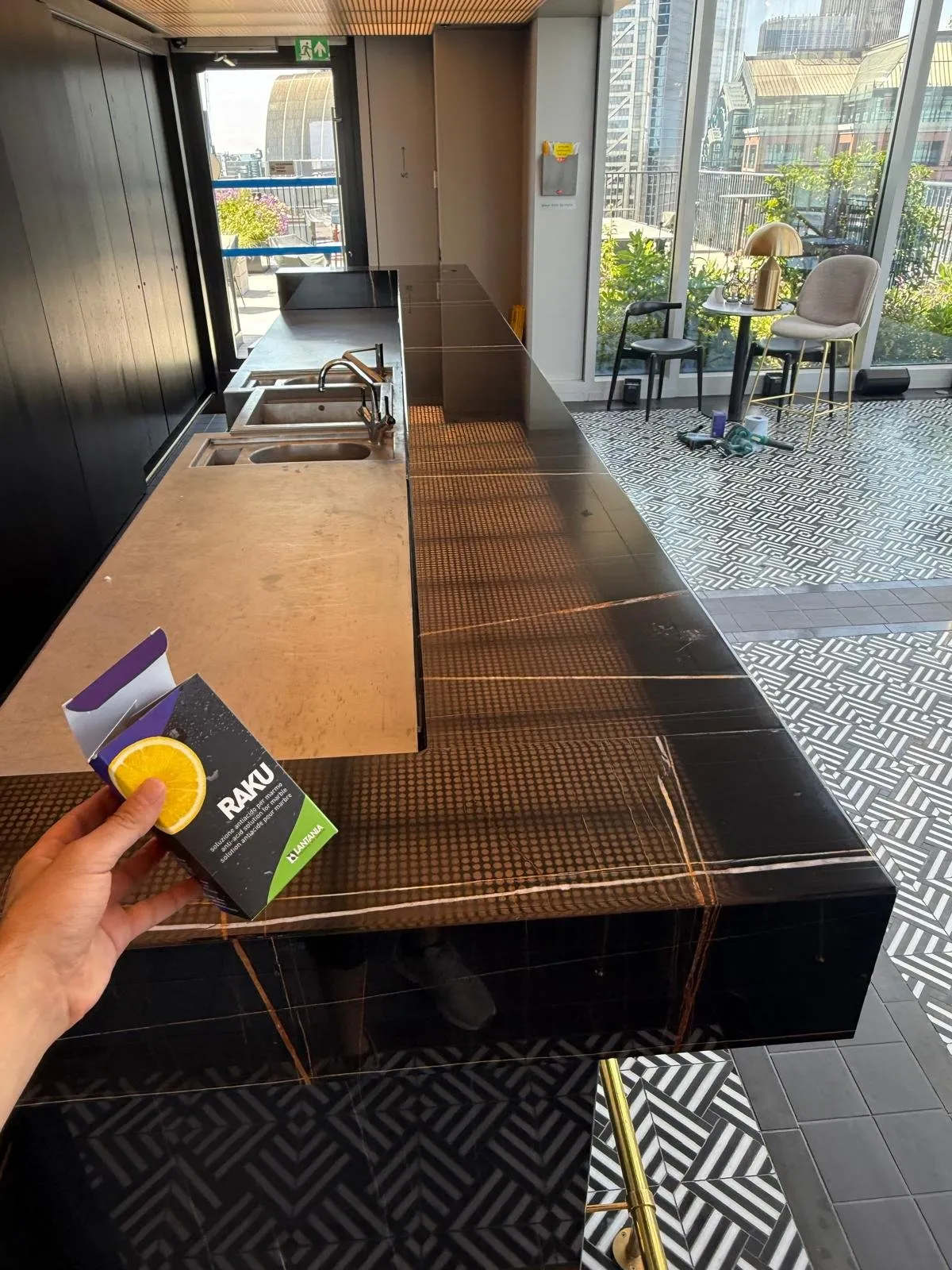
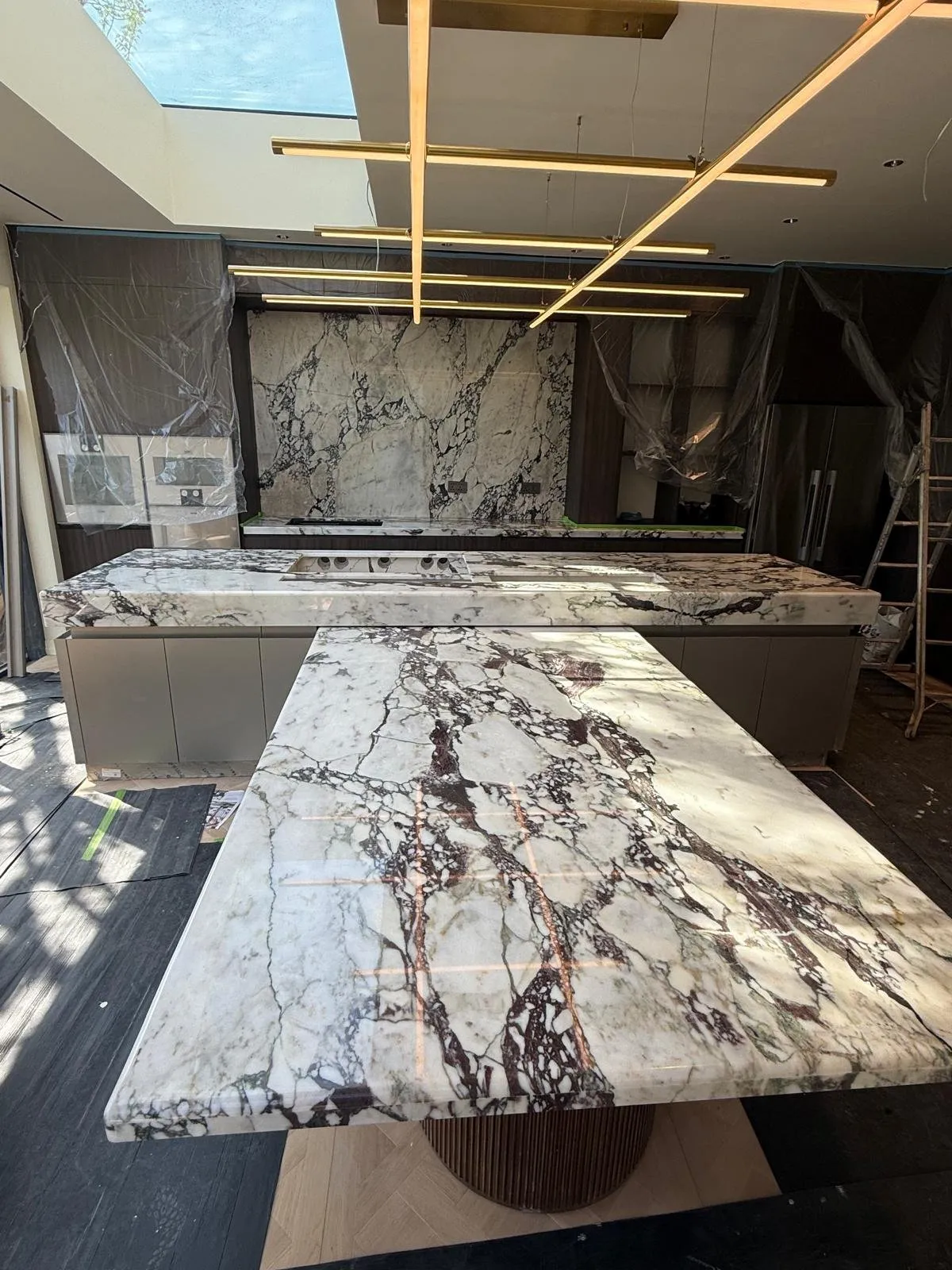
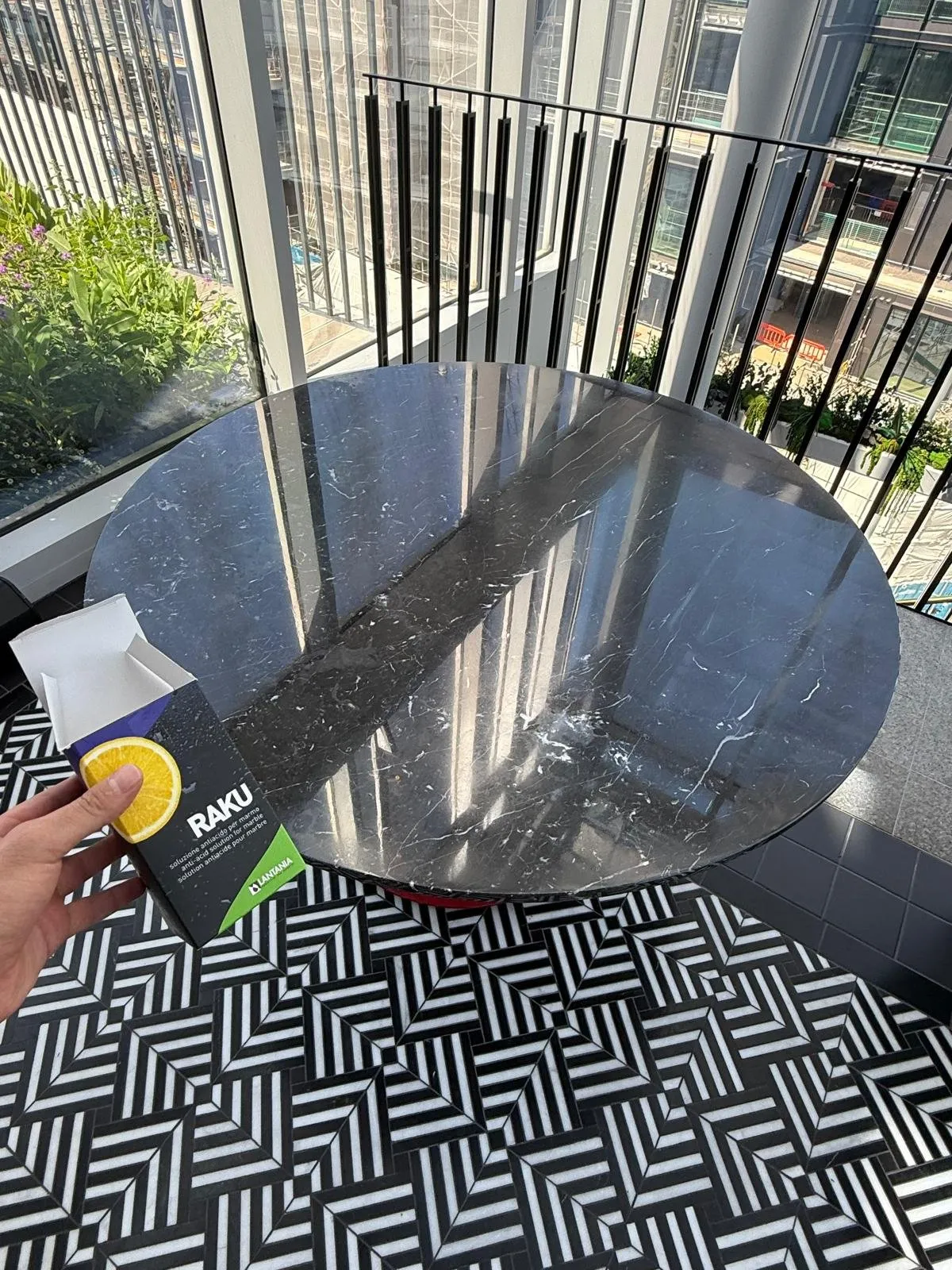
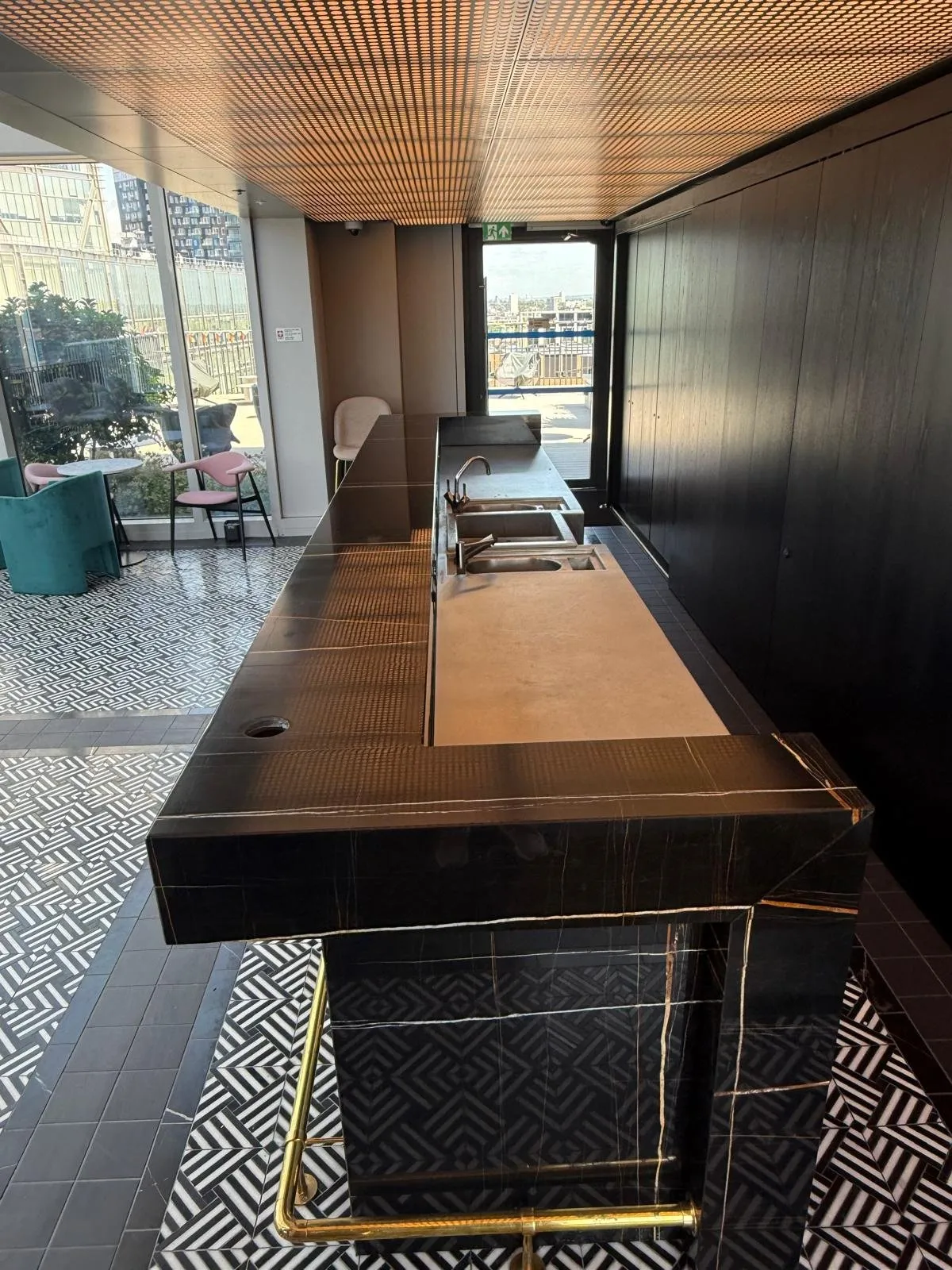
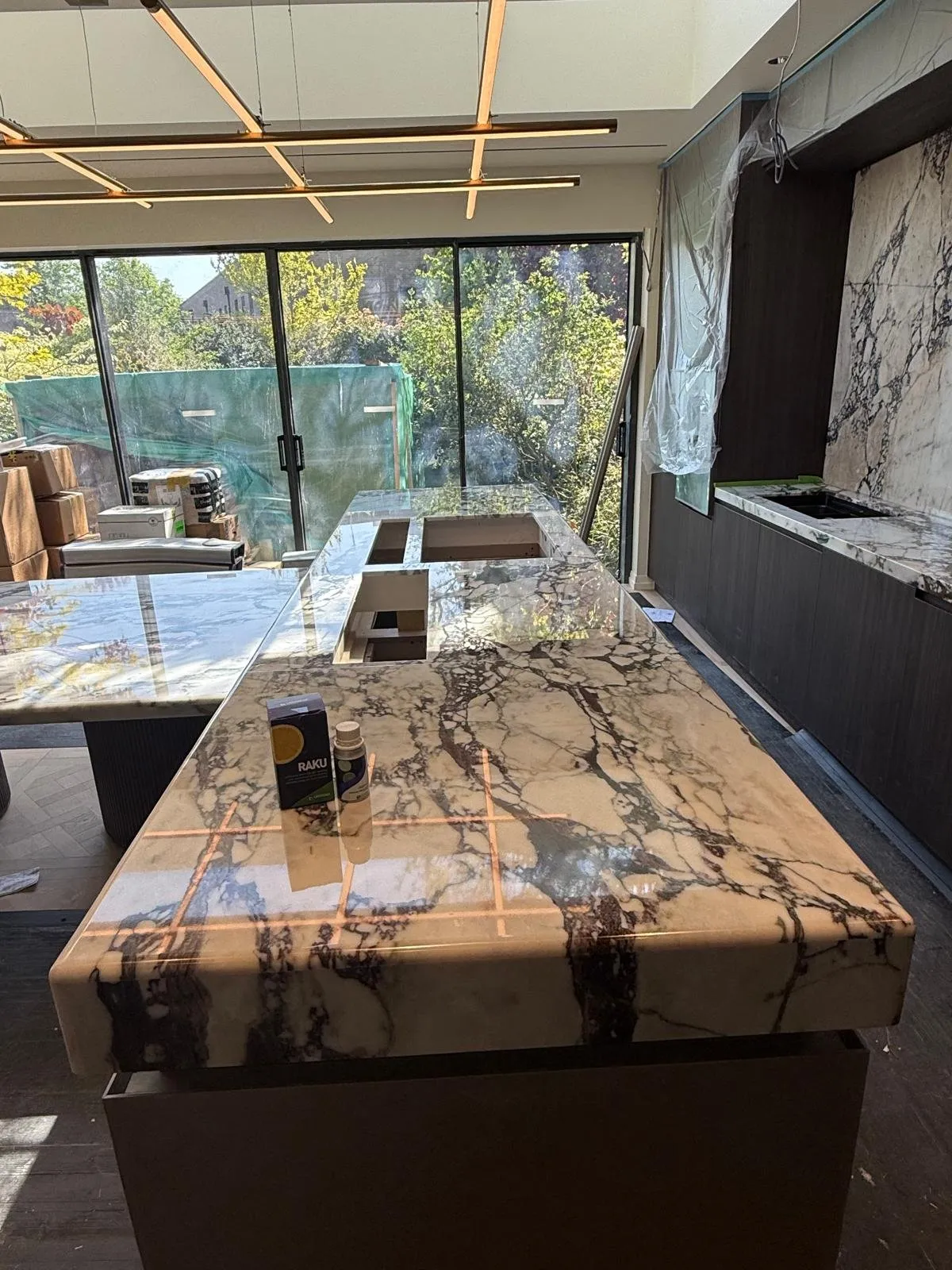
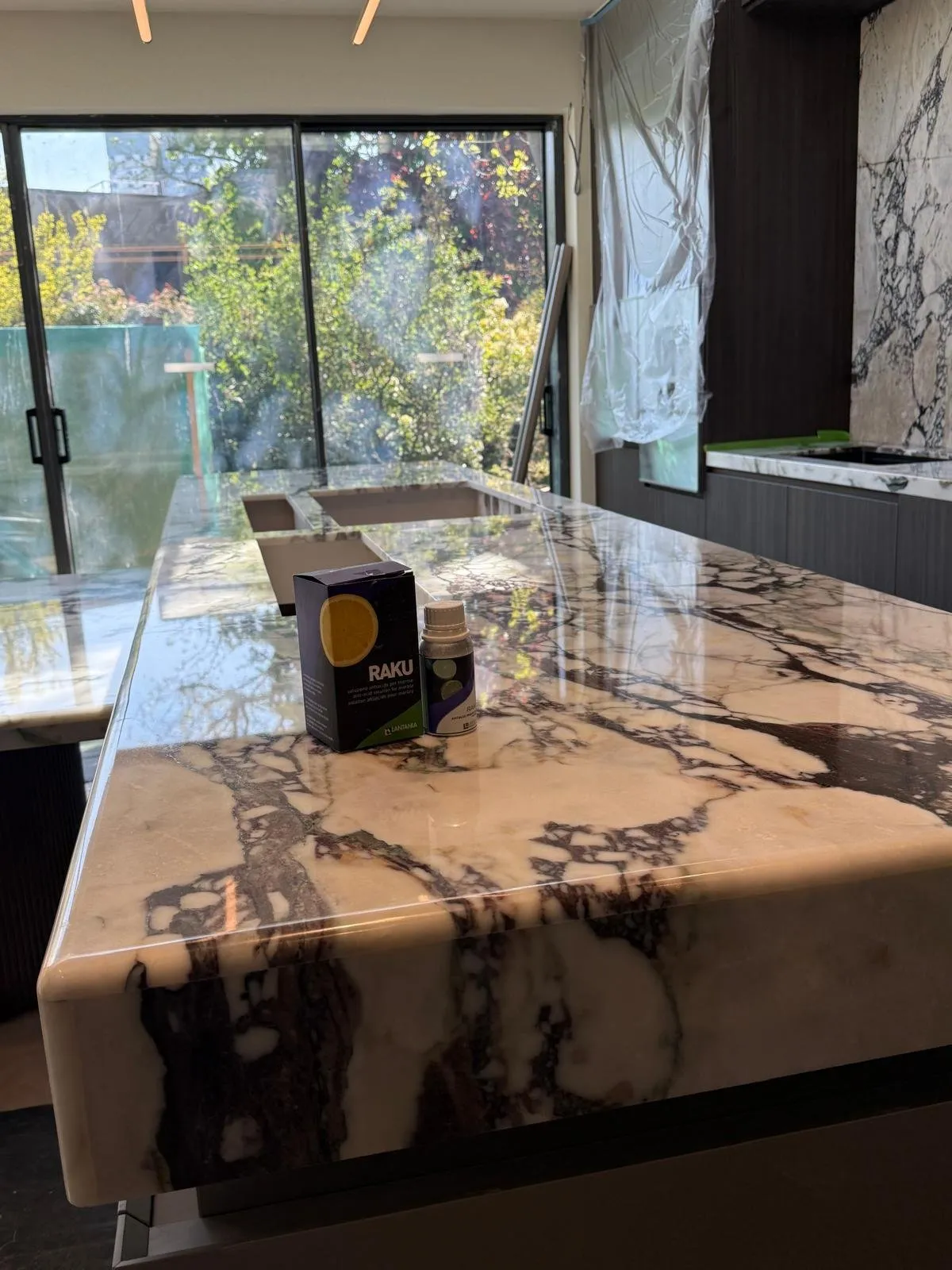
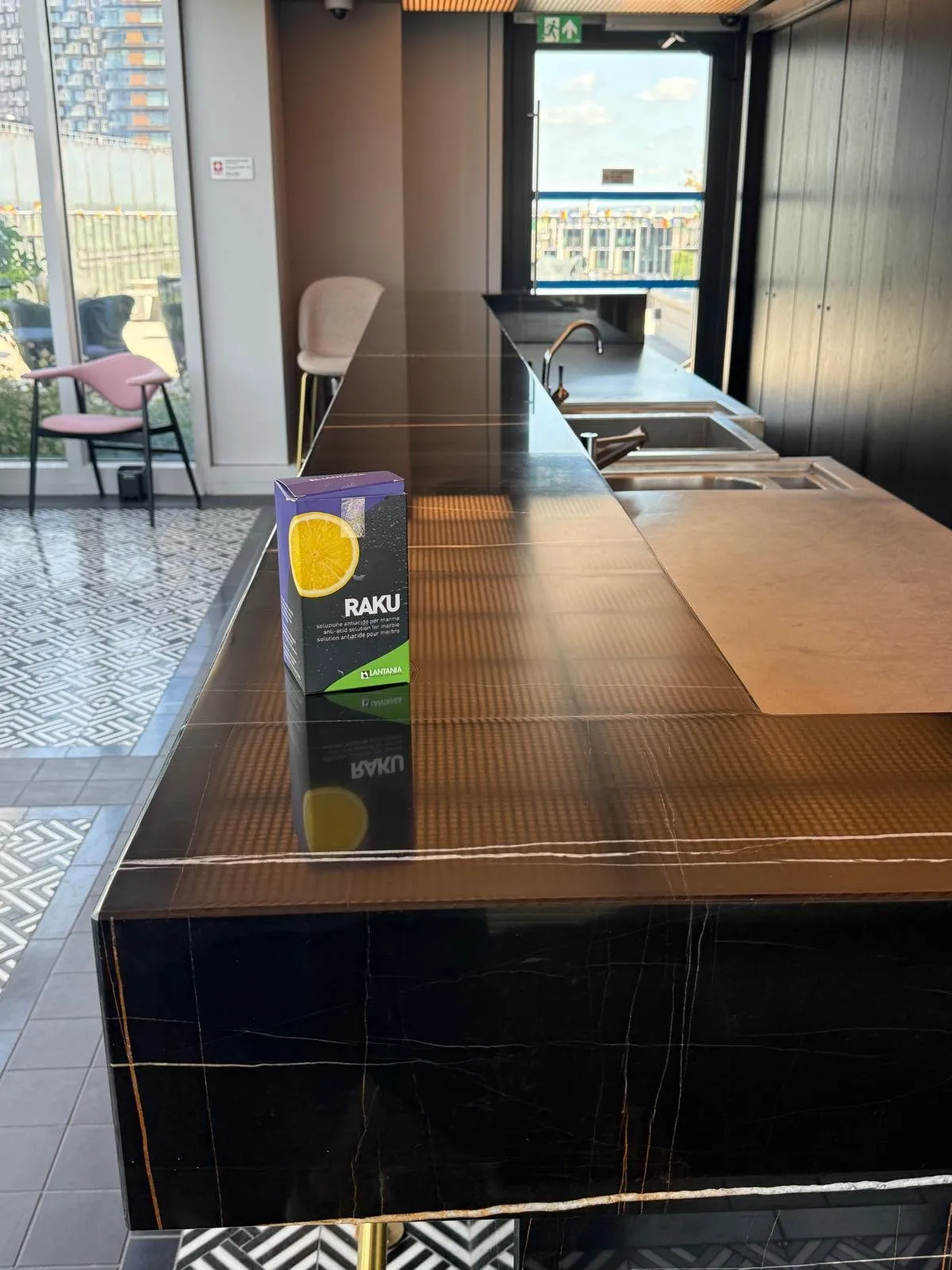
RAKU protection applied to marble, quartzite and natural stone surfaces across London. Select a photograph to see the detail.

Protection in practice
Watch our original project videos. Videos load from YouTube only when you choose to play them.
RAKU marble protection FAQs
Practical answers based on Lantania's published product information and careful surface assessment.
What is the difference between RAKU and a standard marble sealer?
Traditional water- and oil-repellent sealers help with stains but do not necessarily prevent acid etching. Lantania developed RAKU as a thin protective layer specifically designed for acid-etch resistance on marble, alongside stain protection.
Does RAKU change the look of marble?
On polished marble, the manufacturer describes the finish as practically invisible. On honed or brushed marble, the treatment can produce a refined satin appearance. We assess and discuss the expected finish before applying it.
Will RAKU make my marble stain-proof, scratch-proof or maintenance-free?
No surface treatment should be treated as a guarantee against every form of damage. RAKU is designed to increase resistance to acid etching, stains and minor everyday abrasion. Suitable use and regular gentle cleaning are still important.
Can RAKU be used on quartzite, granite or engineered quartz?
Lantania’s published RAKU description focuses on marble. Other materials should be identified and assessed individually; we do not assume that the same treatment is suitable for every stone or engineered worktop.
How do I clean a RAKU-treated marble surface?
Lantania recommends its neutral SANIMAR cleaner with a soft microfibre cloth. Avoid abrasive tools and follow the care guidance given for your treated surface.
How long does RAKU protection last?
Expected performance depends on the condition of the stone, how the surface is used and how it is maintained. We discuss aftercare and any need for future inspection during the assessment rather than promising an unsupported fixed lifespan.
Protect your marble without guesswork
Share photographs of the marble, its location and how the surface is used. We can discuss whether it needs restoration or polishing first, whether RAKU is appropriate, and the expected finish.
For existing acid marks, scratches or dull areas, explore our marble restoration and marble polishing services before protective treatment.
Send photos on WhatsAppAsk about RAKU marble protection
Tell us what surface you have, what is wrong and where the property is. Photos can be shared after we make contact.