
Unwanted dark marks · London
Black Stained Wood Floor Restoration in London
Black patches on a wooden floor need investigation before treatment. The mark may involve the finish, the timber or an unresolved moisture problem. Send photographs to London Marble Stone to discuss an assessment, realistic restoration options and whether local board repair may be needed.
Prefer to talk? 07888 526686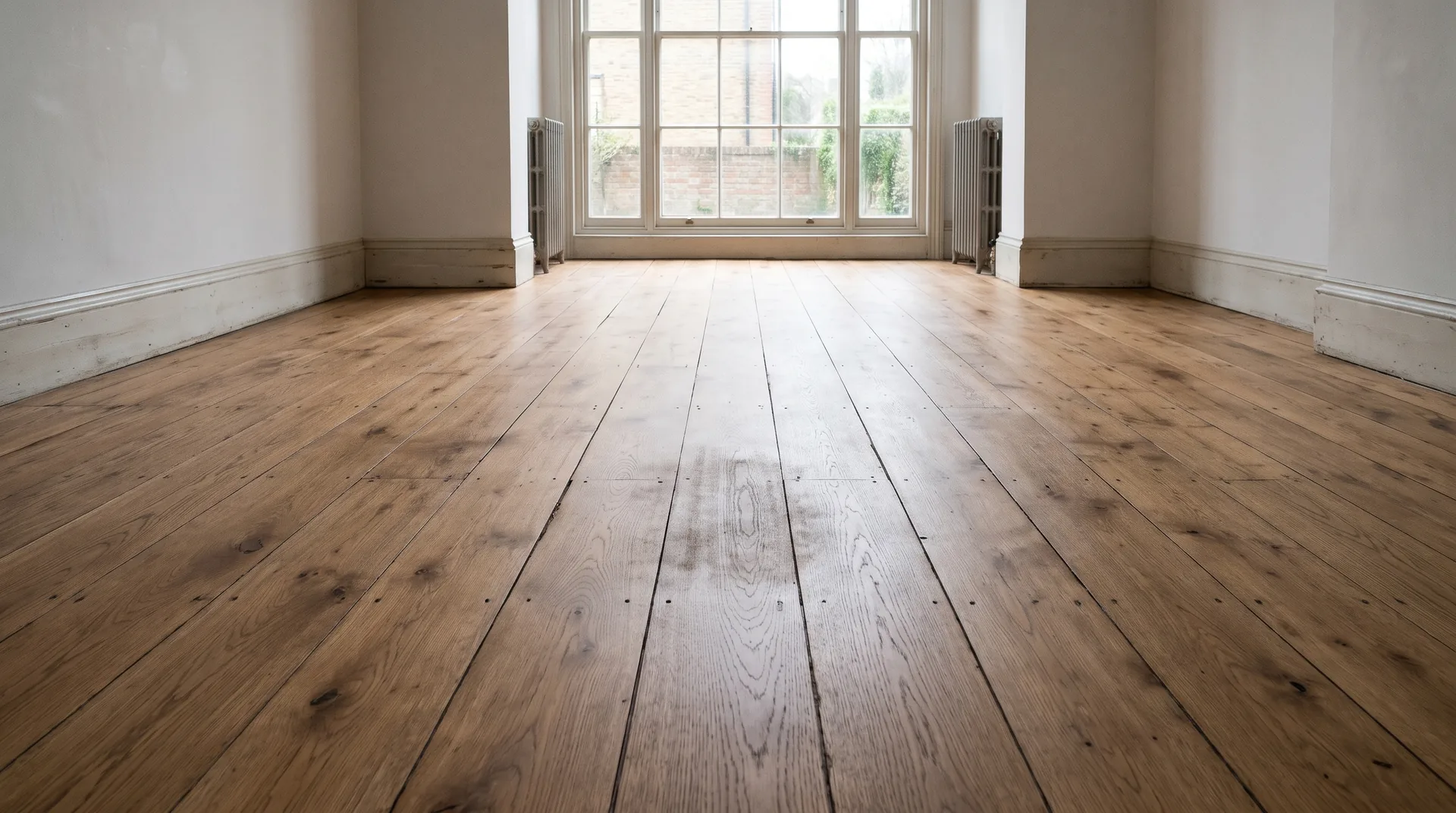
Start with what caused the mark
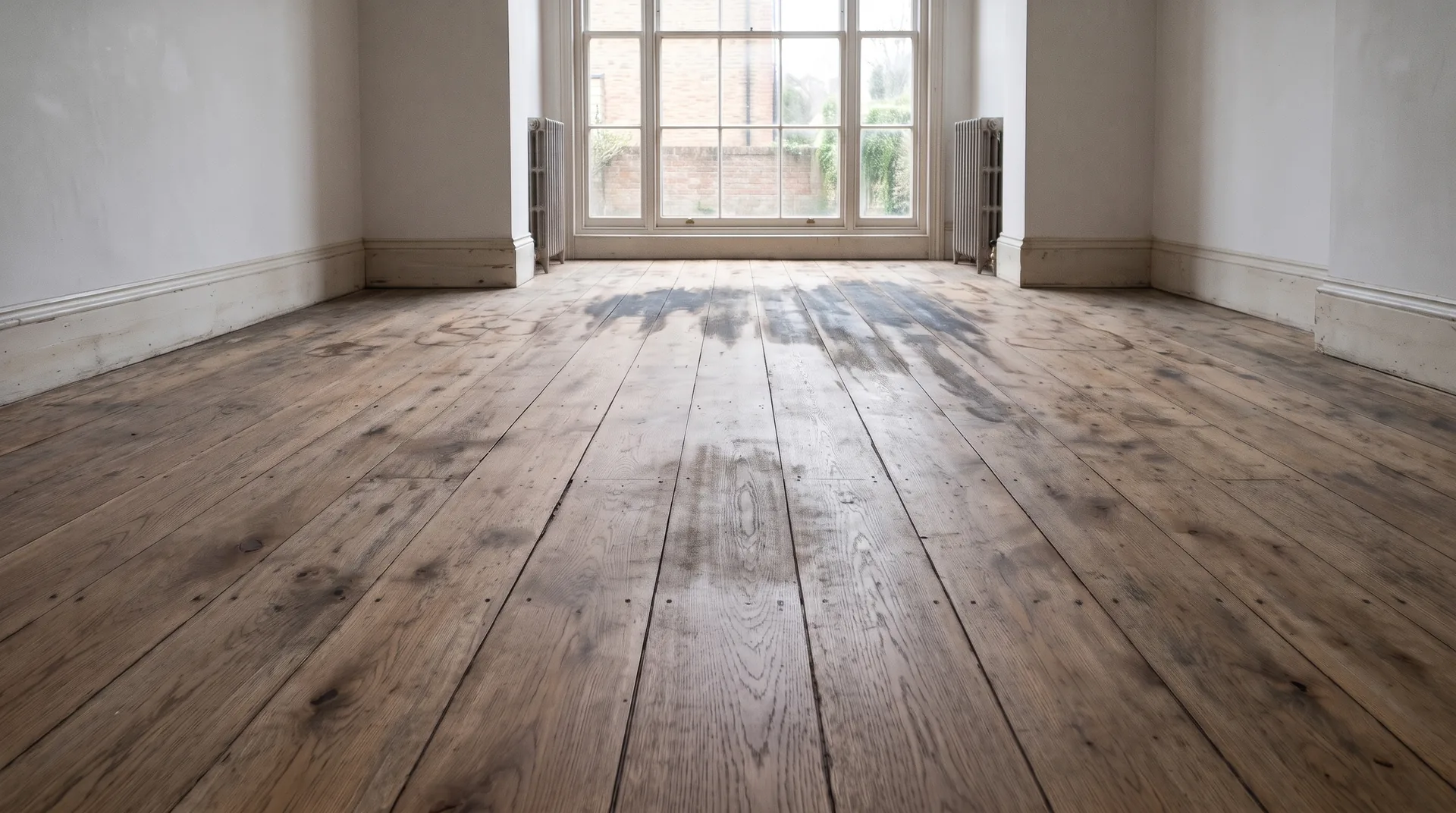
The colour alone cannot tell us how a stain formed or how deeply it extends. Useful clues include when it appeared, whether it followed a leak or spill, and whether the surface feels rough, soft or raised. Tell us about any cleaning products already applied. The first decision is whether the damage sits mainly in the coating, affects the timber beneath it or needs further investigation before restoration.
Resolve moisture before refinishing
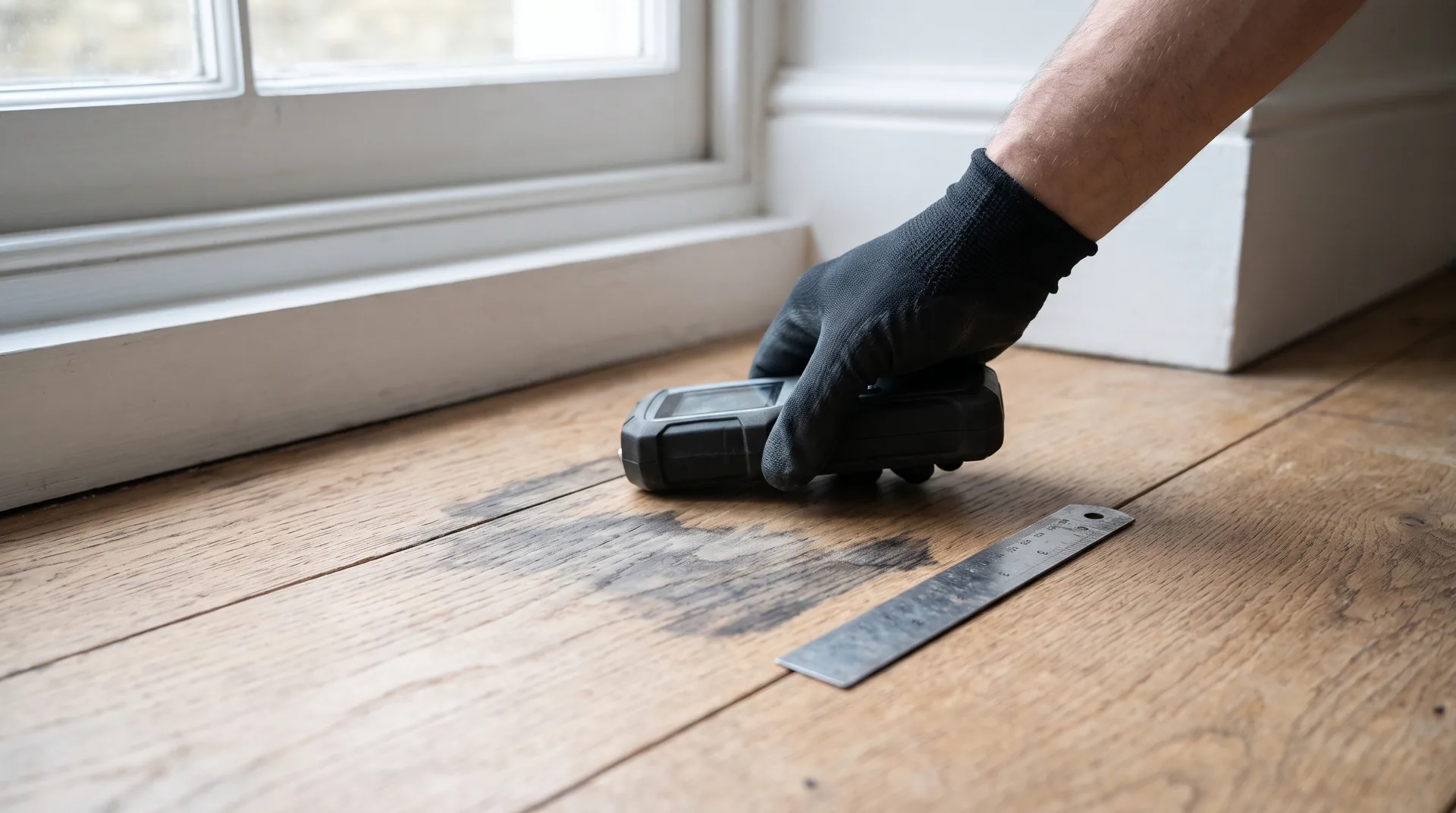
Where water or damp is involved, its source needs to be addressed before cosmetic work proceeds. Covering a dark patch with a new finish does not repair a leak or establish that the floor is ready. The affected area and adjoining timber need assessment for their condition and moisture. If a plumbing or building defect requires another specialist, that investigation should inform the restoration sequence and any proposed repairs.
A closer look at the finish
Explore the change in appearance
Use a sample to test the likely improvement
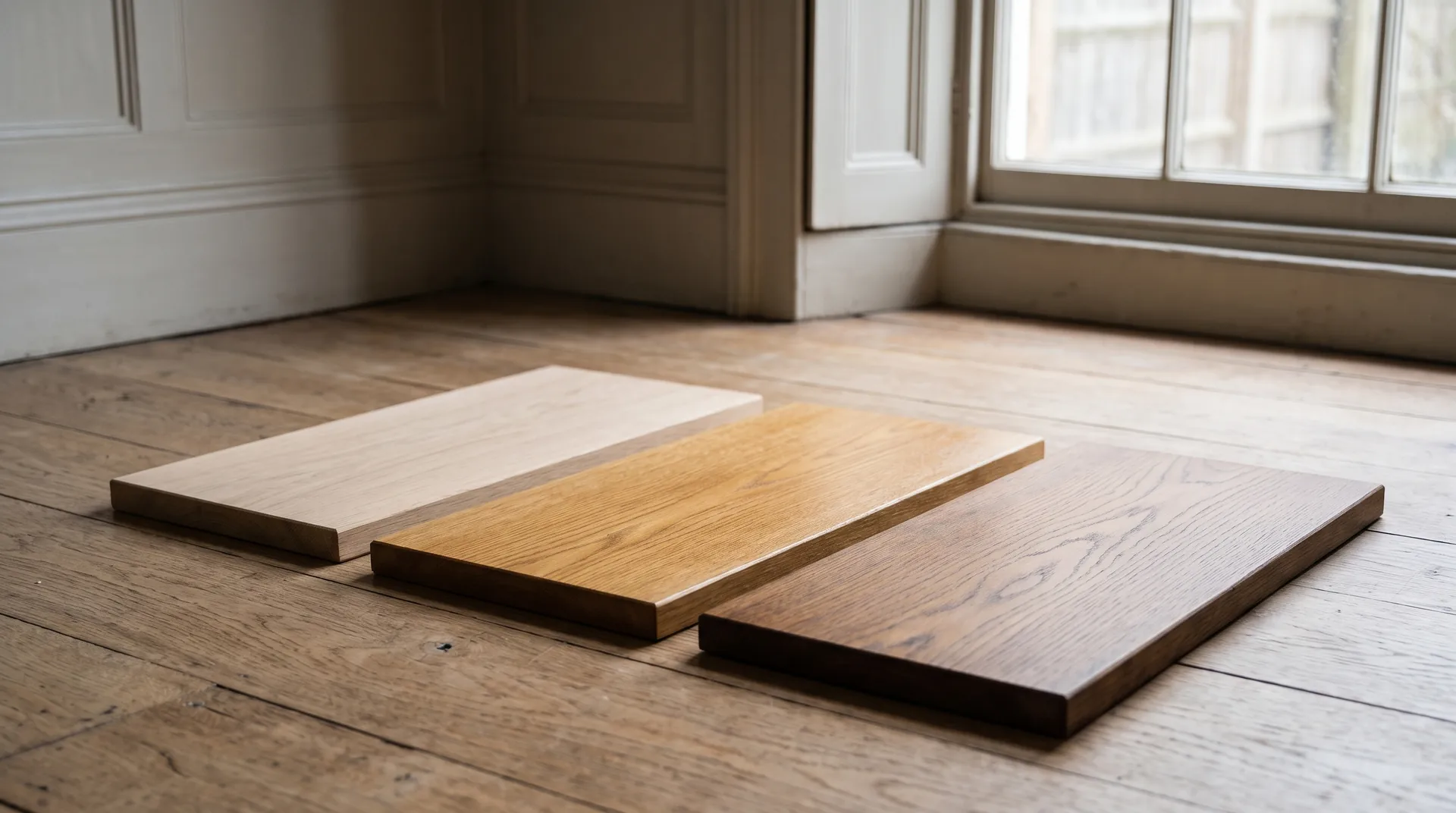
Sanding is not a guarantee that a black mark will disappear. The discolouration may extend beyond the amount of timber that can safely be removed. A suitable test area can help compare the mark before and after the proposed preparation and finish. Avoid repeated sanding or improvised chemical treatments while the cause is unclear. Agree the acceptable appearance and the limits of the trial before committing to wider work.
Consider local repair when staining is persistent
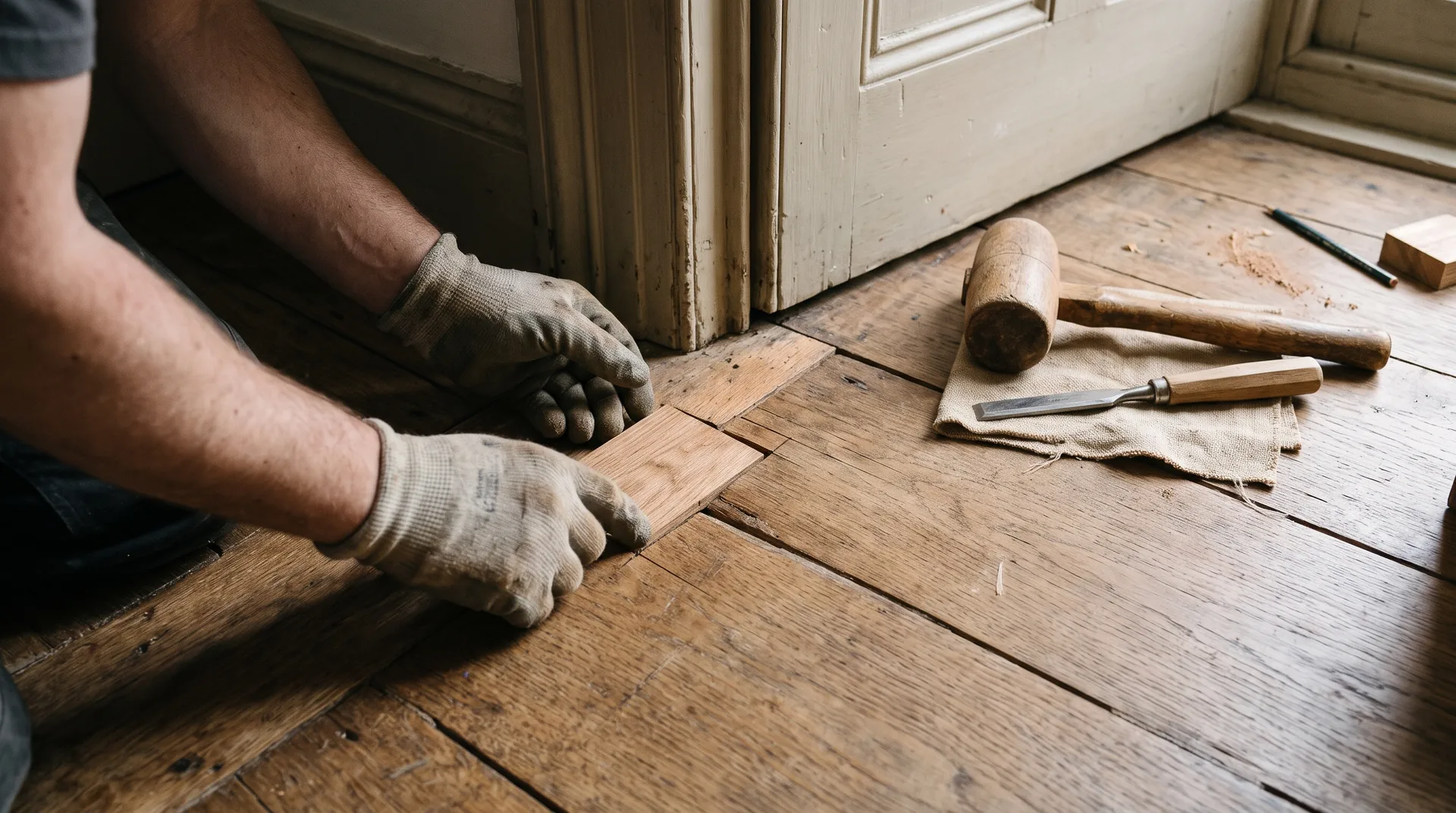
A deeply marked or physically damaged board may need a local repair or replacement. This can be more appropriate than removing additional material across the whole floor in pursuit of a stain. Board dimensions, joint details, timber availability and access affect that decision. Replacement pieces may remain distinguishable from surrounding wood. Discuss where repairs would sit, how they would be finished and the level of colour variation to expect.
Agree the appearance of the surrounding floor
Treating one patch can expose a difference between newly prepared timber and the older surrounding finish. Depending on the coating and room layout, a wider area may need attention to achieve an acceptable transition. A darker colour is an option to discuss through samples, but should not be presented as certain to conceal the mark. The selected finish also needs a compatible cleaning routine and sensible protection from future spills.
Send the details that make an assessment useful
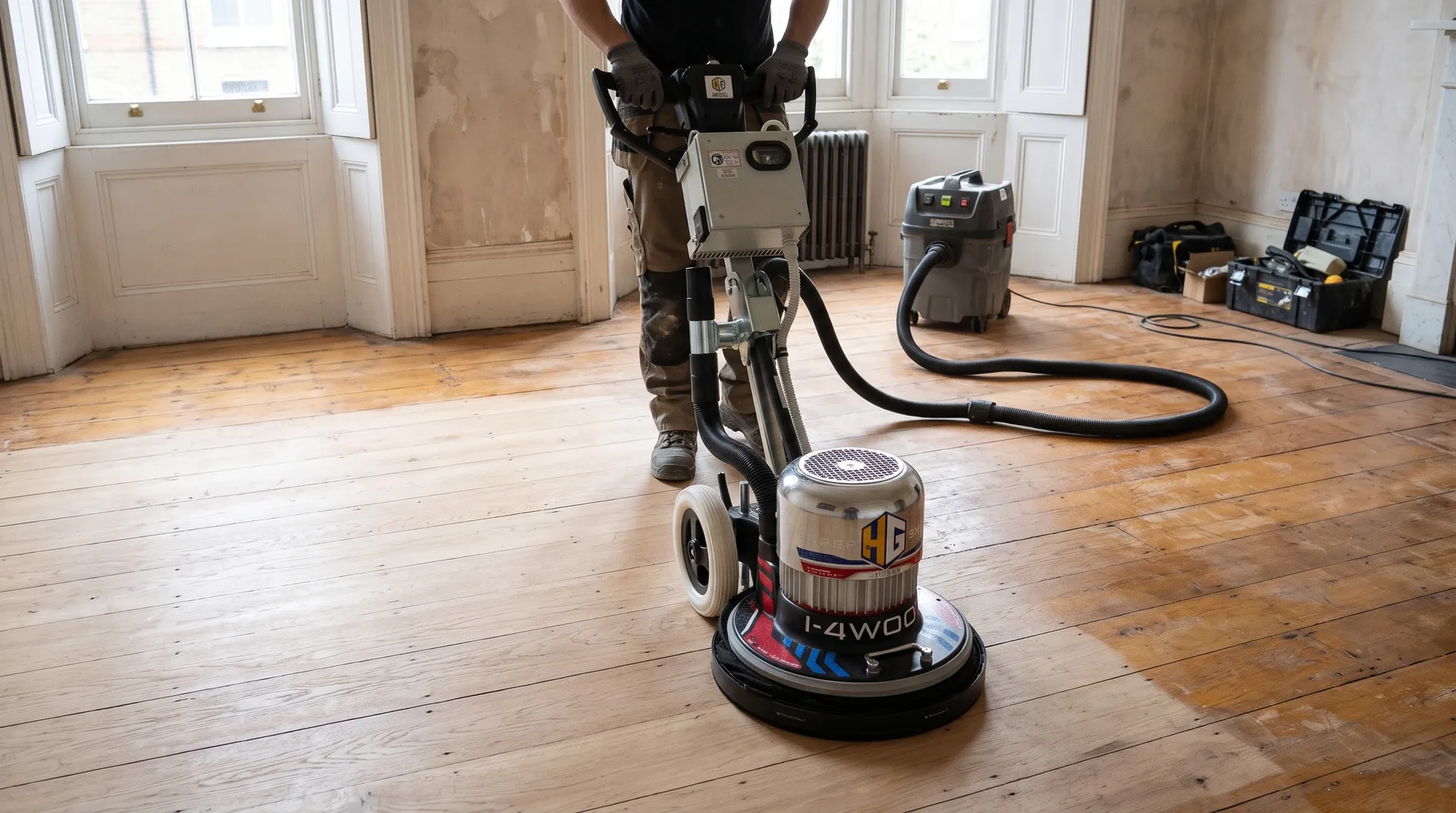
Photograph the whole room, the full outline of the stain and a close view of the surface. Include your London postcode, approximate affected area, known timber type and the date the mark first appeared. Explain any leak repairs or drying work already completed. If the boards have lifted or softened, mention that too. These details help identify the inspection needed and keep the quotation tied to the actual problem.
Before you decide
Your questions, answered
Every floor is different. If your question is about a particular mark, board or finish, send us a photograph.
Can every black stain be removed from a wood floor?
No. Results depend on the cause, depth, timber condition and usable surface thickness. Some marks can be reduced; others remain visible or need local board replacement. A photograph alone cannot establish whether complete removal is achievable.
Does a black mark mean the floor has mould?
A dark colour by itself is not a diagnosis. Share the history of the mark and any known damp or leaks. Where a moisture or building problem is suspected, the appropriate investigation should take place before a cosmetic treatment is selected.
Should I try bleach or stain remover first?
Avoid applying an untested product to the floor. It can change the colour or affect the finish and complicate later treatment. Keep a record of anything already used, and discuss a controlled sample of the proposed approach.
Can the stained boards be replaced individually?
Sometimes, subject to the floor's construction, access and matching timber. The repair may require work around adjoining boards, and a colour difference can remain. The inspection should establish whether local replacement offers a proportionate result.
Will a new finish prevent the stain returning?
A finish is not a remedy for continuing moisture exposure. Any leak or damp source needs addressing, followed by appropriate preparation and care. Ask for cleaning and spill guidance specific to the coating used on your floor.
Discuss the stain before choosing a treatment
Send the marks on WhatsApp with a wide floor photograph, your postcode and the history of the problem. Request an assessment that explains the likely improvement, any repairs needed and the limits of the proposed work.
Prefer to send photos? Message us on WhatsApp or call 07888 526686.