
Timber floors in places of worship
Church Wood Floor Restoration
A church floor needs to serve its congregation while respecting the building around it. Discuss worn aisles, damaged boards and tired finishes with London Marble Stone. Start with an assessment that considers the existing timber, worship arrangements, pews and the access needed for an agreed programme.
Prefer to talk? 07888 526686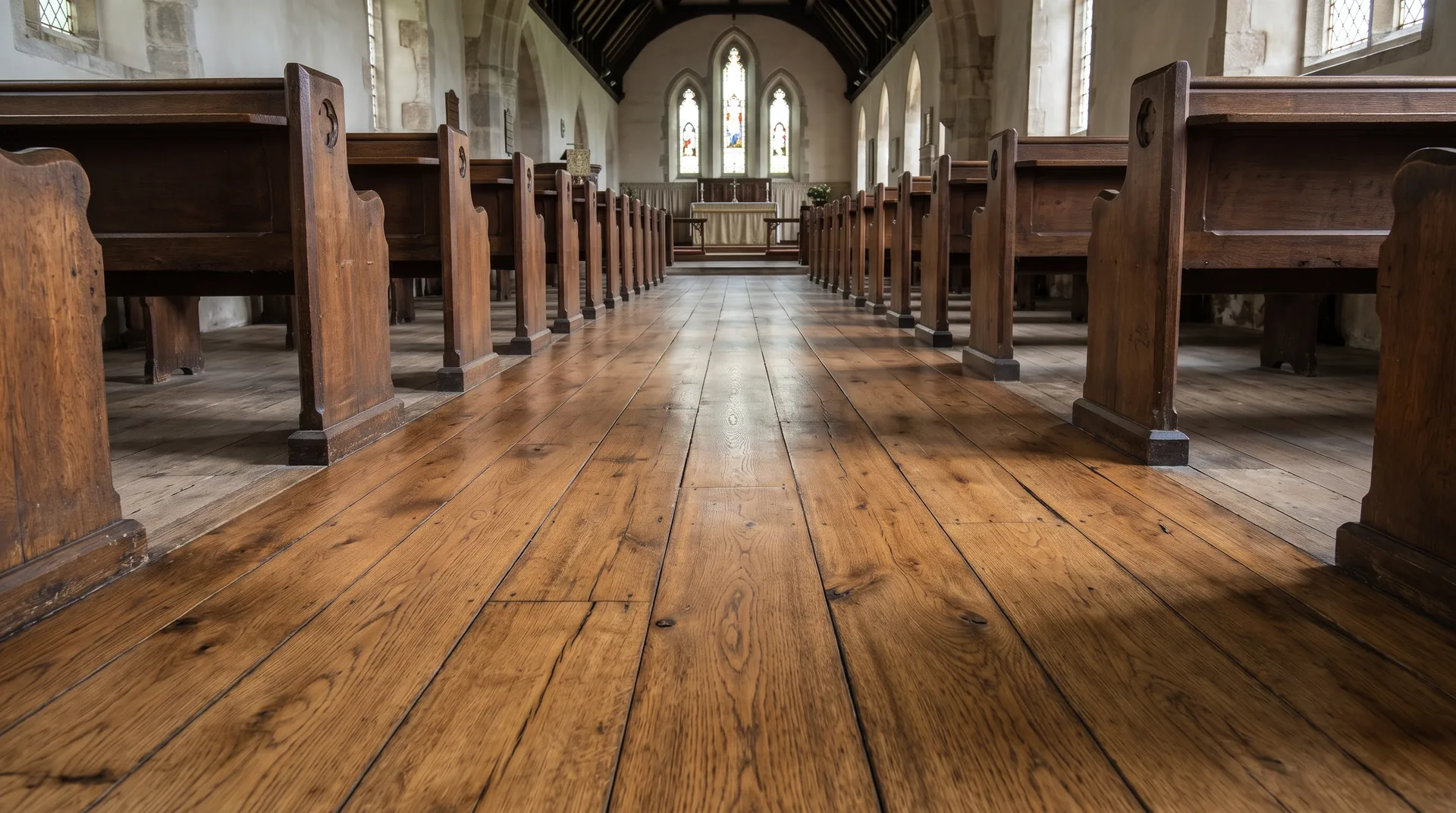
Assess what the church floor needs to retain
Older boards and earlier repairs can contribute to a church's character. The starting point is to understand their condition and significance, rather than assume that every mark should disappear. Note loose or damaged areas, changes in level and previous alterations. Where conservation advice is needed, it should inform the specification. The proposed work can then distinguish essential repair from optional changes to the floor's appearance.
Plan around worship and community use
Services, funerals, weddings and community activities all influence access. Share the church calendar and identify the entrances, facilities and spaces that must remain available. Phasing may be possible, but depends on the layout, the treatment and how areas can be separated. Agree the working arrangements with the church's responsible representatives, including how closures will be communicated and what needs to happen before an area returns to use.
A closer look at the finish
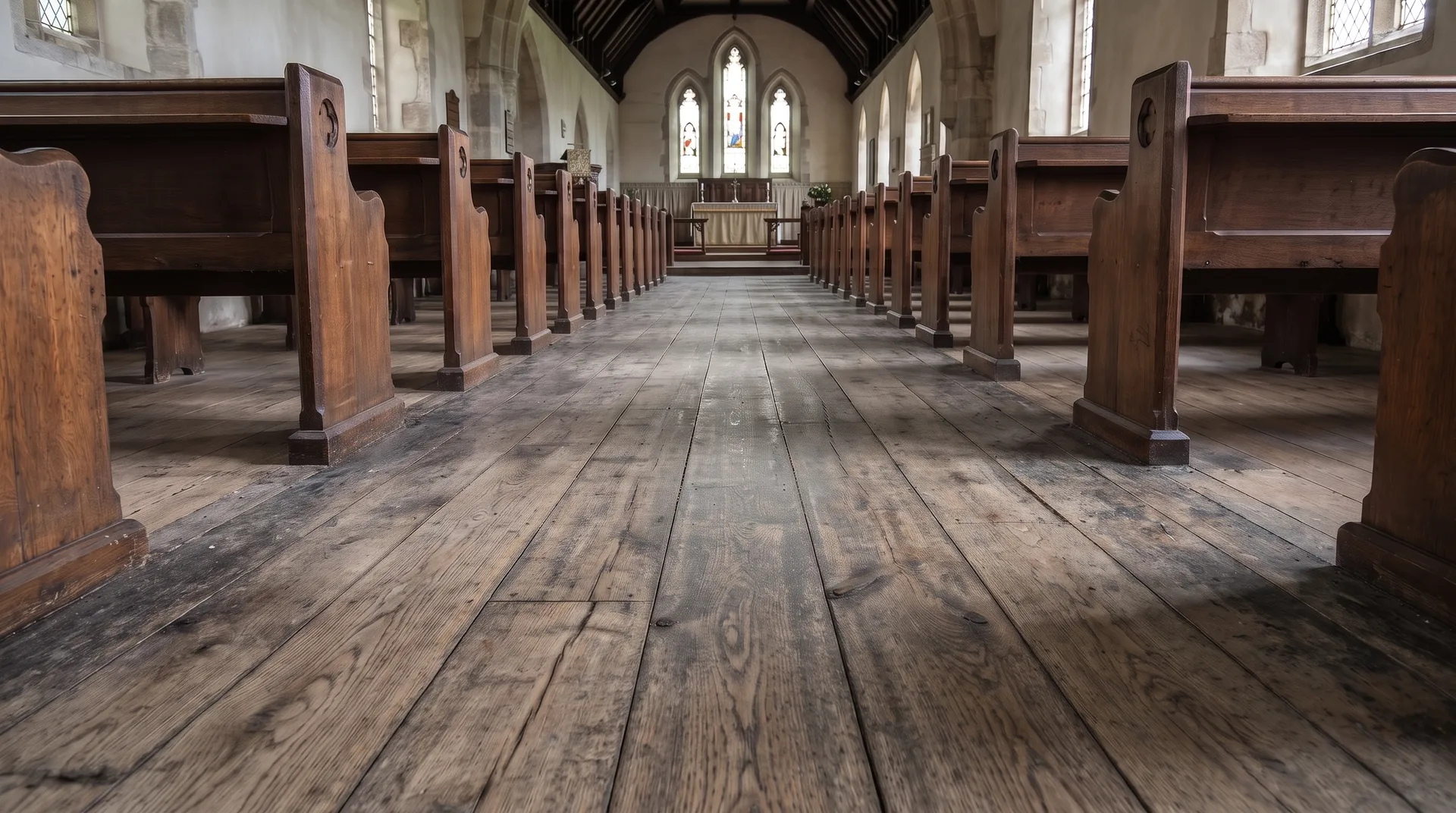
Explore the change in appearance
Include pews and fixed fittings in the scope
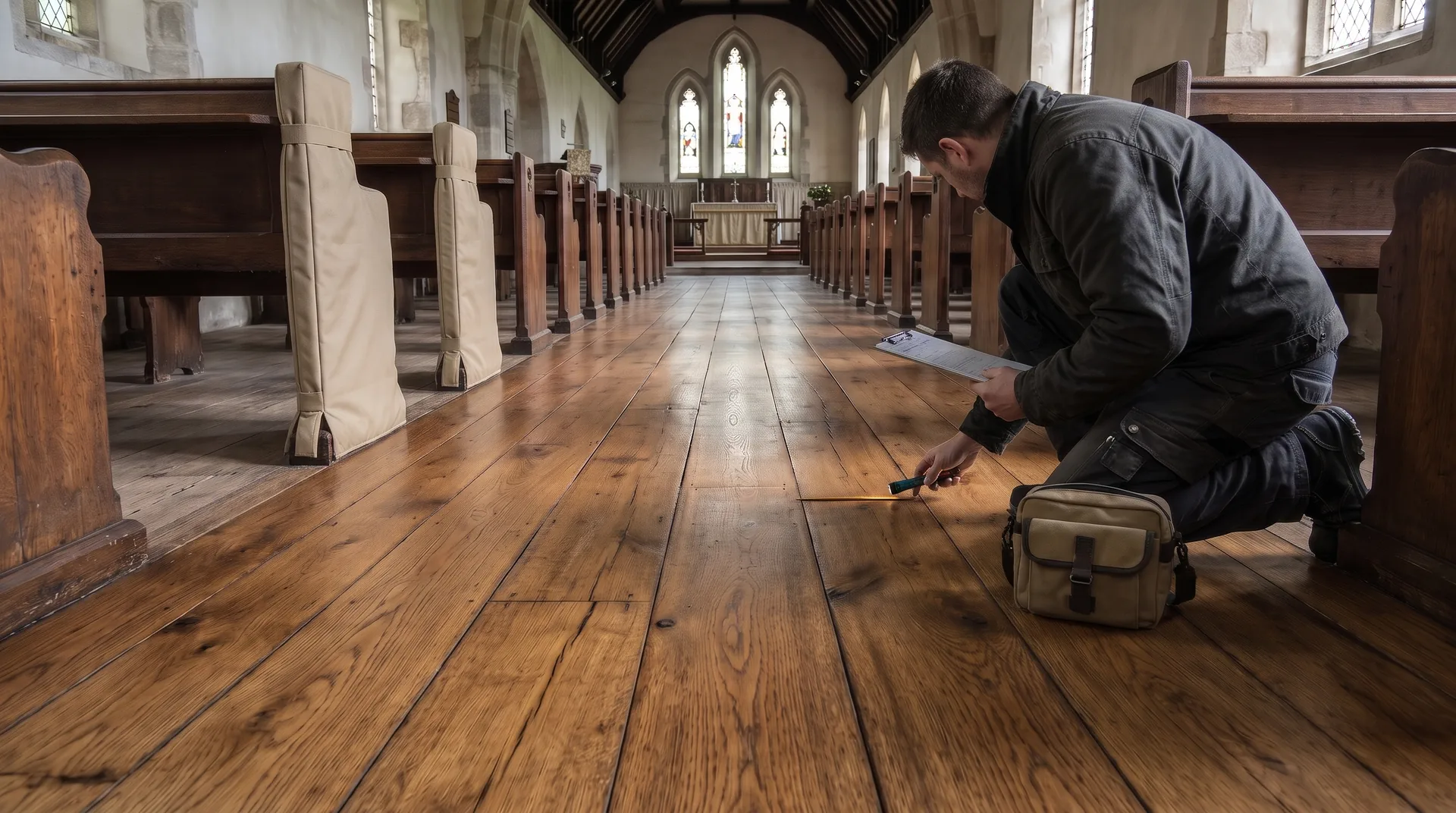
Pews, choir stalls, organs, memorials and other fittings can restrict access to the timber. Some may be fixed or require specialist handling. Establish what can remain in place, what needs protection and who is responsible for any movement before pricing the work. Photographs of aisle edges and the floor beneath seating are useful. Do not assume that work beneath a fitting is included without an agreed access arrangement.
Target repairs where use has taken its toll
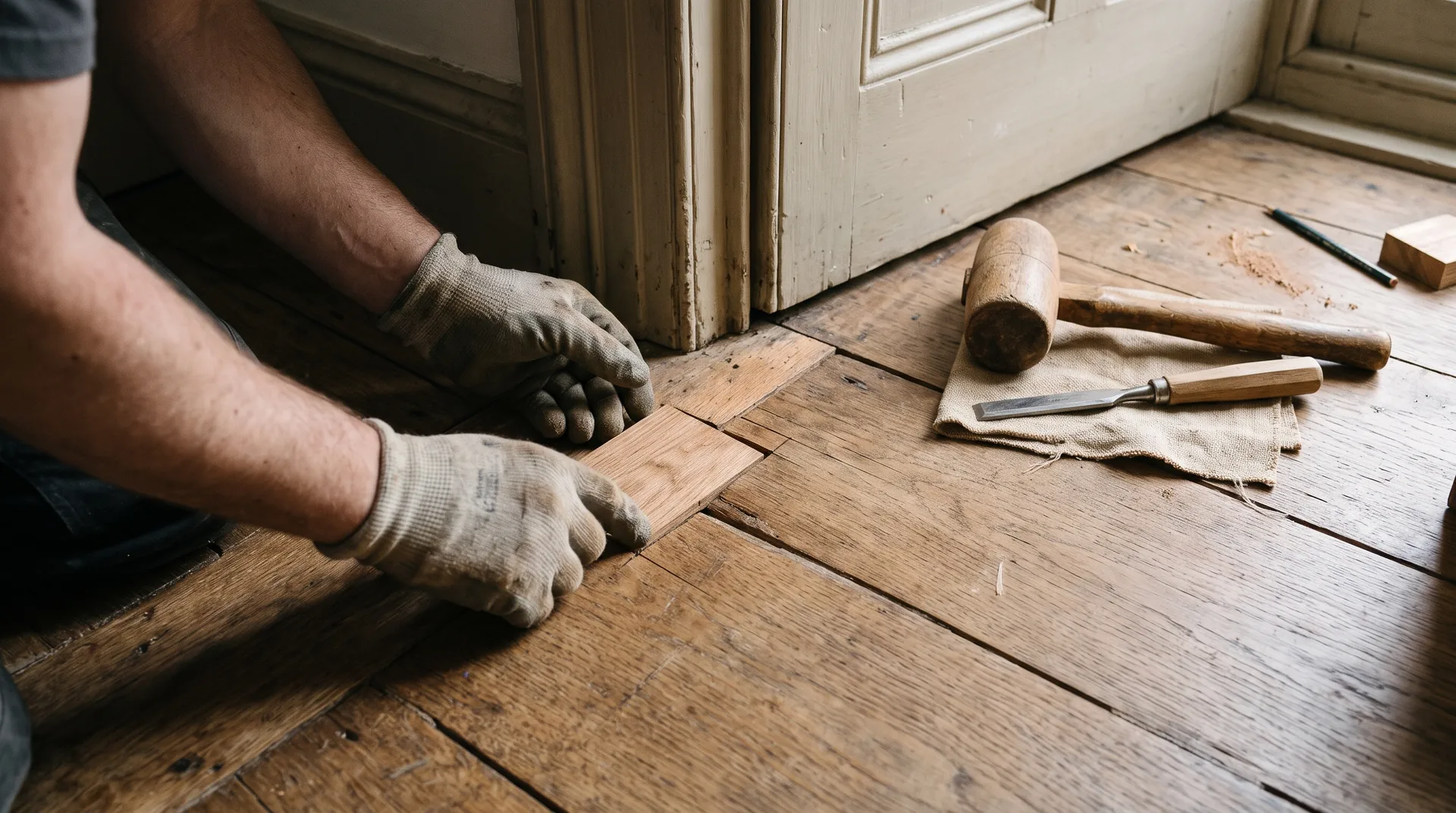
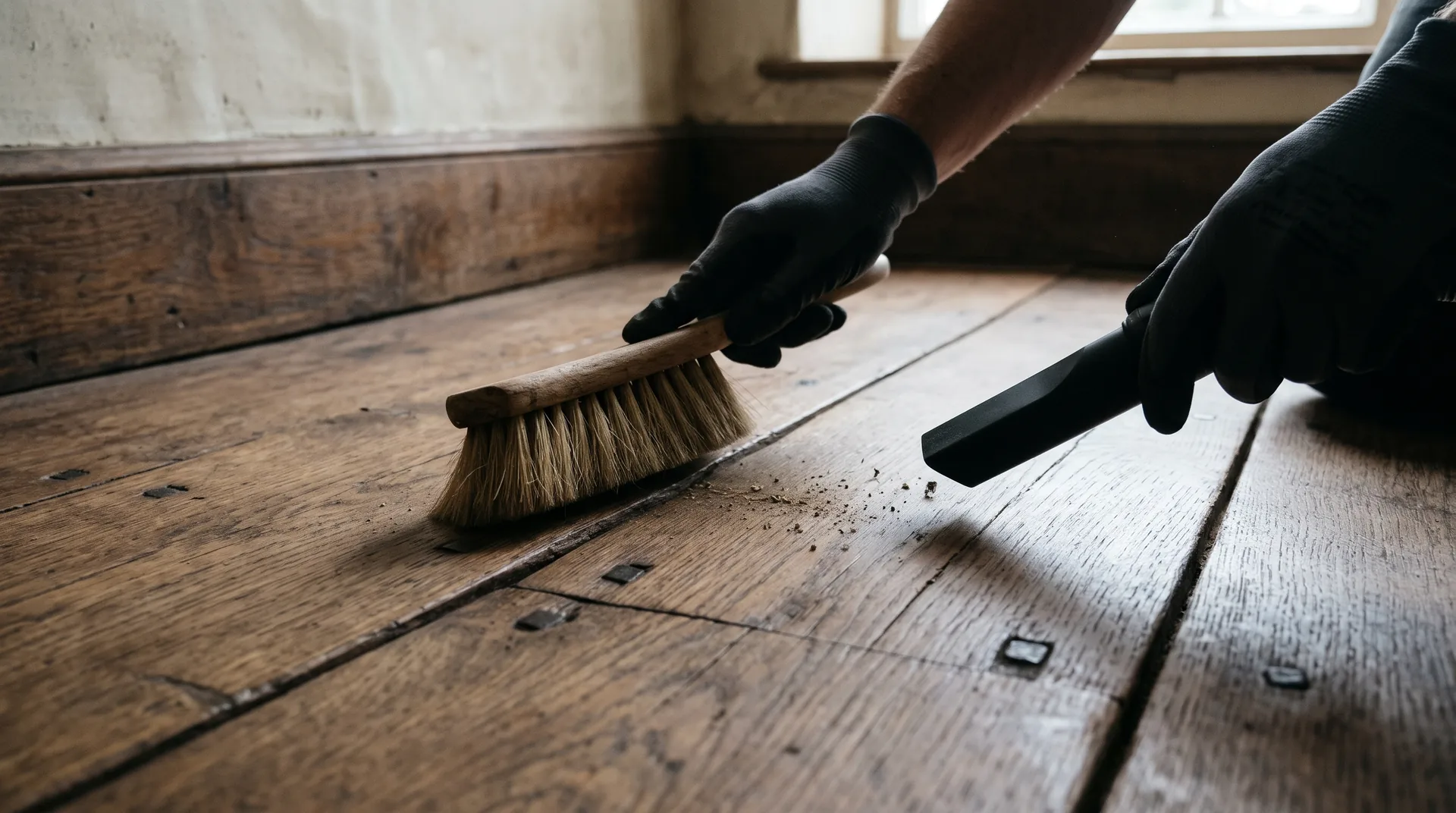
Main aisles, entrances and spaces used for moving chairs can show different wear from quieter areas. Local repairs may be appropriate where boards are damaged or insecure, while sound material remains in place. Any replacement needs consideration of dimensions, joint details and appearance. New timber may remain visible beside older boards. Discuss these transitions and the treatment of previous repairs before deciding how much surface preparation is justified.
Choose a finish with a practical care plan
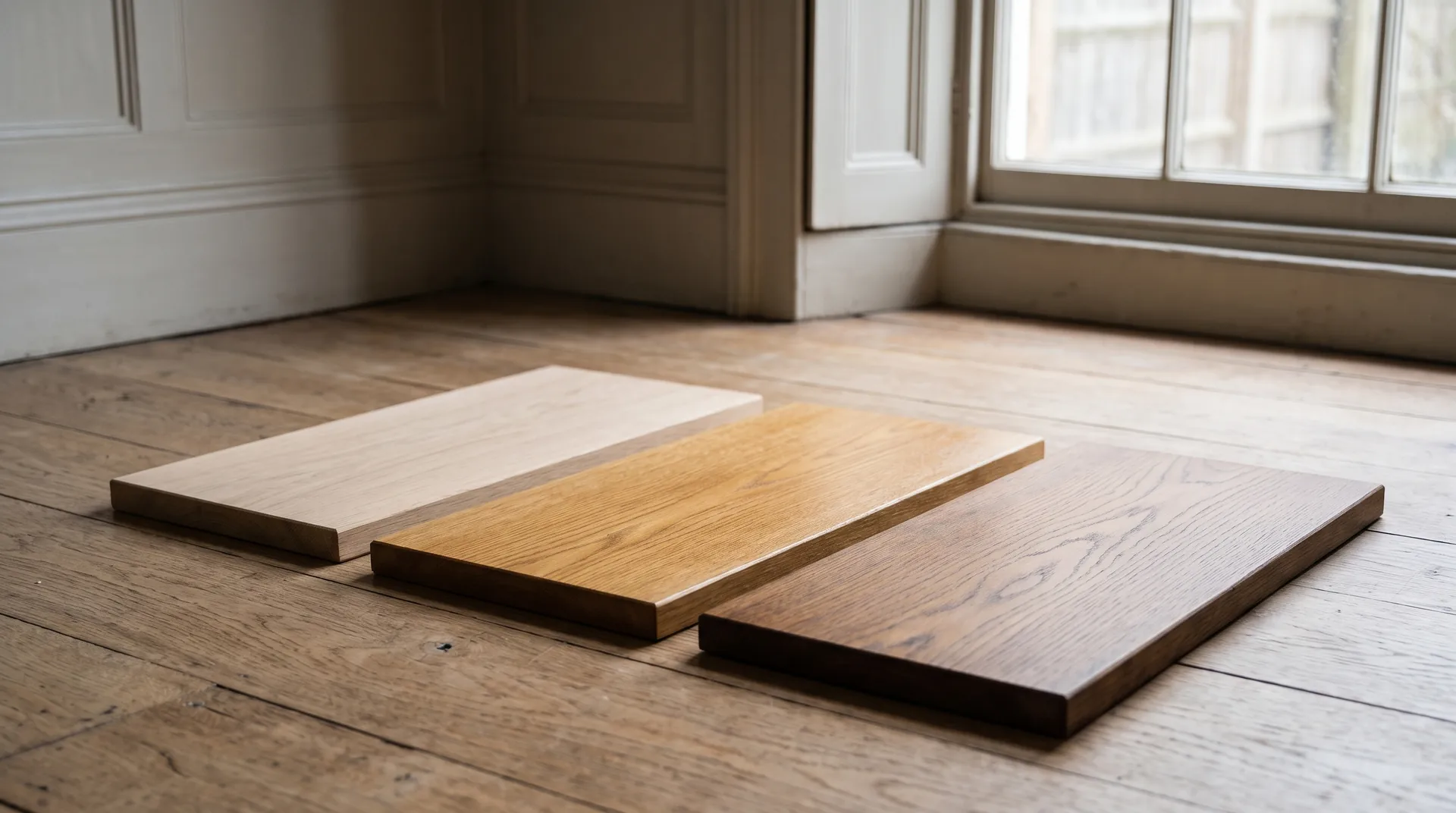
Discuss the desired sheen, existing coating and cleaning arrangements alongside the church's pattern of use. A sample helps assess the appearance in the building's actual light and its relationship to retained timber. Finish compatibility needs checking; no product should be assumed suitable for every old floor. Handover advice should cover cleaning, furniture protection and return to use, distinguishing initial drying from the full cure of the chosen system.
Confirm responsibilities before agreeing a programme
Send the location, approximate floor area, photographs, access details and any existing condition report. Identify the person coordinating the work and the advisers involved. Permissions and approvals depend on the building and proposed intervention; confirm the applicable process with the appropriate authority before work is agreed. London Marble Stone welcomes enquiries for churches in London, with historic properties elsewhere in the UK considered individually for location, scope and practical suitability.
Before you decide
Your questions, answered
Every floor is different. If your question is about a particular mark, board or finish, send us a photograph.
Can the church remain open during the work?
That depends on the layout, access routes and proposed treatment. A phased approach needs an agreed separation and reopening plan. Share the service calendar early so the assessment can identify which activities may require temporary relocation or closure.
Do the pews need to be removed?
Not necessarily. Access beneath and around seating should be assessed first. Fixed pews or other fittings may need specialist advice, and any movement must have an agreed responsibility and scope. Do not assume removal is included in the floor quotation.
Will older marks and repairs be kept?
Retention should be considered where those features contribute to the floor's significance or character. Essential repairs and the desired appearance need to be agreed together, with the church's adviser involved where appropriate. A uniformly new appearance is not the default objective.
Who checks whether permission is needed?
The church's responsible representatives should confirm the applicable approval route with their adviser or relevant authority. Provide any conditions or approved specification during the enquiry. A contractor's quotation should not be treated as confirmation that the necessary permissions exist.
What should we send for an initial quotation?
Send wide views, damaged-board close-ups, the approximate area, location and service calendar. Include photographs around pews and other access constraints. Existing floor records or conservation advice can help establish what needs checking during an inspection.
Discuss your church floor and its working arrangements
Contact London Marble Stone with floor photographs, location and the person coordinating the project. Request a quotation that addresses timber condition, access, protection and the practical requirements of your congregation.
Prefer to send photos? Message us on WhatsApp or call 07888 526686.