
Marble Sealing London offers a professional service for homeowners and facilities managers who want to protect premium natural stone in busy properties. They position sealing as a preventative step that preserves appearance and reduces avoidable damage from everyday use.
This work explains why porous marble needs protection against stains, moisture and wear. Trusted providers such as Royal Stone Care, Master Marble and Ashton’s Marble Restoration offer guaranteed workmanship, public liability insurance and minimal disruption. They often pair sealing with restoration where surfaces are dulled or marked.
Professional sealing supports stain resistance, makes cleaning easier and extends the usable life of floors and worktops. Readers are invited to request an assessment or a quote so a tailored approach can be confirmed for each finish and setting. The following sections explain where sealing is most effective, how often to reapply and what the professional process involves.
Specialist providers assess each surface and choose products that match its condition and use.
Professional sealing means an assessment-led approach: technicians inspect porosity, finish and exposure before selecting a product and method.
The same protective principles apply across residential commercial settings, but footfall and cleaning routines change the plan.
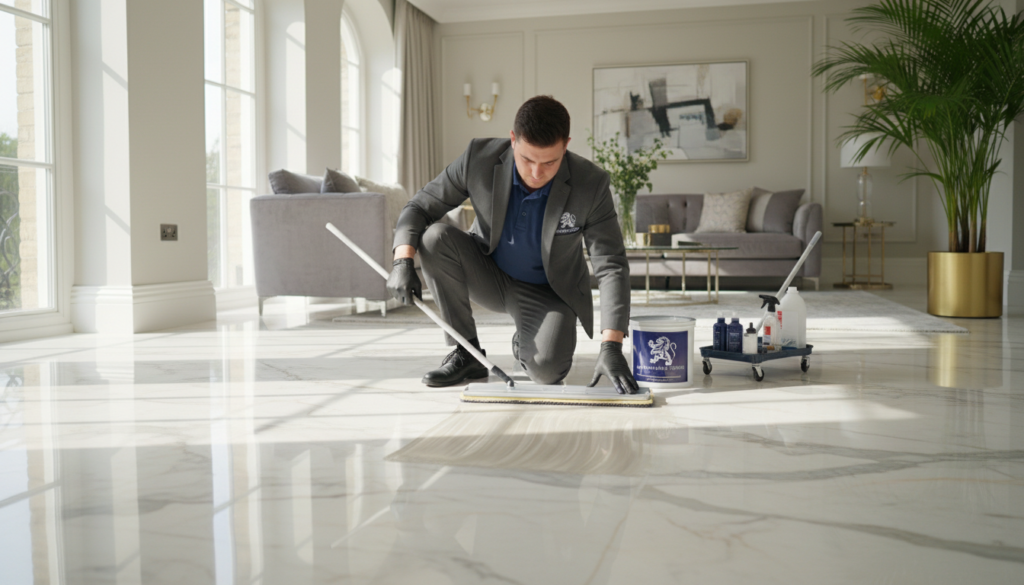
Sealing often forms part of wider stone care and restoration services. Companies such as Master Marble, Royal Stone Care and Ashton’s combine cleaning, repair, polishing and ongoing maintenance.
Reputable providers schedule work to reduce disruption, give clear aftercare guidance, and offer guaranteed outcomes with public liability insurance.
| Company | Coverage | Main services |
|---|---|---|
| Master Marble | Homes & businesses | Cleaning, repair, resurfacing, polishing |
| Royal Stone Care | Residential & commercial clients | Maintenance, protection, hotel & retail work |
| Ashton’s | Commercial and residential | Repair, maintenance, restoration services |
Homes with natural stone surfaces face quick liquid absorption unless protected.
As a porous natural material, marble soaks up spills fast. Liquids sink below the top layer and leave marks that are hard to remove.
In kitchens, oils, wine and sauces are frequent culprits. In the bathroom, cosmetics and toiletries can stain. Entrances collect tracked-in grime and mud.
Staining is about absorption. Wear is about loss of clarity and shine. Both make a surface look tired even when it is structurally sound.
Cleaning with harsh products can speed dulling. Gentle, stone-specific care helps, but proper protection makes maintenance easier. Sealing reduces risk, though deep marks often need restoration first.
Applied correctly, a high-quality impregnator buys time to clean spills and keeps finishes breathable. This is not about surface films; it works beneath the top layer to reduce absorption.
What it does: An impregnating treatment slows liquid penetration, giving more time to wipe spills and making day-to-day upkeep easier.
What it does not do: It will not make marble indestructible or remove etching, deep stains or scratches already present. Heavy damage still needs restoration first.
Expert teams use specialist techniques to prepare and apply products so protection is invisible. Master Marble’s smoothing steps and Royal Stone Care’s post-restoration impregnators are examples of a methodical approach.
Correct application avoids patchiness or residue and ensures consistent coverage. When done to a high standard, protection preserves appearance and function across stone surfaces while maintaining quality finishes.
A well-applied protective treatment keeps everyday spills from becoming lasting marks on prized stone surfaces.
Protection reduces penetration from common culprits such as oils, tea, coffee, wine, toiletries and cosmetics. Treated areas give homeowners more time to wipe spills before they sink in.
When liquids sit on the top layer, cleaning takes less effort. Fewer scrubs and milder products are required, so routine maintenance uses less time and causes less wear.
Wet zones benefit from added resistance to darkening and joint residues that can promote mould. This lowers the risk of discolouration in showers, vanity tops and splash zones.
Quality application preserves the surface’s beauty and reduces the need for early restoration. Ashton’s notes that restoration strengthens the surface against scratches and stains, while Master Marble and Royal Stone Care focus on long-lasting results and guarantees.
For owners seeking dependable protection and expert advice, a professional stone care service is a sensible investment in long-term performance and quality.
Where a surface sits determines how much protection it needs and how quickly wear appears.
Floors take the most punishment: foot traffic grinds grit into pores and regular mopping can abrade finishes.
Entrances and hallways need early attention because dirt and grit accelerate wear. Treating these floors first gives the best value for money.
Wall tiles and splash zones face cooking splashes, steam and soap residue. These build-ups dull the look over time.
Sealing helps prevent staining and makes routine cleaning less damaging to the surface.
Showers and vanity tops see constant moisture and product contact. That combination speeds discolouration and joint residues.
Prioritising these wet areas supports hygiene and keeps the bathroom looking fresh longer.
Kitchen worktops face acids, oils and coloured liquids from daily cooking. Countertops are high-risk for permanent marks.
Protecting work surfaces reduces staining and preserves the finish during heavy use.
Practical note: The right product and method depend on the exact stone and finish. If budget or timing is limited, owners should get advice and treat the most exposed stone surfaces first as part of a longer-term maintenance plan.
| Location | Main risk | Why treat first |
|---|---|---|
| Entrances & hallways | Grit, heavy footfall | Prevents rapid wear and pore build-up |
| Kitchens (worktops) | Acids, oils, coloured spills | Reduces permanent staining and etching |
| Bathrooms & showers | Constant moisture, products | Improves hygiene and appearance longevity |
| Wall tiles & splashbacks | Steam, splashes, soap residue | Makes cleaning gentler and avoids surface dulling |
Reseal schedules should reflect real-world wear rather than a fixed calendar interval. The correct timing depends on use, cleaning and exposure. Professionals recommend tailored checks instead of a single rule for every home or business.
Kitchens face acids, oils and constant wiping. These surfaces often need attention more frequently.
Practical guidance: check annually; busy households may benefit from six‑monthly reviews or an on-site maintenance visit.
Constant humidity and strong cleaners reduce protection faster. A regular check helps spot loss of performance early.
Many clients choose yearly inspections, with more frequent checks where showers are used heavily.
High-traffic floors wear quickest. Blocks and commercial corridors commonly follow planned programmes to protect aesthetics and safety.
Commercial settings often schedule sealed maintenance every 6–12 months depending on footfall and grime levels.
Recommendation: Arrange a simple on-site assessment to confirm whether resealing or restoration is needed first. Master Marble provides free assessments and clear quotes, while Royal Stone Care can create a maintenance plan for busy sites.
| Location | Typical check frequency | When to request a service |
|---|---|---|
| Kitchen worktops | 6–12 months | After visible staining or frequent cooking use |
| Bathrooms & showers | 12 months | If moisture darkens stone or cleaning worsens |
| Entrances & communal floors | 6 months (commercial) / 12 months (domestic) | When footfall causes surface dulling or grit build-up |
Next step: Request a tailored quote based on current condition, area size and access. A short visit saves time and helps plan cost and timing confidently.
Several practical factors change how long a protective treatment lasts on natural stone. Condition, daily routines and cleaning choices all influence performance and how often a retreatment is needed.
Finish matters: Honed surfaces absorb and show marks differently to polished ones, so honed areas often need closer monitoring.
Colour and veining: Light-coloured stones reveal stains sooner, which affects the recommended care plan and reseal timing.
Types and porosity: Denser varieties resist liquids better than softer, more porous stone. Technicians choose specific techniques and products to match each type.
Incorrect chemicals can weaken protection or leave residues that attract dirt. Strong acids and alkaline cleaners are common culprits.
Daily care that uses pH-neutral, stone-safe cleaners extends performance and reduces the need for early retreatment.
Homes usually face lower footfall and gentler use. Private kitchens and bathrooms often need checks yearly.
Commercial spaces such as cafés, lobbies and retail floors demand scheduled, efficient work and more frequent monitoring to avoid patchy wear.
Professional advice from reputable providers ensures a bespoke care plan based on the exact surface, not generic label claims.
| Factor | Effect on frequency | Recommended focus |
|---|---|---|
| Finish (honed / polished) | Changes absorption and visible marking | Inspect honed areas more often; match techniques to finish |
| Colour & veining | Lighter tones show staining sooner | Prioritise light-coloured surfaces for earlier checks |
| Stone type & porosity | Higher porosity shortens protection life | Use techniques and products suited to material density |
| Cleaning products & habits | Harsh cleaners degrade performance | Adopt stone-safe cleaning; train staff or household users |
| Usage (residential commercial) | Higher traffic accelerates wear | Schedule regular commercial maintenance and faster reviews |
A clear, step‑by‑step process ensures professional teams deliver consistent protection and long‑term performance.
Technicians inspect the stone to confirm condition, note stains and check for etching or visible scratches.
Any deep marks are logged so restoration is recommended before protection. Master Marble and Royal Stone Care record these findings and advise clients on options.
Specialist deep cleaning removes ingrained grime and product films that can block penetration.
Teams use handheld machines, diamond discs or diamond pads depending on finish to lift deposits and prepare the surface.
Stone must dry fully. Sealing damp surfaces can trap moisture and ruin results.
Experienced teams apply product evenly and control coverage to avoid patchiness or sticky residue.
Final checks confirm uniform coverage and cure times. Clients receive clear guidance on how long to avoid washing or heavy use.
Aftercare advice includes gentle cleaning, prompt spill removal and recommended service intervals to protect investment over time.
| Stage | Technique | Typical tools | Expected result |
|---|---|---|---|
| Assessment | Condition report, stain mapping | Visual inspection, moisture tester | Decision on restoration vs protection |
| Deep cleaning | Specialist cleaning and film removal | Handheld machines, diamond discs/pads | Open pores and clean surface for penetration |
| Drying | Controlled drying period | Fans, dehumidifiers (if needed) | Stable, dry substrate for reliable cure |
| Application | Even, controlled sealer application | Applicators, lint‑free cloths | Consistent coverage without residue |
| Final checks & aftercare | Cure verification and guidance | Inspection tools, written instructions | Durable protection and maintained appearance |
Deep, targeted cleaning is the essential preparation that ensures protective treatments work as intended.
Professional care teams such as Ashton’s note that advanced cleaning techniques remove films and soils that simple mopping will not shift. Royal Stone Care advises leaving deep cleaning and maintenance to trained technicians for reliable outcomes.
Grout and textured surfaces trap grit and staining agents. This builds up over time and hides under light cleaning.
If protection is applied over these deposits, discolouration becomes locked in and the treatment performs poorly.
Common residues include soap scum, greasy kitchen films and glossy “shine” products. These create a barrier that stops penetration.
Deep cleaning opens pores in the stone so the protective product penetrates evenly. The result is stronger, more uniform protection across floors and worktops.
| Issue | Cause | Professional action |
|---|---|---|
| Grout discolouration | Embedded dirt and salts | Machine scrubbing with stone‑safe cleaners |
| Textured finish build‑up | Grit and product residue | Low‑abrasion agitation and extraction |
| Surface film (shine products) | Polish-overuse and grease | Chemical-free film removal and rinsing |
Restoration and polishing prepare tired stone so protection bonds to a clean, stable surface.
When restoration is needed: choose restoration when surfaces show dull patches, uneven sheen, clear wear paths, etching or embedded staining. These issues prevent a sealer from working evenly and can lock in blemishes if left untreated.
Technicians use handheld machines with diamond discs to level micro‑damage and restore colour and texture. Master Marble favours discs for faster levelling on high‑use areas.
Royal Stone Care applies graded diamond pads to remove marks and fine scratches. This recovers the stone’s natural tone around sinks, hobs and walkways so the finish looks consistent.
Resurfacing is the more intensive option. It flattens heavy wear and restores flatness on floors and worktops before protection is applied.
Why restoration polishing improves final results: sealing a damaged area protects the flaw. Restoring first ensures the protected finish is smooth, uniform and longer lasting. Ashton’s notes that restoration often saves full replacement and gives better long‑term results.
| Process | Common tools | Typical outcome |
|---|---|---|
| Diamond levelling | Handheld machines, diamond discs | Even surface, restored colour and texture |
| Scratch removal | Graded diamond pads, hand polishing | Reduced marks, consistent sheen |
| Resurfacing | Floor grinders, coarse diamonds, finishing pads | Flat floors/worktops, ready for protection |
Before protection is applied, practical repairs stop dirt and moisture entering cracks and chips. This step means finishes accept treatments evenly and last longer.
Technicians carry out colour‑matched fills, seam stabilisation and edge repairs on steps and worktops. Ashton’s and Master Marble offer precise repair work to restore appearance and function.
Stone restoration covers marble stone restoration plus terrazzo, travertine and limestone. Royal Stone Care and others deliver deep cleaning, levelling and polishing so adjacent finishes match.
Why repair before protection: open defects hold grime and moisture that undermine the protective product. Fixing faults first ensures the sealer bonds to sound material and avoids trapped residues.
| Service | Benefit | Typical tools |
|---|---|---|
| Crack & chip repair | Restores look, prevents ingress | Colour resins, fillers, hand tools |
| Stone restoration | Even finish across materials | Diamond pads, polishers, cleaning agents |
| Floor restoration | Improves safety and maintainability | Grinders, levelling pads, seal prep tools |
Durable results come from matching product chemistry to the surface and controlling every preparation step.
Professionals use higher-performance products chosen to suit each stone and finish. These materials penetrate correctly and resist daily wear for longer than generic retail sealers.
Preparation matters most. Deep cleaning and full drying open pores so protection bonds. Trained teams follow strict drying and cure times to secure consistent results.
DIY attempts often cut corners on prep or reuse a room too soon. That can cause patchy absorption, sticky residue and trapped moisture that weakens performance.
Small errors during preparation or application can be highly visible, so skilled stonemasons and specialist technicians are essential for long-term quality.
Master Marble brings over 20+ years of experience and Royal Stone Care over 25+ years. Ashton’s highlights skilled craftsmen who understand finishes and restoration techniques.
Years of experience act as a practical proxy for proven processes and consistent outcomes.
Teams plan work to protect adjacent areas, schedule quiet hours and complete tasks efficiently in occupied buildings.
Practical steps include protective sheeting, careful access management and clear timing to keep daily routines running.
Guaranteed results means a clear scope, realistic finish expectations and accountability if issues arise. Reputable providers carry public liability insurance so homeowners, landlords and managers feel secure.
Connected care: repair, restoration and ongoing maintenance are offered as part of a long-term approach, not short-term fixes.
Many properties contain several types of natural stone, each needing a tailored care plan to keep finishes uniform.
Experienced teams such as Ashton’s and Master Marble work across granite and limestone, while Royal Stone Care lists quartz and terrazzo among its services.
Granite is typically dense and resists stains better. Limestone is softer and more sensitive to acids. Quartz is engineered and needs different cleaners and products. Terrazzo varies by binder and aggregate and therefore requires bespoke attention.
Correct techniques avoid harm and keep finishes consistent. Technicians select products and methods to suit each material, from low‑abrasion cleaning for limestone to specialist treatments for quartz worktops.
Practical benefit: one planned visit can treat kitchen counters, hallway floors and bathroom splashbacks together. The right product choice and method protect appearance and performance over time.
| Material | Typical behaviour | Focus |
|---|---|---|
| Granite | Dense, stain‑resistant | Deep clean, appropriate protector |
| Limestone | Softer, acid‑sensitive | Gentle cleaners, low‑abrasion care |
| Quartz | Engineered, non‑porous | Surface‑safe products, avoid harsh chemicals |
| Terrazzo | Variable, binder‑dependent | Bespoke testing, matched techniques |
London Marble Stone provides professional marble stone services with an assessment-first approach. They inspect each surface to decide if cleaning, repair, polishing or stone restoration is needed before any protective work.
The company covers homes, rental properties, offices, hospitality venues and communal entrances across London. Scheduling is planned to reduce disruption for families, landlords and facilities teams.
Teams can deliver repair, polishing and installation alongside restoration and protective work. This single-provider model helps keep finish and colour consistent across mixed materials and high-use areas.
Free quotes are offered after a short on-site assessment. Clients receive a clear, written plan that explains recommended work, expected outcome and timing.
Early enquiry is encouraged — especially before events, viewings or renovations — so the work can be scheduled and completed without last-minute pressure. Homeowners, landlords and facilities managers are invited to request a quote and book an assessment.
A clear, practical care plan ensures stone surfaces stay attractive and perform for years.
Protection reduces absorption, eases cleaning and preserves the look of prized marble and other stone. The professional pathway—assess → deep clean → restore/polish → dry → seal → cure → aftercare—creates consistent, durable results.
Skilled teams outperform DIY because they match products and prep to the surface, avoid patchiness and back work with guarantees. Sealing works best alongside repair, resurfacing and occasional polishing to keep floors and counters in top condition.
Experts also treat granite, quartz, limestone and travertine, so all stone surfaces are managed together. For a free quote and tailored recommendations from London Marble Stone, request an assessment and set realistic timescales for quality results.
Sealing creates an invisible barrier that reduces liquid absorption and limits staining from spills, oils and cosmetics. It does not restore deep scratches, repair large chips or reverse severe etching; those require professional restoration, polishing or resurfacing before sealing.
Frequency depends on use and location. High-traffic floors and kitchen worktops often need attention every 6–12 months, bathrooms and wet zones 12–24 months, and low-use areas every 2–3 years. The provider will check sealer wear and advise renewal when water no longer beads on the surface.
Professional sealers chosen for natural stone preserve the original finish and colour when applied correctly. They come in different formulations; technicians select products that maintain slip properties appropriate for floors, avoiding glossy films unless a polished look is requested.
Sealing greatly reduces the chance of staining from common kitchen substances but cannot guarantee complete immunity, especially from strong acids or prolonged contact with oil-based dyes. Prompt cleaning and proper maintenance remain important for long-term protection.
Yes. Deep cleaning removes ingrained dirt, residues and previous treatments that block penetration. Effective preparation ensures the sealer bonds properly and delivers the intended protection and longevity.
The typical process includes a site assessment, stain and damage identification, deep cleaning and drying, application of a specialist stone sealer for even coverage, and final checks with aftercare guidance. For worn surfaces, polishing or repairs may precede sealing.
Professional sealers are formulated to penetrate deeper and resist wear longer. Trained technicians also ensure correct preparation, application and curing, reducing risks of patchiness, trapped moisture or residue common with off-the-shelf treatments.
Properly applied sealers increase moisture resistance and reduce liquid ingress on vanity tops, shower walls and floors. However, sealers are not a substitute for correct waterproofing systems in wet-room builds or behind-wall installations.
Sealers can limit liquid penetration but do not prevent chemical etching from acids such as lemon juice, vinegar or some cleaners. Etching alters the stone’s surface and typically requires polishing or repair to restore appearance.
The same care and sealing techniques apply to a wide range of natural and engineered surfaces, including granite, limestone, travertine, terrazzo and quartz. Each material needs a tailored product and method for best results.
Use pH-neutral, stone-safe cleaners, wipe up spills quickly, avoid abrasive pads and refrain from acidic or bleach-based products. Regular gentle cleaning and periodic inspections will extend protection and preserve the finish.
Yes. Technicians typically repair cracks, chips and seams to recover aesthetic appeal and prevent moisture ingress prior to sealing. These repairs ensure the sealer performs effectively and the surface looks uniform.
Duration varies with area size and preparation needs. A small worktop can be completed in a couple of hours, while extensive floor restoration, cleaning and sealing for large commercial spaces may require a day or more, plus drying and curing time.
Yes. Treated surfaces repel spills and soils more easily, so routine cleaning becomes quicker and less intensive. This saves time for homeowners and reduces cleaning costs for commercial clients.
Common signs include liquids soaking in rather than beading, increased staining, dulling of the surface and more frequent dirt build-up. When these occur, a re-assessment and resealing are recommended to restore protection.