Marble Stain Removal London helps homeowners and businesses restore worn or marked stone without needless replacement. In many London homes, kitchens and bathrooms see the most wear because surfaces meet liquids and daily use.
Common issues include coffee, red wine, oil, rust and water marks. These blemishes often look worse than they are, yet they can harm delicate stone if treated with the wrong products.
Professional services use consultation-led methods such as polishing, honing, cleaning and sealing. These approaches are chosen to minimise risk to the finish and to deliver a consistent result across floors, tiles, bathrooms and worktops.
London Marble Stone provides tailored restoration and dust-controlled work in occupied properties. They offer free quotes and expert advice so clients can book one team for end-to-end refurbishment — request a quote via London Marble Stone.
Frequent use and environmental factors in urban properties accelerate blemishes on delicate stone surfaces. Kitchens, bathrooms and high-occupancy service areas see more wear because of regular cooking, heavy cleaning and persistent hard water.
Both residential and commercial sites face the same issues, though hospitality venues and busy offices often show faster dulling due to footfall and cleaning frequency. Specialists adapt methods to each setting to preserve the finish and hygiene standards.
Safe treatment is a controlled, targeted process. It focuses on the mark while protecting the stone from acids, harsh abrasives and inappropriate chemicals that can cause etching, whitening or uneven sheen.
London Marble Stone covers key areas and tailors the approach to each stone type and finish. For a comprehensive floor or worktop service, see marble floor services.
| Setting | Common cause | Professional focus |
|---|---|---|
| Home kitchens | Cooking spills and hard water | Targeted cleaning and sealing |
| Bathrooms | Limescale and cosmetic etching | Descaling and gentle polishing |
| Commercial venues | High footfall and frequent cleaning | Durable finishes and maintenance plans |
Household and commercial activity produces a predictable set of surface blemishes on natural stone. Trained teams identify the mark type and select a targeted process that protects the finish.
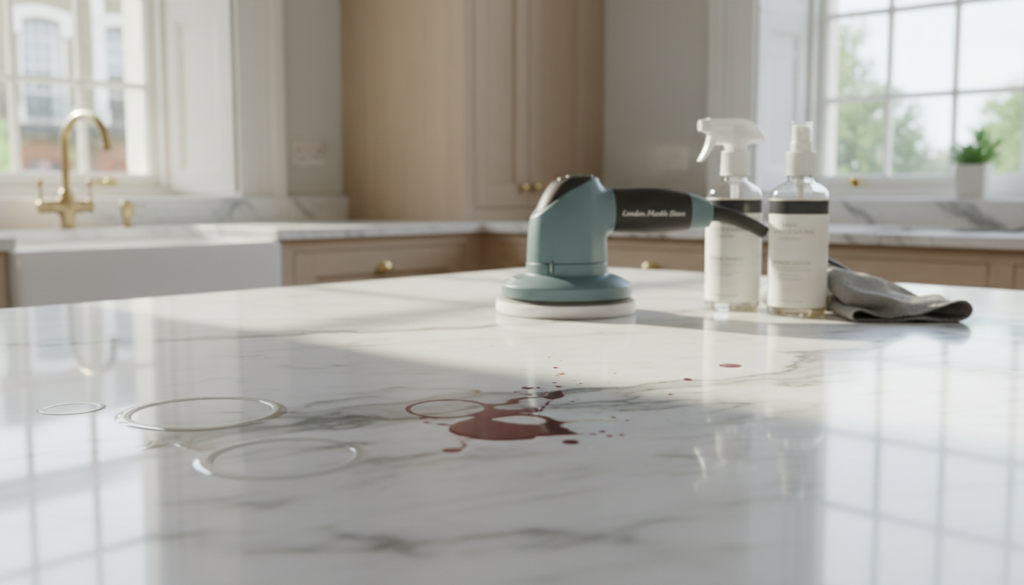
Coffee and tea often leave rings on light marble countertops and tiled splash zones. These are common where hot drinks sit directly on stone.
Red wine and food colouring penetrate quickly. Rapid professional action reduces absorption and prevents long-term discolouration.
Oily marks near cooking areas darken over time. They frequently need deeper cleaning and a specialist restoration step.
Rust from metal legs, taps or minor leaks causes orange-brown staining. Specialists use products suited to iron deposits rather than generic descalers.
Bathrooms often show cloudy water marks and etching from toiletries. Descaling and careful polishing restore clarity without harming the finish.
| Stain type | Typical location | Specialist focus |
|---|---|---|
| Coffee / Tea | Worktops, splash tiles | Targeted cleaning and poultice |
| Red wine / Food dye | Kitchens, hospitality areas | Rapid extraction and sealing |
| Oil / Grease | Hobs, prep zones | Deep degreasing and restoration |
| Rust | Bathroom fittings, furniture legs | Iron-specific treatment |
| Water marks / Limescale | Bathrooms, floors | Descaling, light polishing |
Note: The same skill set applies across other materials such as granite, limestone, travertine and terrazzo. A professional service blends cleaning with restoration to protect floors, tiles and work areas.
Small spills and routine use create entry points that let liquids travel into stone. Marble is naturally porous, so pigments and oils can migrate if left for any length of time, especially on lighter colours.
Tiny scratches and general wear open pathways on the surface. These micro‑scratches make the finish look dull and let contaminants sit below the top layer.
Over months and years, normal maintenance can’t fully prevent this without targeted restoration.
Acidic products etch delicate stone and weaken the top layer. This kind of damage changes how light reflects and can mimic a deeper mark.
Time is a key factor: even clear liquids may penetrate if not blotted quickly. Unsealed or worn areas absorb more, so a quick clean may no longer be enough.
Distinguishing topical marks from absorbed discolouration guides the right course of action. A clear assessment avoids unnecessary work and protects the existing finish.
Technicians inspect colour change, sheen and porosity. They test tiny, discreet areas and review previous maintenance records.
Surface marks often lift with controlled cleaning. Absorbed marks need staged treatment to extract contaminants safely.
Incorrect chemistry can react with the stone and change the finish. Abrasive scrubs or strong acids may spread the mark or etch the surface.
DIY attempts sometimes push residues deeper or create a halo effect. That makes later professional restoration more complex and costly.
When etching, dull areas, chips or worn traffic lanes appear, simple removal is not enough. Specialists move to honing, polishing and targeted repair to restore uniform results.
| Issue | Indicator | Typical professional work |
|---|---|---|
| Surface (topical) | Visible on finish, unchanged depth | Controlled cleaning, poultice, reseal |
| Deep (absorbed) | Colour persists after cleaning | Staged poultice, extraction, sealing |
| Structural damage | Etching, dull areas, chips | Honing, polishing, repair and full restoration |
Technicians combine targeted chemistry and mechanical work to protect delicate surfaces. They choose each step to avoid over-processing and to deliver consistent results across floors, tiles and worktops.
Cleaning products are matched to the contaminant: tannin, oil-based or oxidised marks each need different chemistry. This reduces the risk of altering the surface finish.
Poultices are applied with managed dwell times and containment. They draw out deep deposits without aggressive abrasion or harmful chemicals.
Where etching or deeper wear exists, technicians use honing and, if needed, light grinding. Polishing then restores clarity and a uniform colour across the stone.
Diamond pad systems remove fine marks and light scratches consistently before sealing. Work is dust-controlled and mess-minimising so occupied properties remain usable.
| Method | Purpose | Benefit |
|---|---|---|
| Targeted cleaning | Specific chemistry for different contaminants | Protects finish and reduces over‑processing |
| Poultice treatment | Extracts absorbed deposits | Safe deep extraction with controlled dwell time |
| Honing & polishing | Remove etch and restore clarity | Uniform colour and improved appearance |
| Diamond pad system | Remove fine marks and scratches | Consistent surface prep for sealing |
After extraction and cleaning, the final refinishing stage defines how the stone will catch light and wear.
Polishing is the step that turns a clean patch into a consistent surface. Skilled teams use graded pads to control gloss and remove fine scratches. This stage often completes a successful marble restoration by delivering even reflectivity and a renewed look.
Polished gives a high-gloss, mirror-like finish that highlights colour and pattern. Honed is matte and hides wear. Satin sits between the two with a soft sheen for modern schemes.
Technicians blend repaired zones into surrounding surfaces by matching colour, texture and reflectivity. They refine edges, adjust pad sequence and test in different light angles.
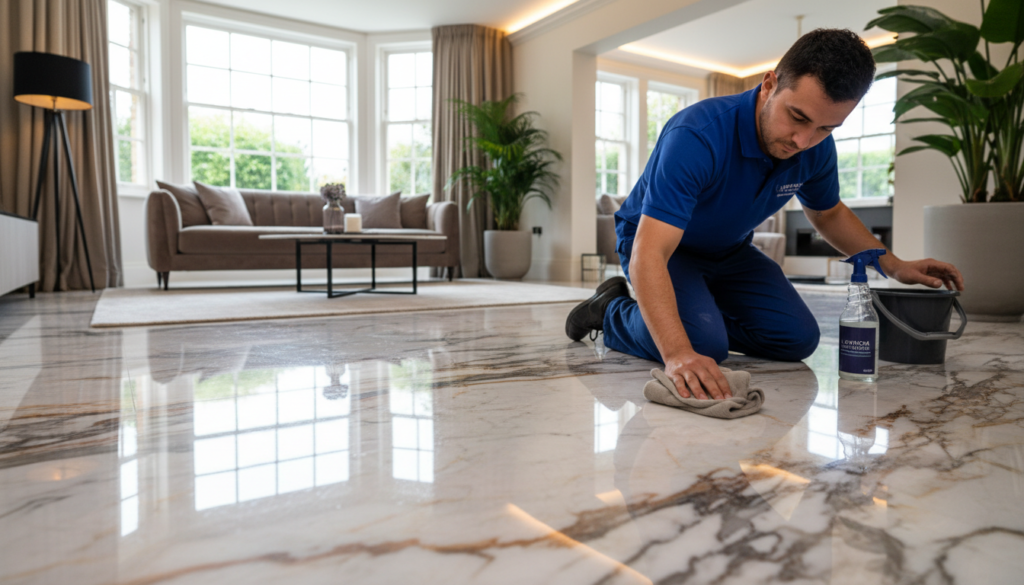
High-traffic hallways and living areas often show uneven colour where wear concentrates along walking lines. Professionals treat flooring sections room‑by‑room to limit disruption and protect skirtings and thresholds.
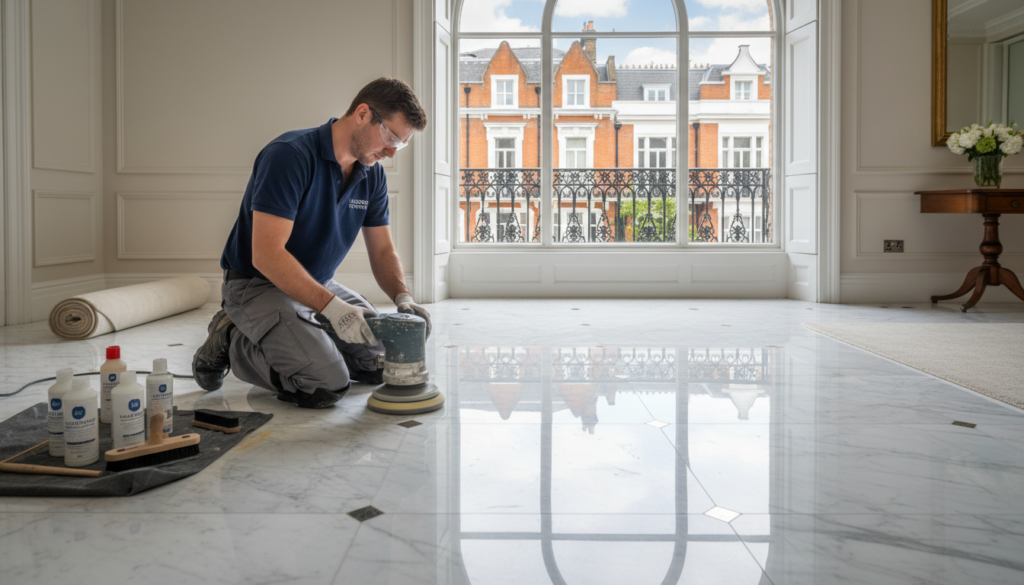
Floor projects target ingrained dirt and localised marks with gentle cleaning, honing and polishing. Dust-controlled methods keep occupied homes and business reception areas usable during work.
Tiles in kitchens and shower areas collect grime at grout edges and splash zones. Technicians use specific cleaning products and poultices to lift deposits without harsh chemicals.
Bathrooms need descaling, light polishing and resealing to restore vanities, wall tiles and shower surrounds. This restores an even look while protecting the surface from repeat water damage.
Worktops and countertops are treated with controlled chemistry and mechanical care to avoid etching or discolouration. The chosen method depends on finish, surface type and severity of the mark.
A correctly applied impregnating sealer slows liquid absorption and makes routine cleaning far easier. It leaves treated surfaces less likely to draw in spills, giving occupants more time to wipe messes away before they penetrate.
Impregnating sealers sit below the top layer and form a microscopic barrier. This reduces the stone’s ability to absorb oils and liquids so most accidents remain on the surface.
What sealing does and does not do:
Reseal frequency depends on use. Busy kitchens, bathrooms and high footfall sites need resealing more often than occasional domestic areas.
Professionals advise a tailored maintenance schedule for residential commercial clients. This aligns resealing with cleaning, polishing and any minor repair work to deliver consistent results.
Use pH‑neutral cleaners and avoid acidic bathroom products. Wipe spills quickly, use coasters and chopping boards and follow any care notes from the provider.
Regular light cleaning and planned maintenance work extend protection and save time by reducing the need for heavy restoration. Book a periodic service to protect the investment and maintain the finish.
A trusted team brings consistent technique and clear guarantees that protect high-value stone finishes.
London Marble Stone offers focused marble restoration and stone restoration services. Trained experts use diamond-pad resurfacing, controlled poultices and impregnating sealers to protect the finish.
They work in homes, hotels and offices with minimal disruption. Insured teams with 25+ years experience schedule around occupied sites and deliver safe, dust-controlled work.
Consultation-led processes move from assessment → plan → execution → inspection. The aim is even, consistent results across the whole area, not isolated patches.
| Credential | Benefit | Note |
|---|---|---|
| Qualified craftspersons | Guaranteed outcomes | Insured work |
| 25+ years | Proven methods | Consultation-led |
| Diamond-pad & sealing | Longer protection | Minimal disruption |
London Marble Stone provides marble stain removal and marble polishing services across London with free quotes. Facilities managers, landlords and homeowners should request a quote to book an assessment and protect high-value finishes.
, Skilled teams match methods to each mark so results stay consistent across rooms and surfaces.
Common issues such as coffee, wine, oil, rust and water marks are treatable with targeted cleaning, poulticing, honing and sealing. Correct assessment saves time and improves final results by distinguishing surface marks from deeper, absorbed discolouration.
London Marble Stone covers floors, tiles, bathrooms and worktops with a full range of professional services. Polishing and careful marble restoration are often the finishing steps that return the stone’s beauty and uniform sheen.
Sealing then protects the surface, making day‑to‑day care easier and reducing repeat blemishes. The same restoration principles apply to granite, limestone, travertine and terrazzo in mixed‑material areas.
For lasting quality and clear results, request a free quote from London Marble Stone to book a tailored service and protect natural stone long‑term.
They treat a wide range of surfaces including polished and honed countertops, floor tiles, bathroom surrounds, stairs and terrazzo. The team works on limestone, travertine and granite as well as marble, providing cleaning, repair, polishing and protective sealing for both domestic and commercial properties.
Porosity and everyday wear make stone vulnerable. Spills, oils, acidic cleaners and hard water can penetrate micro-scratches or unsealed areas, causing absorbed marks, etching and dulling. High-traffic zones such as kitchens, bathrooms and hospitality spaces see more contact and so develop visible staining faster.
Safe removal uses pH-neutral products, controlled poultices and methods matched to the stone type to avoid further damage. Technicians assess the finish and choose non-abrasive techniques where possible, protecting colour, veining and the overall integrity of the surface before any restoration steps like honing or polishing.
Many topical and some absorbed marks respond well to targeted treatments. Coffee, tea, red wine and oil often lift with specialist cleaning agents or poultices. Deeper or older stains may require more extensive work such as micro-abrasion, colour blending or full restoration to achieve the best possible match.
Rust needs specific chelating agents applied safely to avoid etching, while limescale and hard-water marks are removed with controlled descaling and mechanical polishing when required. The priority is to remove the contaminant without harming the surrounding finish, followed by sealing to reduce recurrence.
Surface stains sit on the finish and often respond to routine cleaning. Absorbed stains penetrate the pore structure and require poulticing, solvent extraction or professional restoration. Technicians perform simple tests and visual inspection to determine depth and recommend the appropriate course of action.
Many DIY products contain acids or harsh abrasives that can etch or discolour delicate surfaces, making stains worse or permanent. It is safer to consult a specialist who can recommend pH-safe cleaners or provide professional treatment that protects the finish and avoids long-term damage.
If stains have caused etching, colour loss, deep absorption or if prior repairs are visible, the work may progress to restoration. That can include honing, grinding and polishing to restore uniformity, followed by sealing and colour blending to match the surrounding stone.
Technicians use targeted cleaning products, controlled poultice-style treatments, dust-controlled diamond pad systems and low-abrasion polishing. These methods remove contaminants while preserving the finish and reducing mess, which is vital for occupied homes and commercial sites.
Skilled operatives blend repaired sections using matching abrasives and polishing levels. For best results they recreate the existing finish—polished, honed or satin—and apply sealing to achieve consistent colour and sheen across the entire surface.
Yes. Modern techniques favour mechanical action, poultices and specialist low-impact products. These approaches effectively remove contaminants from floors, kitchen worktops, bathroom tiles and splashbacks without relying on aggressive chemical cleaners.
Timings depend on the area size and the severity of damage. Many jobs complete within a few hours to a day. Dust-controlled equipment and mess-minimising practices help keep disruption to a minimum, with clearer scheduling for larger restoration projects in commercial settings.
Sealing with an impregnating sealer is recommended to reduce future absorption and staining. The team advises when to reseal based on traffic levels; high-use areas in commercial properties often need more frequent re-application than residential surfaces.
Simple care measures include using pH-neutral cleaners, wiping spills quickly, avoiding acidic substances and using mats or trays near prep zones. Regular light cleaning and prompt attention to spills significantly extend the effectiveness of the protective sealer.
Yes. The specialists provide tailored solutions for residential and commercial clients across the capital, offering cleaning, polishing, stain extraction and full stone restoration with years of experience in diverse properties and flooring types.
Clients can arrange an on-site inspection or send photographs for an initial evaluation. A detailed quotation follows, outlining recommended treatments, expected timeframes and protection measures to ensure transparent, quality-focused results.