Marble scratch removal is a controlled restoration process that does more than mask defects. Specialists assess the stone, then use diamond abrasive stages to refine the surface, hone shallow marks and return a consistent finish.
Busy homes and businesses often suffer from dullness, light abrasions and more serious gouges. London Marble Stone provides a specialist service for properties across the capital, focused on measurable improvement in appearance and finish.
The practical approach combines assessment, levelling, polishing and sealing. This method works on floors, tiles, stairs and worktops, and it adapts to site conditions and the original finish.
Clients should expect honest outcomes: many light marks vanish, deeper damage is levelled and improved rather than promised perfect renewal. Restoration frequently avoids full replacement, saves money and reduces disruption.
Next step: request a free quote for repair and polishing from London Marble Stone to check likely results for your property.
High footfall and dragged furniture make surface marks a common issue across flats, houses and commercial entrances. Grit from pavements and routine cleaning with unsuitable products accelerates wear. London Marble Stone sees this on hotel lobbies, entrance hallways, corridors, steps and stairs throughout Greater and Central London.
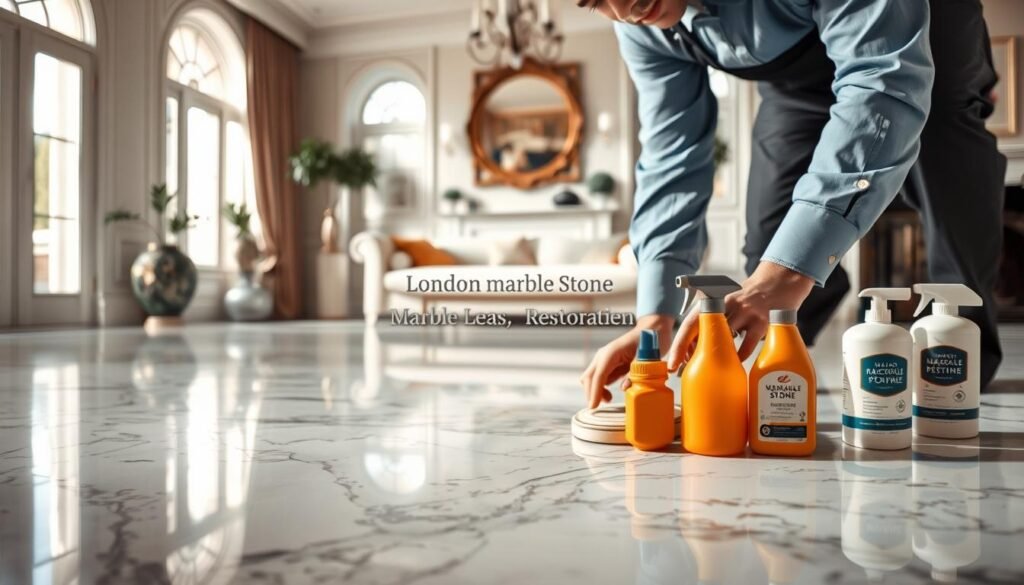
Compact circulation in apartments and busy hallways in homes concentrate traffic. Commercial lobbies were built to impress but face daily abrasion from shoes and trolleys.
Not all surface problems are the same. Scratch-related dullness differs from etching caused by acidic spills and from uneven wear. A professional assessment identifies the exact issue before work begins.
| Option | Typical disruption | Cost factors |
|---|---|---|
| Restoration (polishing & repair) | Low to medium — done on site | Labour, diamond pads, sealing; often cheaper |
| Replacement | High — removal, disposal, re-fit | New stone cost, matching, installation |
| When to choose | Surface damage, structurally sound | When only top layer is affected |
For many homes and businesses, restoration saves time and expense compared with full replacement. London Marble Stone schedules work to suit live environments and reduces downtime. Expected results depend on damage depth, which professionals evaluate before recommending the best course of action. Learn more about polished stone history here.
Differing damage types produce distinct outcomes, so assessment matters before any work begins. A clear appraisal shows whether full restoration is achievable or if improvement is the realistic goal.
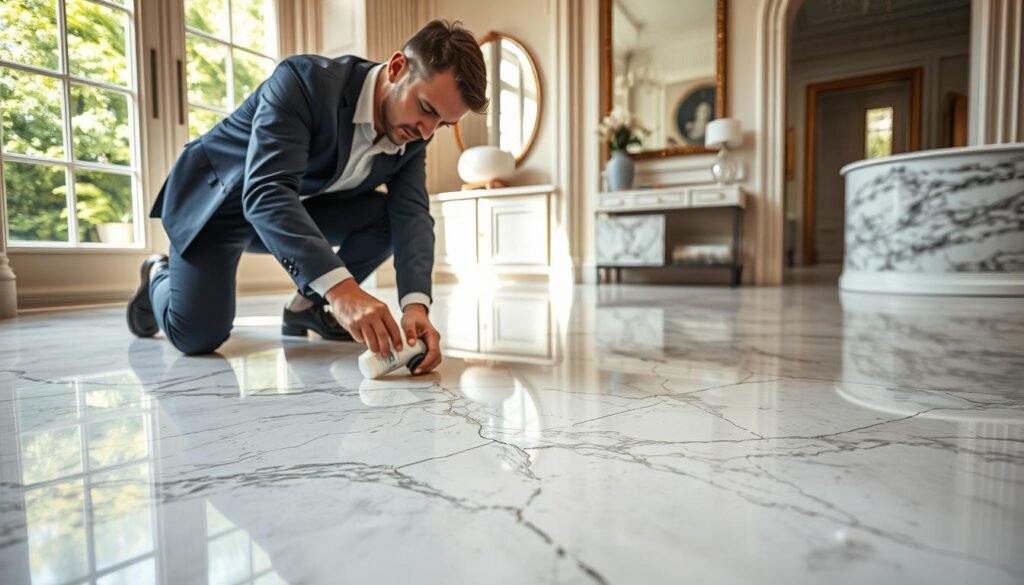
Light surface marks are fine lines that catch light but do not change the level of the stone. These usually respond very well to professional honing and polishing.
Expected results: a more uniform sheen, improved reflectivity and a surface that looks cleaner under both natural and artificial light.
Deeper damage requires controlled abrasion to level the surrounding area. Technicians balance material removal with preserving edges, grout lines and profiles.
Very deep gouges may not vanish completely without excessive removal. In such cases, the aim is to reduce visibility and achieve a consistent finish across adjacent surfaces.
Dullness is a loss of shine caused by footfall and routine wear. Polishing and sealing can restore reflectivity and make maintenance easier.
Functional benefits: a restored floor or worktop will look better, feel smoother and resist stains and cracks more effectively after professional repairs and polishing.
Simple rule of thumb: if damage is limited to the top layer, full removal is often achievable. If it reaches beyond the workable layer or affects structure, substantial improvement is a practical and valuable outcome.
A precise survey sets the stage: technicians identify marks, etching, stains and weak points that affect the planned work. This assessment decides which machines, pad grades and cleaning products suit the surface.
Protection and dust control are put in place. Surrounding finishes are masked and safe walkways are set up. Teams choose the machine and diamond pad system appropriate to the stone type.
Skilled operators use diamond abrasives in controlled, progressive steps. This staged approach refines the surface, removes visible marks and reduces deeper lines without over-grinding.
Honing removes coarse abrasion patterns and rebuilds a smooth base. Polishing then restores the chosen sheen level so reflectivity is uniform across the area, not just spot-lit.
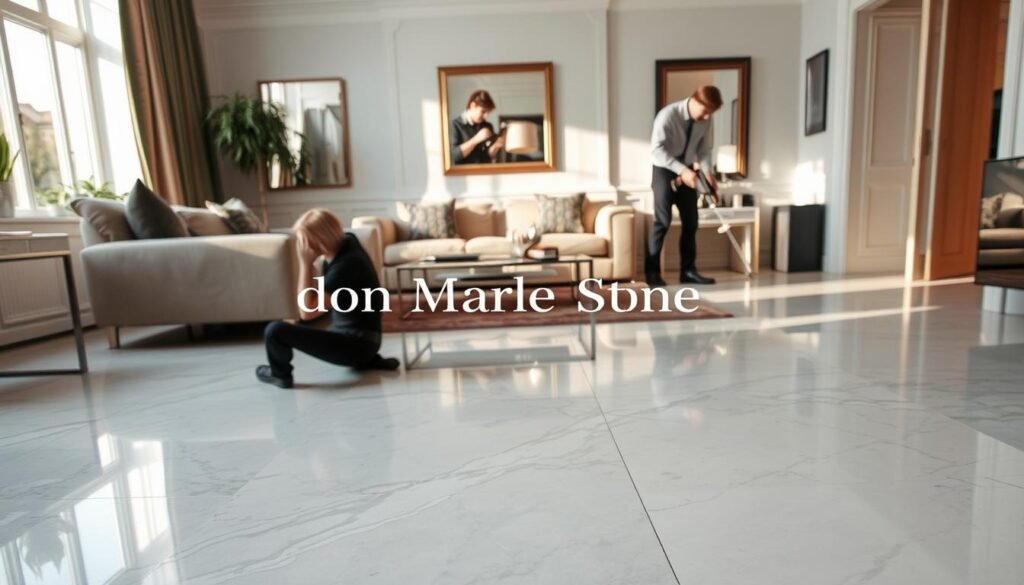
Finally, a sealer or impregnator supports ongoing cleaning and helps prevent future staining. Reputable teams work quickly and with minimal disruption, holding insurance and quality accreditations to ensure predictable restoration results.
Where traffic concentrates, technicians focus on blending worn lanes with surrounding areas for a cohesive look.
Floor and high-traffic flooring services restore consistency across entire rooms, corridors and open-plan living areas. Teams treat traffic lanes and thresholds where wear is worst, working to blend the finish so there are no visible repair zones. This approach protects the overall appearance and extends the life of the floor.
Tile restoration in kitchens and bathrooms targets dullness from cleaning products, water marks and general wear. Technicians use controlled polishing and sealers, avoiding harsh chemicals that can etch sensitive stone or damage grout. The result is restored surface beauty and safer cleaning routines.
Stairs and entrances face heavy use and grit. Resurfacing and polishing improve both appearance and durability. Teams pay special attention to treads, nosing and thresholds to maintain profiles and slip resistance in busy areas.
Worktop work is careful and controlled, preserving edges, cut-outs and profiles. Restoration suits food-prep spaces by improving finish and hygiene while keeping the surface intact for daily use.
Natural stone services often cover granite and terrazzo too, making a single provider ideal for mixed-material interiors and commercial fit-outs. Many teams offer coordinated services across floors, tiles, stairs and worktops to deliver a uniform finish throughout a property.
| Surface | Common issues | Professional approach |
|---|---|---|
| Floor / flooring | Wear lanes, dullness, light marks | Progressive polishing, lane blending, sealing |
| Tiles (kitchen & bathroom) | Etching from cleaners, water marks, grout wear | Gentle abrasive stages, non-acidic cleaners, resealing |
| Stairs & entrances | Grit abrasion, edge wear, slip concerns | Resurfacing, edge protection, anti-slip finishing |
| Worktops / countertops | Light scratches, dull finish, hygienic needs | Controlled polishing, profile protection, hygienic seal |
| Other natural stone | Granite & terrazzo wear | Matched polishing systems and tailored sealers |
Attempting a quick fix at home can make surface problems far worse than the original mark. Many household cleaners react with calcium-based natural stone and cause etching that shows as dull patches or rings.
Acidic or abrasive cleaners can remove the top layer and leave a patchy finish. This often looks worse under direct light and may be permanent.
Well-meaning repairs using abrasive pads or kits create uneven sheen, swirl marks and over-polished spots. Home treatments can enlarge the original defect and complicate future care.
Experts use specialist machines that keep steady pressure and speed. Technicians select the correct abrasive progression for the exact surface condition, delivering consistent quality results.
Professional restoration strengthens the finish, reduces ongoing maintenance and makes routine cleaning simpler. A planned, repeatable process saves time and avoids repeat costs compared with trial-and-error DIY work.
Clients across Greater and Central areas rely on scheduled, low-disruption restoration and polishing visits. The team offers a clear, professional service for homes and commercial properties alike.
London Marble Stone works in apartments, private homes, offices, retail and hospitality buildings across Greater and Central areas. Visits are planned to suit access and building rules.
Experienced specialists use professional machines and quality-assured techniques. Many operatives have 15–25+ years of experience, so customers see consistent results across floors, stairs and worktops.
Customers get agreed timescales, tidy working routines and a managed process suited to occupied sites. The restored finish often lifts ambient light and reduces cleaning time.
Free quotes are available for repair, polishing and restoration work. Requesting a quote is the quickest way to confirm what level of improvement is achievable and the expected time and cost.
| Offering | Typical clients | Benefits |
|---|---|---|
| On-site restoration & polishing | Homes, flats, offices, hotels | Low disruption, consistent finish, improved reflectivity |
| Planned commercial work | Retail, reception areas, luxury buildings | Efficient scheduling, dust control, profile protection |
| Free written quote | New enquiries and repeat customers | Clear timescales, tailored recommendations, cost estimate |
Skilled technicians restore sheen and uniformity, improving both appearance and ease of cleaning for long-term use.
Professional marble and stone work uses staged restoration with diamond abrasives and careful sealing. This approach treats light marks and hones out heavier defects while preserving profiles.
Polishing is more than shine; it creates a consistent surface that is simpler to maintain. Many marks vanish; deeper damage is levelled and markedly improved rather than guaranteed totally removed.
The company covers floors, tiles, stairs and worktops and can also manage granite and terrazzo within the same plan. DIY attempts often worsen damage and add cost.
London Marble Stone offers a prompt, insured service for repair, polishing and restoration. Request a free quote to confirm condition, recommended work and likely results.
They restore natural stone surfaces such as marble, granite and terrazzo. Typical work covers floors, tiles, stairs and worktops in both residential and commercial properties. Technicians match techniques to the stone to avoid etching and ensure durable results.
A trained assessor inspects the damage, looking at scratch depth, cracks, stains and overall wear. If the structure is sound, restoration using grinding, honing and polishing is usually the cost-effective choice. Replacement is only recommended for severe cracking or when slabs are irreparably damaged.
Light surface marks and dulling from foot traffic are often removed or greatly improved. Diamond polishing pads and staged honing restore clarity and shine without removing significant stone thickness, delivering a consistent finish on most lightly damaged areas.
Deep scratches and shallow gouges can usually be levelled through careful grinding and resin filling, then honed and polished to blend with the surrounding surface. Complete invisibility depends on stone veining and colour; technicians aim for the best aesthetic and structural outcome.
Professionals prepare the site to protect adjacent surfaces and fittings. Dust-control measures and controlled polishing stages minimise disruption, making it suitable for occupied homes and commercial sites where tidy working practices matter.
Timescales vary with surface area and damage: small worktops may take a few hours, while extensive flooring or staircase projects can take one to several days. Clients receive clear time estimates during the free quote so they can plan accordingly.
Yes. Trained technicians use stone-safe cleaners, resins and sealants designed for food-prep surfaces. They avoid harsh acids and abrasive DIY products that cause etching or dull patches, ensuring the finish is safe for daily use after curing.
A professional finish can last years with correct care. Regular gentle cleaning with a pH-neutral stone cleaner, prompt stain removal and periodic resealing in high-traffic areas will preserve appearance and reduce long-term maintenance costs.
Yes. Assessments identify etching and stains alongside scratches. Technicians use targeted cleaning, poultices and polishing to tackle stains, integrating those steps into the overall restoration plan where possible.
Restoration primarily focuses on appearance and surface integrity. Where required, technicians can apply specialist treatments that increase slip resistance while maintaining the stone’s aesthetic, especially on stairs and entrances.
Reputable firms provide workmanship guarantees and outline recommended aftercare. They use proven equipment, trained staff and reputable sealants to deliver consistent results, and they offer follow-up advice to maintain the finish.
Pricing depends on stone type, area size, damage severity and access. Most reputable providers offer a free on-site quote that details timescales, methods and costs so clients can compare value and quality before committing.
For minor worktops or a few tiles, same-day repairs and polishing are often achievable. Larger or heavily damaged jobs usually need scheduled appointments to allow for grinding, drying and curing between stages.
Clients should clear the workspace of loose items and remove personal effects. Avoid using DIY cleaners or abrasive pads that can worsen damage; technicians prefer to assess untreated areas to plan the best restoration route.
Yes. Experienced specialists typically cover central and Greater London, offering residential and commercial services. They focus on trusted workmanship, efficient scheduling and minimal disruption across a wide range of areas.