
Homeowners in London often face the issue of damaged stone surfaces. Knowing the cost of professional repair services is key to protecting their investments.
This comprehensive guide covers everything from small chip fixes to big restoration jobs. It applies to homes and businesses alike. Whether it’s in kitchens, bathrooms, floors, or architectural details, expert care keeps them looking good and lasting long.
The cost of repairs in London varies a lot. Old buildings in Kensington and Chelsea need careful handling of original stones. New buildings in Canary Wharf might need different fixes.
Professional services vary a lot based on the damage, size of the surface, and the repair method chosen. This guide breaks it down, helping you understand what affects prices. It also shows how to pick the right expert for your needs.
In London, marble repair costs vary a lot. This is because of many factors like where you are, the type of marble, and the project’s details. Each job is different, so getting a good price needs a professional look first.
The cost of fixing marble in London changes a lot. Experts look at how bad the damage is, what kind of marble it is, and how easy it is to get to. This way, they can give a price that fits your needs, not just a general guess.
London’s different areas mean different prices for marble repair. Places like SW1, SW3, and W1 charge more because of higher costs and demand. This is because of things like rent, travel, and what people are willing to pay.
In fancy areas like Belgravia, Mayfair, and Hampstead, marble is often more expensive. This is because there are rare marbles and experts who know how to fix them. So, the price goes up for the skill and knowledge needed.

But, outer London areas might have lower prices. Specialists in places like Bromley, Enfield, or Havering have lower costs. Yet, it’s important to remember that the price doesn’t always mean the quality is better. Many skilled experts work all over London.
Travel costs also play a part in the price. A repair in East London might cost more if the expert has to travel to West London. This is more important for urgent repairs or when many visits are needed.
Getting a good quote for marble repair needs a detailed look at the damage first. Experts check the chips, cracks, or stains to suggest the right fix. This way, they fix the real problem, not just cover it up.
Matching the marble’s colour is a big challenge. Rare marbles like Calacatta or Statuario need special knowledge. Finding the right materials can be expensive, which means the price goes up.
How easy it is to get to the marble also affects the cost and time needed. Marble in hard-to-reach places needs more time and special tools. Some repairs can be done on-site, but others need to be taken to a workshop, changing the cost.
The method used for the repair also changes the price and how long it takes. Small scratches might just need polishing, but big cracks need more work. Experts decide the best way to fix it based on how bad the damage is.
| Cost Factor | Impact Level | Typical Price Influence | Consideration |
|---|---|---|---|
| Central London Location | High | 15-30% premium | Operational costs and market positioning |
| Rare Marble Variety | High | 20-40% increase | Specialist materials and colour matching |
| Access Complexity | Medium | 10-25% addition | Equipment requirements and labour time |
| Workshop Restoration | Medium-High | 30-50% higher | Removal, transport, and reinstallation |
| Project Urgency | Medium | 15-35% surcharge | Schedule disruption and expedited service |
Getting a clear price means talking openly with the repair experts. The cheapest quote might not always be the best value, specially for high-quality marble. Experts with deep knowledge and skills give better results, even if it costs more upfront.
Ask for a detailed quote that shows all costs, like assessment, materials, labour, and extra expenses. This way, you can make a choice based on what you know, not just the price. Understanding these factors helps you choose the best option.
Knowing the cost of marble restoration starts with understanding three main price categories in London. The cost reflects the damage’s complexity and the specialist’s skill needed for seamless results. It’s helpful for property owners to know which category their issue falls into before getting quotes.
Marble repair services are divided into small, medium, and large projects. Each category has different damage types, labour needs, and materials. This helps homeowners plan their budgets and make informed decisions.

Minor marble damage is the most affordable to fix. These jobs usually need only a small amount of work and can be done quickly.
Small repairs include fixing minor chips on worktop edges and removing small scratches on vanity surfaces. They also cover spot stain treatment and stabilising small cracks. These tasks require little material and can often be done in one visit.
The cost reflects about one to two hours of specialist time. This makes it a good option for homeowners with minor cosmetic issues.
More serious damage needs more time and skill. Medium repairs affect both looks and function on larger areas.
This range includes fixing multiple chips on a kitchen island or worktop. It also covers deeper crack repair and colour matching. Scratch removal that needs several polishing stages also falls here.
Specialists might replace big sections or do repair and polishing in bathrooms. These jobs take two to four hours and might need several visits for curing.
Big repairs cost more because they’re complex and take longer. They often deal with structural issues or widespread damage.
Replacing a full floor section is a common large project. Fixing structural cracks in load-bearing marble needs special skill. Extensive stain removal and edge restoration on damaged worktops also fall here.
These repairs can take days and need dedicated equipment. Specialists might need rare marble for invisible fixes. The expertise of master stone craftsmen with years of experience justifies the cost.
| Project Scale | Price Range | Typical Duration | Common Examples |
|---|---|---|---|
| Small Repairs | £80–£200 | 1–2 hours | Minor chips, small scratches, spot stains, simple cracks |
| Medium Projects | £200–£500 | 2–4 hours | Multiple chips, deeper cracks, comprehensive scratch removal, section replacement |
| Large-Scale Work | £500+ | Several days | Floor sections, structural cracks, extensive stain removal, complete edge restoration |
Understanding these categories helps homeowners evaluate quotes better. The cost reflects the technical demands and materials needed for each project. Homeowners should think about both the upfront cost and the long-term benefits of professional restoration.
Marble damage comes in many forms, each needing special care. In London, there are many repair services for marble surfaces. Experts use different methods for each type of damage.
Stone repair services in London sort treatments by damage type and how hard they are to fix. Each fix needs special skills, materials, and tools for the best results. Knowing these categories helps owners get the right service and price.
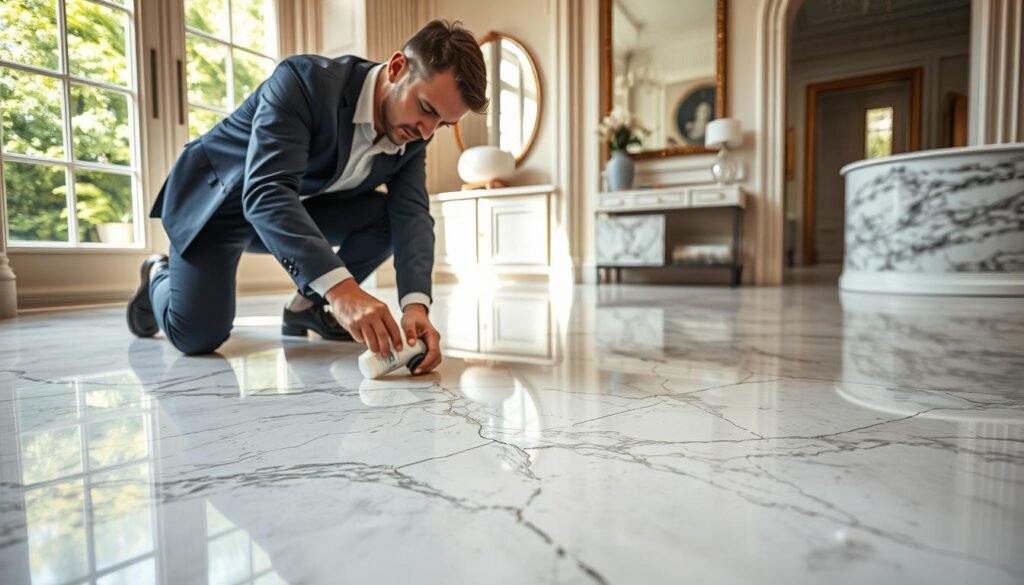
Chips are common on marble, often seen on edges and floors. Marble chip repair london experts use special resins or fillers to fix these. They match the stone’s colour and pattern perfectly.
They study the marble’s look and structure before choosing materials. They mix custom blends to match the stone’s appearance. The area is then polished to shine like the rest.
Fixing chips makes the marble look and feel good as new. The repairs last through daily use and cleaning. This saves money by not having to replace the whole section.
Cracks are serious and can mean the marble is damaged. Marble crack repair london experts use special methods for each crack. They check the crack’s size and where it is before starting.
They use different methods for cracks:
They clean the crack, prepare it, and apply the chosen material carefully. Then, they polish the area to match the rest of the marble.
Scratches can be light or deep, affecting the marble’s finish. Marble scratch repair london services use different methods for each scratch. Light scratches need buffing, while deep ones need grinding and polishing.
They use diamond abrasives to remove the scratch. They start with coarse grits, then move to finer ones. This makes the marble shine like new.
They use special tools and know-how to avoid more damage. The marble looks and feels like new again.
Marble can stain from many things, like acids and oils. Stone repair experts use special methods to remove stains. They need to know what caused the stain.
They use poultice applications to draw out stains. These pastes absorb the stain. They leave it on for a while, then clean it off.
They also use chemicals for tough stains. They choose cleaners that won’t harm the marble. After removing the stain, they apply sealers to protect the marble.
Edges on marble surfaces can be tricky to fix. Edge repair fixes chips and worn areas. It needs careful work to match the original.
Experts use profile rebuilding techniques with epoxy. They make moulds from good parts, then build up the damaged area. The bond is strong and permanent.
Polishing the edge is the last step. They use special tools to make it smooth and even. The repair looks and feels like new.
Many things affect the cost of marble repair in London. Knowing these can help homeowners budget better. Each repair job is different, affecting the materials and time needed.
Experts look at technical, material, and logistical factors when pricing repairs. This ensures quotes accurately reflect the job’s complexity. Here are the main factors that influence what homeowners pay for marble restoration.
The extent of damage greatly affects repair costs. A small surface chip measuring 2cm is easier to fix than a large crack. Experts check if damage goes deep into the marble.
More damage areas mean more work and cost. A countertop with many chips takes longer to fix than one with just one. They also check if repairs need to shape edges or add support.
Damage location affects repair work. Edges and corners are harder to fix than the middle. Different types of damage, like hairline cracks or deep scratches, also change costs.
The type of marble greatly influences repair costs. Common Carrara marble repairs are cheaper than rare ones like Calacatta Gold. Exotic marbles need precise colour matching, making repairs more complex and expensive.
Some marbles are harder to restore than others. Porous marbles need extra sealing, and marbles with unique patterns require careful alignment. This increases complexity and cost.
Finding matching materials for repairs varies by marble type. Common marbles are easy to find, while rare ones may need custom colours or imports. This adds time and cost to the project.
Where in London you are affects repair costs. Central London repairs may include congestion charge costs. Properties in areas with parking restrictions may face extra fees.
Areas with more high-end properties have more competition. This can keep prices down despite higher costs. Outer London may have higher travel costs but lower base rates.
Travel distance from the repair team’s base is important. Companies in North London may charge more for South London jobs. Local specialists often offer the best deals.
Access to the property is a big factor in repair costs. Apartment properties on upper floors without lift access are harder to work on. This can add 20-40% to the cost.
Narrow staircases and small workspaces make repairs harder. Properties with no vehicle access mean carrying heavy equipment far. This increases labour costs and project time.
Working in homes with people inside requires extra care. Specialists must protect areas, furniture, and floors from dust. This limits when noisy work can be done, adding to costs.
| Pricing Factor | Low Impact | Medium Impact | High Impact |
|---|---|---|---|
| Damage Severity | Single minor chip | Multiple scratches | Network of deep cracks |
| Marble Type | Common Carrara | Mid-range varieties | Rare Calacatta Gold |
| London Location | Outer boroughs | Inner London areas | Central Zone 1 postcodes |
| Access Difficulty | Ground floor, easy parking | Second floor with lift | Fourth floor without lift |
The distance to the work area from parking affects setup time. Easy access saves time. But, navigating security, lifts, or corridors adds to the cost.
Knowing the difference between polishing and repairing marble is key in London. These services solve different problems and give different results. Homeowners who know the difference save money by choosing the right treatment.
Many think a polish can fix all marble issues. But polishing only fixes surface problems. Repair fixes deep damage that harms the marble’s structure.
Marble polishing is a cosmetic refinishing process that makes surfaces shine. Technicians use diamond pads to remove dullness and small flaws. This process reveals fresh, unblemished marble.
Polishing has several stages. First, scratches and etching marks are removed. Then, finer abrasives make the surface smooth.
The last stage uses diamond compounds or treatments. These enhance the marble’s colour and shine. The result is a glossy, mirror-like finish that shows the stone’s beauty.
Polishing costs between £15 and £40 per square metre in London. The price varies based on the marble’s state and the finish desired. Worn surfaces need more work, which costs more.
Marble repair fixes physical damage to the stone’s structure, not just looks. Experts fix chips, cracks, and stains that go deep. Polishing alone can’t fix these issues.
Repair work fills voids with colour-matched resins or epoxies. Technicians bond broken parts with special adhesives. Missing parts are rebuilt with fillers that match the marble.
Colour matching is a crucial skill for marble repair in London. The filler must blend with the marble. Poor colour matching can ruin the look.
Deep stains need special treatments to remove. These treatments draw out stains from the stone. Surface cleaning can’t reach deep stains.
After repairs, the area is polished to blend with the rest. This makes the repairs almost invisible.
Polishing and repair serve different purposes. Polishing is for maintenance and looks on intact surfaces. Repair fixes damaged marble that needs structural work.
Here are key differences to help choose the right service:
Many projects need both polishing and repair. Experts do repair first, then polish to blend repairs with the rest. This approach preserves the marble’s beauty and structure.
Trying to polish over damage often fails. It can make problems worse. Cracks spread, and chips become more noticeable.
Before choosing a treatment, get a professional’s opinion. Experts can tell if you need repair, polish, or both. This advice prevents wasting money on the wrong treatment.
Understanding these differences helps London homeowners make better choices. They can talk to contractors and set realistic goals. The right treatment at the right time keeps marble beautiful and strong for years.
Deciding if marble needs repair or just polishing is key. Some damage is too deep for polishing alone. This is when you need marble repair london experts.
Knowing the difference saves your marble and your money. Here’s how to tell if repair is needed.
Some signs mean your marble needs a pro to fix it, not just polish. Spotting these early can save you from bigger, more expensive problems.
Physical damage indicators include chips and cracks. Polishing can’t fix these. Cracks that go deep into the marble also need expert care.
These problems need marble repair london experts. Simple polishing won’t fix them.
Polishing has its limits. It can make surfaces shine and remove small scratches. But it can’t fix deeper problems.
Material loss is a big problem for polishing. Chips, cracks, and missing marble can’t be fixed by polishing alone. You need special repair techniques for these.
Polishing can’t fix:
Trying to polish damaged marble can make things worse. It can spread stains and make damage more obvious.
Professional marble repair london services use the right techniques. This gives you lasting results, not just a quick fix.
Checking your marble carefully helps decide if it needs repair or polish. This involves looking closely and doing some tests.
Visual examination is the first step. Look at the marble under good light from different angles. Check for chips, cracks, stains, and uneven areas. Take photos of any problems.
Next, do a tactile examination. Run your clean hands over the marble. Feel for any rough spots or temperature changes that might show deeper issues.
The water droplet test checks if the seal is working. Place small water drops on the marble. If they soak in within five minutes, the seal has failed. This might mean you need repair before resealing.
Get a pro if you’re unsure about the damage or what to do. This is true for:
Marble repair experts in marble repair london use special tools like moisture meters. They give you the right advice and treatment. This avoids making damage worse.
Keep a record of your findings. Note where and what the damage is. This helps contractors give you a good quote and plan.
Getting accurate marble repair quotes in London requires careful preparation and evaluating contractors. The quote process is crucial as it sets the financial and time frames for the project. It also determines the quality of the repair work.
Understanding the marble repair cost london landscape helps avoid common mistakes. These include accepting vague estimates or choosing based on price alone. A structured approach ensures the chosen specialist meets project needs while offering value.
Before a specialist visits, proper preparation is key. Start by cleaning the damaged area to show the full extent of the damage. Dust and debris can hide the true extent of cracks and stains, leading to higher costs later.
Take photographs from different angles and in good light. These images help specialists give accurate estimates. They should show both close-up details and the marble’s location in the property.
Measuring the affected area is also important. Note the size of the damage, the number of areas affected, and the total square footage. This information helps specialists estimate the materials and time needed.
Knowing when the damage happened helps specialists understand the situation better. Recent damage might need different treatment than older issues. Also, mentioning any previous repairs helps specialists avoid complications.
Clearing access to damaged areas before the visit shows professionalism. It also allows for a thorough examination. This preparation can save time and reduce the need for multiple visits.
Asking the right questions helps separate experienced marble specialists from general contractors. Ask about the specific repair method they plan to use. They should explain why they choose certain techniques for your marble.
Find out what materials they will use. Different materials work better with different marbles. They should specify the products and explain how they address the damage.
Ask how they will match the marble’s colour. Matching veining and tones requires skill. They should describe their colour-matching process.
These questions help determine if contractors have the right expertise. They also help compare quotes fairly, showing differences in quality and service.
Comparing quotes is more than just looking for the lowest price. Look at the repair methodology quality described. Better methods may cost more but last longer and look better.
Examine the materials specified. Premium products usually match colours better and last longer. Look for specific product brands, not just “professional materials.”
Consider the project timeline. Faster completion might be better for commercial properties. But, rushing can compromise quality.
Guarantees vary between contractors. Longer guarantees show more confidence in the repair. Find out what voids warranties and what the guarantees cover.
Check if the contractor has insurance. This protects you from liability during the work. Make sure they have current insurance certificates.
Experience with specific marble types is crucial. Contractors familiar with your marble type will do a better job. This reduces the risk of colour-matching errors.
Look for value-added services like post-repair sealing or maintenance advice. These services add to the overall package. They help keep the marble in good condition over time.
Choosing a specialist may cost more upfront but is often better value in the long run. Cheap repairs can fail, leading to more expensive fixes later. Investing in quality marble repair services is more cost-effective for your property.
Choosing between DIY and professional marble repair is a big decision. It affects how well the repair works and the value of your property. Homeowners need to think about the damage and their own skills before deciding.
How bad the damage is, where the marble is, and your skill level matter. Money is also a factor, but the cheapest option might not be the best in the long run. London homeowners should think about the cost now and the cost later.
Only a few times is DIY marble repair okay. These are when the damage is small and doesn’t hurt the stone’s structure. DIY works best when you don’t mind if it’s not perfect and the marble is not very important to look at.
Fixing small scratches with DIY can work. Using special marble polish on small areas can make light scratches less noticeable. But, you need to be patient and use the right products for marble.
London has many places where you can buy DIY marble repair products. These products come with instructions for non-professionals. But, even with the right products, the results can vary a lot.
Trying to fix marble without knowing what you’re doing can be very risky. The biggest worry is causing permanent damage with the wrong products or methods. Marble can get damaged by acidic things, and many household cleaners can etch it.
DIY repairs often make damage worse, not better. It’s hard to match marble’s colour and veining without a lot of experience. Professionals know how to do this.
Other risks include:
Fixing DIY mistakes can cost a lot more than getting a professional to do it in the first place. The pro has to fix the amateur’s work before they can fix the real problem. This makes getting a pro the cheaper option often.
Getting a pro for marble repair in London has many benefits. They have access to commercial-grade materials that are better than what you can buy. These materials last longer and work better.
Professionals know how to match colours, which is hard to do. They can blend repair compounds to match even the most complex marble patterns. This makes the repairs almost invisible.
Professional marble repair services offer:
In London’s competitive market, marble is very important for looks and value. Professional restoration keeps this investment safe by ensuring repairs are top-notch. This is very important for old properties with original marble.
Professionals also give advice on how to take care of marble to avoid damage. Their tips can be as valuable as the repair itself, making the marble last longer.
Finding a reliable marble repair specialist in London needs careful research. The city has many contractors, from skilled stone experts to general builders. Knowing how to spot genuine marble repair professionals is key to protecting your investment and marble surfaces.
Before choosing a contractor, consider several factors. Look for someone with the right skills, experience, insurance, and equipment. This ensures your marble is restored to its former glory and lasts long.
Professional qualifications are crucial in finding a qualified marble repair specialist. Being a member of the Stone Federation Great Britain shows a commitment to high standards. These organisations ensure members meet certain competency levels and follow codes of practice.
Specialist training in natural stone restoration is important. Look for professionals with formal qualifications or apprenticeships in stone masonry or conservation. Practical experience is also valuable, which is crucial for working with delicate marble in London’s premium properties.
Ask for evidence of previous marble work, not just general stone repairs. A contractor skilled in limestone or granite might not know how to work with marble. Seeing photos of similar repairs can give you confidence in their ability and quality.
Online reviews can tell you a lot about a contractor’s reliability and quality. Look on Google Reviews, Trustpilot, and Checkatrade for positive feedback. Focus on reviews that mention stone repair in London, not just general building work.
Good specialists will give you references from previous clients with similar projects. It’s important to talk to these references, not just get their names. Ask about communication, punctuality, cleanliness, the final result, and if they would hire the contractor again.
Before-and-after photos show a contractor’s skill and attention to detail. Look closely at these images for colour matching, surface finish, and how well the repair blends in. Be wary of contractors who can’t show you examples of their marble work.
Having comprehensive insurance is crucial for protecting yourself from potential financial loss. Public liability insurance should cover at least £5-10 million, reflecting London’s high property values. This is essential when working in valuable homes with expensive furnishings.
Professional indemnity insurance shows a contractor’s commitment to quality. It protects against claims due to professional negligence or poor workmanship. Contractors with both types of insurance usually have higher standards than those with minimal coverage.
Written guarantees on completed work offer important consumer protection. Make sure these guarantees specify what they cover, for how long, and any exclusions. A formal contract should detail the project scope, costs, timelines, payment schedules, and how to handle any issues after completion.
Professional marble repair specialists use specialised tools for natural stone work. Tools like variable-speed polishers and diamond abrasive systems show a serious commitment to the job. These tools allow for precise work that preserves the surrounding area while fixing the damage.
Colour-matching skills are key to seamless repairs. Professionals use high-quality repair resins, fillers, and pigments for a perfect match. This requires both the right materials and expertise in using them.
Knowing the right sealers and finishing products is important for marble’s long-term care. Reputable professionals recommend specific products for different marble types and applications. This knowledge adds value to the project, ensuring the marble remains protected over time.
| Qualification Factor | Professional Specialist | General Contractor | Why It Matters |
|---|---|---|---|
| Trade Body Membership | Stone Federation GB, heritage organisations | General building associations only | Ensures current knowledge of stone-specific techniques and standards |
| Insurance Coverage | £5-10M public liability plus professional indemnity | Basic public liability (£1-2M) | Protects high-value London properties and provides recourse options |
| Specialist Equipment | Variable-speed polishers, diamond systems, dust extraction | General power tools and basic abrasives | Enables precision work without damage to surrounding areas |
| Material Knowledge | Marble-specific resins, colour-matching systems, appropriate sealers | Generic fillers and all-purpose products | Ensures invisible repairs and long-term durability |
The quality of marble repair depends on choosing the right specialist. Spending time researching contractors leads to better results, professional protection, and lasting marble restoration. This maintains your property’s value and beauty.
Understanding the cost of marble repair in London is key. Prices range from £80 for small chips to over £500 for big repairs. Homeowners who know what to expect and do their research get better results than those just looking for the cheapest option.
Marble is a big investment in any London home. Professional repair keeps it looking good and its value high. Choosing experts based on their skills and experience, not just price, leads to lasting results.
Getting several detailed quotes and asking the right questions is smart. It’s important to know the difference between polishing and real repair for serious damage. This ensures the job is done right.
Quality marble repair adds long-term value to your property. Even though it might seem expensive at first, the skills and tools of experts make it worth it. They help keep your marble looking great for years.
Finding the right marble repair specialist takes time and effort. Look at their qualifications, insurance, past work, and what others say about them. This way, you’ll get results that keep your property beautiful.
Marble repair in London costs vary. Small jobs like chip filling or scratch removal cost £80 to £200. Medium projects, like multiple chip repairs, cost £200 to £500. Large repairs, such as extensive restoration, can cost £500 or more.
The final cost depends on the damage, marble type, and location. Accessibility of the area also plays a role.
Marble chip repair starts at £80 for small chips on edges or bathroom surfaces. For larger areas, costs range from £150 to £350. This depends on the number of chips, their size, and the marble type.
Marble crack repair costs vary. Simple crack stabilisation costs £100 to £200. More complex cracks, like those needing resin injection, cost £250 to £600.
Structural repairs can cost over £600. This is due to the need for specialist assessment and multiple treatment stages.
Scratch removal costs depend on the scratch’s depth and area. Light scratches cost £80 to £150. Deeper scratches cost £150 to £300.
Extensive damage can cost £300 to £600 or more. This includes comprehensive restoration and resealing.
DIY marble repair is okay for minor scratches or small chips. But, for visible damage or structural issues, hire a professional. They have the right skills and materials for invisible repairs.
Amateur repairs can make damage worse. This can lead to higher costs for professional fixes.
Several factors influence marble repair costs. Damage severity, marble type, and location in London are key. Accessibility and repair complexity also play a role.
Whether you need additional services like polishing and sealing affects the cost too.
Polishing enhances the surface shine and removes minor scratches. It’s for cosmetic maintenance. Repair, on the other hand, fixes structural damage like chips and cracks.
Polishing can’t fix chips or deep stains. Repair work needs polishing to blend seamlessly.
Marble needs repair for visible chips, cracks, or stains. Polishing is for dull surfaces or minor scratches. If unsure, get a professional assessment.
Small repairs take 1 to 2 hours. Medium projects take 2 to 4 hours. Large-scale repairs can take several days.
Look for qualifications, experience, and membership in Stone Federation Great Britain. Check for positive reviews and insurance. Ensure they offer guarantees and have a portfolio.
Choose someone who provides clear quotes and transparent pricing.
Yes, costs vary by location. Central London areas like Belgravia and Mayfair charge more. Outer areas have lower costs but higher travel charges.
Yes, most specialists offer mobile services. They bring equipment to your property for repairs. This is ideal for worktops and floors.
Some repairs may need removal and reinstallation, but specialists advise on the best approach.
Prepare the area by cleaning and taking photos. Measure the damage and document when it happened. Get quotes from at least three specialists.
Ask about their approach, materials, timeline, and guarantees. Compare quotes based on quality, experience, and value.
Specialists can repair most marble types, including rare ones. The cost depends on the type and complexity of the repair.
They have colour-matching systems and supplier relationships to handle all types of marble.
Home insurance may cover marble damage, depending on the cause. Accidental damage is usually covered, but not wear and tear. Check your policy and contact your insurer before repairs.
Professional repairs can last 10 to 20 years or more with proper care. The durability depends on the repair quality and maintenance.
Reputable specialists offer guarantees on their workmanship, covering material failure or degradation under normal use.
Repairing is more cost-effective than replacing. Small to medium repairs cost £80 to £500. Replacement costs £1,000 to £5,000+ for worktops and £100 to £300+ per square metre for floors.
Repair is preferred unless damage is extensive or structural integrity is compromised.
Deep stains can be treated by professionals. The success depends on the stain type and marble variety. Costs range from £100 to £400.
Some stains, like those in porous marble, may be difficult to remove completely. But, significant improvement is usually possible.
Yes, reputable specialists offer guarantees on their workmanship and materials. Guarantees last 1 to 5 years, depending on the repair type and policy.
They cover material failure, colour-match degradation, and bonding failures under normal use. Guarantees exclude damage from misuse or inappropriate cleaning.