Many property owners in London look for marble restoration price UK before hiring professionals. Knowing what affects prices helps them make better choices for their stone surfaces.
The cost to restore marble surfaces depends on a few things. These include the extent of damage, the area size, and the stone type. A floor with heavy stains needs more work than one that just needs polishing.
This guide gives detailed price information for 2026. It covers services in different London boroughs. Most companies offer free on-site assessments to give accurate quotes.
Readers will learn about realistic prices, what affects costs, and what to expect from specialists. This is true for both home and business projects.
Marble surfaces in London homes need expert care to keep their beauty and strength. Over time, marble wears down from daily use and the environment. When simple cleaning doesn’t work, professional help is needed.
More London homeowners are seeing the value in specialist restoration services. These services help marble last longer and look great. A marble restoration company london has certified experts who know how to care for different marbles.
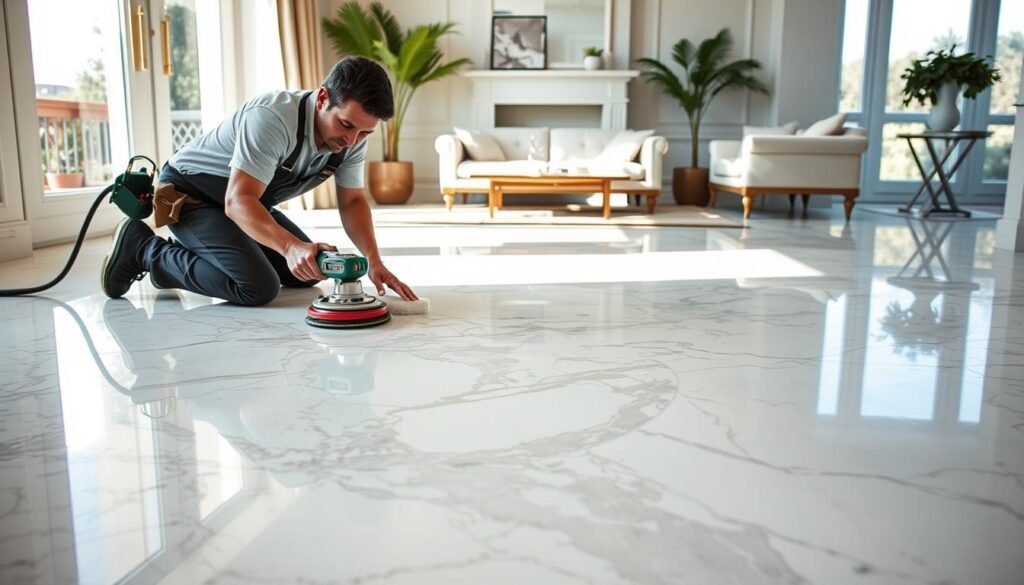
The restoration process is detailed and aims to fix surface damage. First, experts assess the marble to find out what needs fixing. They consider the marble type, damage level, and the finish wanted.
Special tools are key to getting the best results. Industrial diamond abrasives remove imperfections through grinding. This can’t be done with home cleaning products.
The restoration steps include:
Each step needs special skills and care. Experts adjust their methods based on the marble and client needs. This makes dull, damaged marble look stunning again.
Spotting damage early can save money and effort. Signs that marble restoration services london are needed should not be ignored. Many people wait too long to act.
One common sign is when marble loses its shine. This happens as tiny scratches build up. Cleaning alone can’t fix this.
| Damage Type | Visual Indicators | Restoration Urgency |
|---|---|---|
| Surface Etching | Dull spots, water marks, ring stains from glasses | Medium priority – progressive worsening |
| Scratches and Scuffs | Visible lines, loss of polished finish, rough texture | Medium priority – aesthetic concern |
| Cracks and Chips | Structural breaks, missing fragments, separation lines | High priority – structural integrity |
| Discolouration | Yellow patches, dark stains, uneven colour distribution | Low to medium priority – appearance |
Etching happens when acidic things touch the marble. Wine, citrus, vinegar, and some cleaners can cause permanent dull spots.
Staining is another big issue, often in kitchens and bathrooms. Liquids can get into the stone and cause colour changes. Only pros can get rid of these stains.
Cracks, chips, and breaks need quick fixing. They affect how the marble looks and works. Quick action stops more damage and keeps everyone safe.
London’s marble restoration services cover all types of properties. The main steps are the same, but the size and timing vary. Knowing this helps find the right service.
Home projects focus on specific areas like hallways, kitchen tops, and floors. Homeowners want work done with little disruption and flexible times.
Commercial places face bigger challenges. Hotels, offices, shops, and restaurants have large marble areas. They need strong finishes that last through lots of use.
For commercial jobs, services adjust by:
Both homes and businesses get the same specialist care and methods. The main differences are in planning, timing, and size. Experienced companies have done many projects in London.
Choosing skilled professionals means your marble gets the right treatment. They have the knowledge and tools to make marble look beautiful for years.
How much you pay for marble restoration depends on the service you need. In London, costs vary based on the type of service. This includes simple polishing, full restoration, or just treating worktops. Knowing these prices helps you plan your budget and choose the right service.
Prices in London are steady in 2026. But, areas in the city centre might cost a bit more. Here’s what you can expect to pay for each service.
Polishing marble usually costs between £25 to £45 per square metre in London. This price is for floors that need polishing but no major repairs. The cost can change based on the marble’s condition, the finish you want, and the polishing method used.
If your marble is in good shape but looks dull, you’ll likely pay less. But, if your floor is very damaged or you want a shiny finish, you’ll pay more. London has many marble polishing services, so prices are competitive.
Before giving a quote, technicians check your floor’s condition. Floors with small scratches or dullness cost less than those with big damage or need a high-gloss finish.
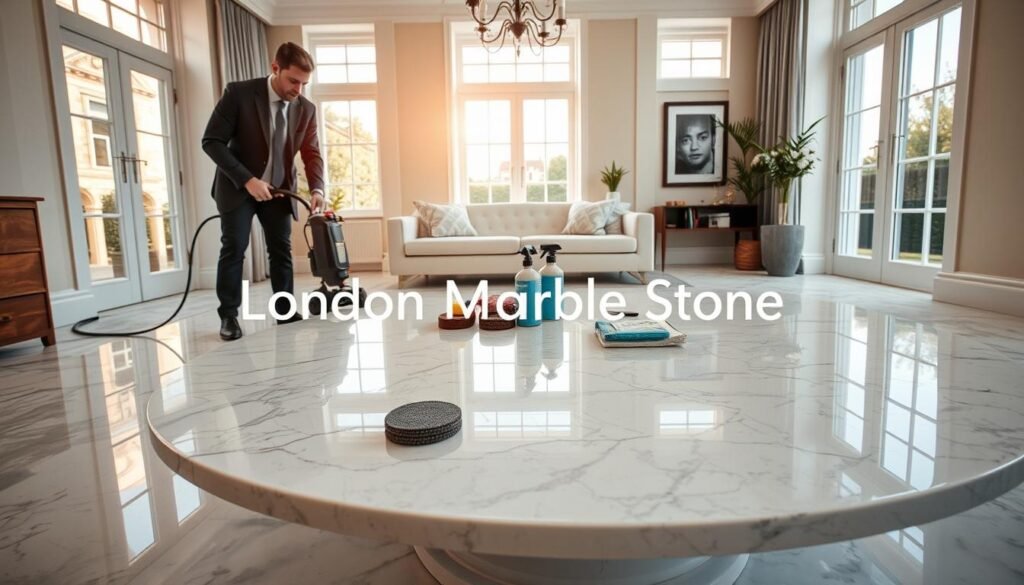
Restoring a marble floor completely costs between £40 and £75 per square metre for homes. This price includes cleaning, repairs, and polishing. It’s for floors that are badly damaged.
This price covers all the steps needed to fix your floor. It includes grinding, filling cracks, honing, and polishing. Homes usually get better prices than businesses because of easier access.
Bigger floors can get cheaper per square metre. This is because doing more at once saves money. The finish you choose also affects the price, with shiny finishes costing more.
Restoring marble worktops in kitchens and bathrooms is different. Prices range from £200 to £500 for a standard-sized worktop. This covers about 3 to 5 square metres, typical for kitchens and bathrooms.
How easy it is to get to the worktop affects the price. Kitchen islands are harder to work on than bathroom vanities. Worktops damaged by acidic things like lemon juice cost more to fix than just dull ones.
Restoring edges and profiles on worktops adds to the cost. Technicians need to be very careful to keep the design right. Premium marble or complex designs might cost more.
Marble restoration services in London charge a minimum of £150 to £250 for a visit. This covers the visit, assessment, and small repairs. It’s good for small jobs or single rooms.
In central London, like Westminster and Camden, this minimum charge is higher. It’s because of travel time, congestion charges, and getting to properties in busy areas. Outer boroughs might have lower minimum charges.
This minimum charge helps with small projects. For example, a 4 square metre bathroom floor will cost this minimum. Some services might not charge this if you book more rooms or maintenance.
| Service Type | Average Cost Range | Typical Coverage | Key Factors |
|---|---|---|---|
| Standard Polishing | £25 – £45 per m² | Well-maintained floors | Surface condition, finish type |
| Complete Restoration | £40 – £75 per m² | Damaged or worn floors | Damage extent, area size, finish level |
| Worktop Restoration | £200 – £500 | 3-5 m² surface area | Accessibility, etching, edge detail |
| Minimum Service Call | £150 – £250 | Small areas or assessments | Location, travel requirements |
These prices are typical for London in 2026. They help you budget. Remember, the final price depends on your project, the marble, and the company’s prices. Always ask for detailed quotes to compare and understand the costs.
Knowing these prices helps you choose the right service for your budget. Getting a professional assessment is key for accurate quotes. Each marble surface is different, so the right approach is important.
In London, property owners face various marble damage issues. Each one needs a specific repair method and cost. The marble repair cost London owners pay changes based on the damage type. Knowing these differences helps in budgeting for repairs.
Each damage type needs its own fix. Experts assess the damage to give a fair price. The cost also depends on matching the marble’s pattern and finish.
Minor scratches on marble are common. Removing surface scratches costs between £80 and £150 for small areas. These scratches often respond well to diamond polishing.
Deeper scratches need more work. Expect to pay £30 to £50 per square metre for large repairs. Deep scratches require multiple grinding stages, raising the cost.

The cost for scratch removal depends on the scratch’s depth. Fine scratches might just need honing and polishing. Deeper scratches need a full refinishing.
Etching happens when acidic substances damage marble. It looks like dull spots or watermarks. Etching restoration costs between £100 and £250 for worktops, based on the area size.
Floor etching costs differently. It’s £35 to £55 per square metre for floors. The damage’s severity affects the cost and time needed.
To fix etching, the damaged layer is carefully ground away. Then, the surface is polished to match the marble. Severe etching needs more treatment and polishing.
Cracks and chips need special repair to last. Hairline crack repairs cost £120 to £200 per crack, based on length and location. The repair involves cleaning, filling, and blending.
Large cracks are harder to fix. These repairs cost £200 to £400 depending on size and location. Matching the marble’s colour is crucial for a good repair.
Chip repairs on edges or corners cost £80 to £180 per chip. The price depends on colour and pattern matching. Corner chips are harder to fix due to their three-dimensional nature.
Stubborn stains need professional help. Deep cleaning marble floors costs £25 to £40 per square metre. This includes cleaning, stain treatment, and polishing.
Worktop stain removal costs more. It’s £150 to £300 for deep cleaning and stain removal. The price varies with the stain’s type and depth.
Hard stains might need special treatments. These treatments are more expensive but essential for removing deep stains. Knowing the marble repair cost London owners face helps with budgeting and expectations.
The cost to restore marble surfaces varies based on several factors. Knowing these helps owners understand quotes and what to expect. Experts look at a few key things when pricing marble restoration.
Quotes from different companies can vary a lot. Each factor adds to the project’s complexity and time needed. Owners who know these factors can make better choices for their marble restoration.
The size of the marble area affects the cost per square metre. Larger areas often get better prices because technicians work more efficiently. Floors over 50 square metres usually get a discount.
But, many small marble areas are harder to work on. Setting up equipment in different places takes more time. A big floor costs less than many small ones.
Room layout also matters. Open-plan spaces are easier to cover than rooms with corners or built-in furniture. Specialists consider these when giving quotes.
Marble that’s well-maintained and just needs polishing is cheaper. Regular care keeps the stone in good shape and reduces restoration needs. This means less work and lower costs.
Marble that’s never been professionally treated needs more prep work. This includes cleaning up dirt and damage from wrong cleaning products. This extra step adds to the cost and time of the project.
How often the marble has been maintained affects the cost. Floors that are looked after yearly need less work than those neglected for years. This difference shows in the final quote.
Marble with little wear needs less work than badly damaged marble. Deep scratches, etching, and cracks require more steps and special techniques. Each type of damage needs a specific fix, affecting the project’s length.
The finish you want also changes the cost. Polished finishes need more work than honed or matte ones. Getting a high-gloss finish takes more polishing, making the project longer.
How bad the stains are also matters. Surface stains are easy to clean, but deep stains need special treatments. The specialist will check the stains first to give a fair price.
Properties in busy areas like Westminster or Kensington might cost more. Parking, congestion charges, and moving equipment around add to the challenge. Specialists include these costs in their quotes.
Properties without lifts are harder to work on. Moving heavy equipment up stairs takes more time and effort. This makes the project more expensive.
The distance from the restoration company’s base also affects prices. Projects far from the specialist’s location may cost more due to travel. Knowing how costs vary by location helps owners understand quotes better.
Building rules and working hours also impact planning. Special permissions or working at odd hours can increase costs. This is true for commercial properties that work only in the evenings or weekends.
Professional marble floor polishing services in London offer many ways to make worn marble look new again. The cost depends on the method used. Homeowners can choose the best service for their needs and budget.
The right polishing method depends on several things. These include the marble’s current state, the finish quality wanted, and how the space will be used. Commercial spaces with lots of foot traffic need different methods than homes with less use.
Standard marble floor polishing is the most common service in London. It costs between £25 and £40 per square metre. This service is for marble that has lost its shine over time. It involves cleaning, light grinding, and polishing to bring back the shine.
Professionals can polish a standard room in one to two days. The floor is ready for light use within hours. This service is best for marble in good condition without major damage or stains.
The cost of standard services in London includes all materials and labour. Technicians check the surface first to make sure it’s right for this service. Many properties in Westminster, Camden, and other central areas choose this cost-effective option.
Diamond polishing creates premium high-gloss finishes that look like mirrors. This advanced technique costs between £35 and £55 per square metre. It uses diamond-impregnated pads to achieve exceptional clarity and depth.
This service is popular for entrance halls, reception areas, and luxury homes. Areas like Chelsea and Kensington prefer it for its beauty. Diamond polishing is more durable and lasts longer than some traditional methods.
Skilled technicians with knowledge of marble are needed for this service. Each finer diamond pad adds to the previous stage. The result is a finish that enhances the marble’s beauty and protects it well.
Crystallisation polishing is another option, costing between £30 and £50 per square metre. It involves applying special chemicals that react with the marble’s calcium. This creates a hard, glossy surface that looks great and protects the marble.
This technique gives a great shine and some protection against daily wear. But, it needs to be reapplied every 12 to 18 months. Most properties benefit from refreshing crystallised surfaces every 12 to 18 months, depending on how much they are used.
Experts recommend this method for commercial spaces and busy homes. The protective layer helps resist minor scratches and stains. The process is quicker than diamond polishing, making it good for businesses that need little disruption.
Knowing the difference between maintenance polishing and full restoration helps with budgeting. Maintenance polishing for previously restored floors costs between £20 and £35 per square metre. It refreshes the existing polish without needing to grind or repair a lot.
Regular maintenance polishing makes restored marble surfaces last longer. Properties that do this avoid the need for expensive full restoration. This approach is more cost-effective over time than neglecting marble until it needs major work.
Full restoration, on the other hand, fixes underlying damage and wear. It costs more but lasts longer for badly damaged surfaces. The table below compares key aspects of different polishing services.
| Polishing Method | Cost Per Square Metre | Best Suited For | Typical Duration |
|---|---|---|---|
| Standard Polishing | £25 – £40 | General maintenance and shine restoration | 1-2 days for average room |
| Diamond Polishing | £35 – £55 | High-gloss luxury finishes | 2-3 days for average room |
| Crystallisation | £30 – £50 | Commercial spaces and high-traffic areas | 1 day for average room |
| Maintenance Polishing | £20 – £35 | Previously restored surfaces | 4-6 hours for average room |
Property owners should talk to restoration specialists during the initial assessment. Experts will evaluate the marble and suggest the best polishing method. This ensures the best results while keeping costs in check across London properties.
Marble floor restoration London specialists cover all major boroughs. This ensures property owners get expert services wherever they are. The city’s varied architecture means these experts need to know many property types and areas well.
They work from historic Central London to North and West London’s homes. This wide range helps meet the needs of many properties.
Knowing regional service delivery helps owners see how location affects service and cost. Most companies have networks across several boroughs. This lets them quickly respond to requests from all over the city.
Westminster is a key area for marble restoration. It has many period properties like Georgian and Victorian buildings. These need careful restoration to keep their look and feel.
Camden has a mix of old and new properties. From Victorian houses to modern buildings, each needs different restoration. Companies here must be flexible with their work.
Working in Central London needs careful planning. Weekday traffic charges add to costs. Parking and access issues also affect service times and costs.
Westminster and Camden properties often have rare marbles. Technicians here know a lot about heritage materials. They also know how to restore listed buildings.
Kensington and Chelsea are known for luxury homes with marble. These homes have marble in many rooms. Owners here want top quality and detail in restoration.
Restoration in West London often involves old marble. Specialists here aim to keep the marble’s history while making it last longer.
Fulham has a mix of old and new homes. Marble restoration here covers many styles. Companies must adapt to each property’s needs.
Quality expectations in West London are high. Owners want the best finishes and guarantees. They also want services that fit their schedules.
Islington is big for marble restoration due to its Victorian homes. These homes have marble in many places. Restoration brings back their original beauty.
North London’s density means companies can serve many clients close together. This can make services cheaper because travel time is less.
Victorian marble in North London often uses traditional materials. Specialists here know how to fix these materials well. They also know how they deteriorate over time.
Commercial properties in Islington also need marble work. Old offices and shops have marble that needs care. Restoration keeps these features looking good.
Location in London changes how much restoration costs. While basic costs are the same everywhere, other factors can add to the price. Knowing these helps owners budget for their restoration.
Congestion charges in Central London affect prices. Companies might charge more for weekday work. Evening or weekend work might cost more due to scheduling.
Parking rules and restrictions also impact prices. Without parking, companies might need to get permits. This can add to the cost and time needed for the job.
Access difficulties can also change prices. Places with hard-to-reach areas or no lifts need more time and effort. This is included in the final quote.
Property type and area also influence prices. High-end homes want premium service and quality. Commercial places might need work done outside regular hours, which costs more.
Despite these factors, marble restoration in London is clear about prices. Good companies give detailed quotes. This shows what the price covers and why.
Marble restoration in London is done with care to keep disruption low. Knowing what happens at each step helps owners get ready. They learn what to expect from start to finish.
Before any work starts, experts do a detailed check. They figure out the best way to fix each marble surface. This planning is key to a good job.
Good marble restoration companies in London do free on-site assessments. They check the marble before giving quotes. A skilled person comes to look at the damage and how big the area is.
They talk about what the owner wants the marble to look like. Some want it shiny, others not so much. This usually takes 30 to 45 minutes.
After looking, owners get a detailed written quotation. It says what needs to be done, how it will be done, when, and how much it will cost. This lets owners compare and choose wisely.
Before starting, teams put up dust containment barriers. They cover everything nearby to keep it safe. This stops dust from spreading.
Owners should move things out of the way. The team brings all the tools and materials they need. This makes the work go smoother and faster.
They also make sure there’s good air flow. Dust and cleaning solutions can make the air bad. Good air helps keep everyone safe.
Marble restoration goes through several steps. It starts with thorough initial cleaning. This gets rid of dirt and shows the marble’s true state.
Then, they fix any damage. This includes filling cracks and removing scratches. Next, they grind the surface to get rid of deeper problems.
After that, they hone the marble. This makes it smooth for polishing. The final step is polishing to get the desired look. Sometimes, they seal it too to protect it.
For homes, a small room takes one to two days to restore. Bigger rooms or more damage might take longer. Businesses are usually done outside regular hours to avoid trouble.
When it’s all done, the team gives comprehensive aftercare instructions. They tell you how to clean it and what to avoid. This keeps the marble looking good.
They also say how often you should get it polished. And what not to use on it. This helps keep it looking great for a long time.
Good aftercare makes the marble last longer. It keeps it looking beautiful and strong. Some companies offer maintenance plans for regular checks and touch-ups.
The whole process of marble restoration in London is well-organised. It ensures quality work from start to finish. Owners get advice on how to keep their marble looking great.
Choosing the right marble restoration service in London is crucial. It protects your investment and keeps your stone surfaces in top condition. Look beyond the price when picking a professional. The best companies offer technical skill, clear practices, and proven results.
When deciding, check the company’s credentials, service terms, and past work. Knowing the difference between skilled specialists and general cleaners helps avoid bad choices and poor results.
Experience with natural stone is key. A top marble restoration company in London has years of experience with various marble types and damage. This ensures they know the best techniques for each stone.
Experts understand marble’s properties and how it reacts to different substances. They use the right polishing compounds for each type of marble. This prevents damage during the restoration.
Being part of trade organisations shows a company’s commitment to standards and ongoing learning. Look for memberships in recognised bodies that require members to keep up with industry standards. Companies that invest in modern tools and training usually do a better job.
Specialists focused on natural stone have the expertise that general contractors lack. They know how to handle different types of marble, from Victorian hallways to modern bathrooms.
A detailed quote gives you a clear idea of what to expect. Professional companies provide quotes that list each step of the restoration. This makes it clear what you’re paying for.
Quality quotes should include:
Be wary of quotes that seem too good to be true. Lower prices might mean hidden costs later. Knowing what’s included prevents misunderstandings during the restoration.
Good companies explain their quotes clearly and answer any questions. They break down material and labour costs, and explain any special treatments needed for certain damage.
Insurance is vital to protect against accidents during restoration. Every marble restoration company in London should have substantial public liability insurance. This usually covers up to £10 million.
Always ask for insurance certificates before signing. This confirms the company can cover any damage during the work. Without proper insurance, you could be left with the financial risk.
Guarantees show a company’s confidence in their work. They cover the restoration’s quality and durability. Guarantees last from six months to two years, depending on the service.
| Protection Type | Coverage Details | Typical Duration |
|---|---|---|
| Public Liability Insurance | Accidental property damage, injury claims, third-party incidents | Annual policy with £5-10 million coverage |
| Workmanship Guarantee | Restoration quality, finish durability, technique effectiveness | 6 months to 2 years post-completion |
| Materials Warranty | Sealant performance, polish longevity, product defects | 1 to 3 years depending on products |
Guarantee terms should be clear about what’s covered and any maintenance needed. This helps keep your marble in good condition.
Customer feedback and project photos show a company’s true abilities. Research marble restoration companies in London by looking at multiple sources. Independent reviews give honest insights.
Photos of before-and-after projects show the company’s skill and quality. A good portfolio should include different marble types, damage scenarios, and projects similar to yours. Companies confident in their work will share plenty of photos.
Use independent review sites for more reliable feedback than company websites. Look at:
Talking to previous clients gives valuable insights. Ask about their experience with the company, including punctuality and professionalism.
Seeing projects in person is best. This lets you check the quality and durability of the work. Companies in London should have many projects to show.
Choosing a company based on professional credentials, clear pricing, insurance, and proven results ensures a good outcome. This careful selection process protects your investment and keeps your marble looking great for years.
Knowing the cost of marble restoration in London helps owners plan for their stone surfaces. Prices vary from £25 to £75 per square metre. This depends on the surface’s condition, the damage, and the project’s size.
Investing in professional restoration is smart. It makes your marble last longer and keeps it looking good. This is very important in London’s busy property market.
Getting free on-site assessments from experts is a good idea. They give you a clear quote based on what you need. Quotes should list all services, materials, and when they’ll start.
Choosing skilled professionals with insurance and good reviews is key. Look at their work and what others say. This helps find reliable teams for lasting results.
Both homes and businesses in London can get marble restoration. Experts use modern methods to care for these stones. They work all over the city, keeping your surfaces beautiful for years.
Understanding marble restoration and setting realistic goals helps owners make smart choices. Quality work adds lasting value, making the initial cost worth it.
Marble restoration in London costs between £40 to £75 per square metre. This includes deep cleaning, repairs, and polishing. For just polishing, prices range from £25 to £45 per square metre. The final cost depends on the marble’s condition, damage extent, and desired finish.
Larger areas over 50 square metres get lower rates due to scale economies.
Marble floor polishing in London costs between £25 and £55 per square metre. This depends on the polishing method and finish. Standard polishing costs £25 to £40 per square metre for dull surfaces.
Diamond polishing for mirror-like finishes costs £35 to £55 per square metre. Crystallisation polishing costs £30 to £50 per square metre. Maintenance polishing costs £20 to £35 per square metre.
The minimum service call price in London is £150 to £250. This covers the technician’s visit and minor work. It’s mainly for small repairs or polishing in central London.
For bigger projects, prices are per square metre, not a minimum call-out fee.
Marble worktop restoration in London costs £200 to £500 for standard sizes. Prices depend on the worktop’s size, accessibility, and damage. Etching treatment costs £100 to £250, and stain removal costs £150 to £300.
Properties in Kensington, Chelsea, and Fulham often need premium services, affecting prices.
Marble repair costs in London vary based on the damage type and extent. Minor scratch removal costs £80 to £150 for small areas. Extensive repairs cost £30 to £50 per square metre.
Etching restoration costs £100 to £250 for worktops and £35 to £55 per square metre for floors. Crack repairs range from £120 to £400, depending on the crack’s size and location.
Yes, marble restoration companies in London offer free quotes. They assess the marble’s condition and discuss the client’s expectations. The quote outlines the work, timeframe, and cost.
This allows property owners to compare services before committing.
Marble floor restoration in London takes one to two days for small areas. Larger areas or heavily damaged marble may take three to five days. Commercial projects are often scheduled outside business hours.
This ensures efficient work hours, even in central London.
Several factors affect marble restoration costs in London. The total floor size and the marble’s condition are key. Larger areas get lower rates, while neglected marble costs more.
The extent of damage and the desired finish also influence pricing. Central London locations may have additional costs due to congestion and access challenges.
Marble polishing and full restoration have different scopes and prices. Polishing costs £25 to £40 per square metre for dull surfaces. Full restoration costs £40 to £75 per square metre for damage repair and polishing.
Polishing provides a temporary shine, while full restoration lasts longer by repairing damage.
Marble restoration companies cover all major London boroughs. Central areas like Westminster and Camden are well-served. West London, including Kensington and Chelsea, also receives extensive service.
North London, including Islington, is covered for Victorian terraced houses with marble features. Companies understand London’s diverse needs, including central access challenges.
When choosing a marble restoration company in London, look for experience and qualifications. Check for membership in professional organisations. Ensure you get a detailed written quotation.
Confirm the company has adequate insurance and offers workmanship guarantees. Read customer reviews and portfolio examples to assess reputation and capability.
Removing scratches from marble in London costs £80 to £150 for small areas. Larger repairs cost £30 to £50 per square metre. Deep scratches require more work, increasing costs.
Scratch removal in high-traffic areas may be part of a full restoration package. The marble type also affects pricing.
Etching treatment in London costs £100 to £250 for worktops and £35 to £55 per square metre for floors. It depends on the etching’s severity. Restoration involves removing damaged layers and re-polishing.
Extensive etching may require complete restoration. Premium marble installations in Kensington and Chelsea need meticulous treatment.
Crack and chip repair costs vary based on damage size and location. Hairline crack repairs cost £120 to £200 per crack. Larger cracks cost £200 to £400.
Chip repairs cost £80 to £180 per chip. The complexity of matching the marble’s colour and veining affects pricing.
Marble cleaning costs vary depending on the service. Deep cleaning and stain removal cost £25 to £40 per square metre for floors and £150 to £300 for worktops. Cleaning involves using specialist products.
Stain removal for stubborn stains may cost more. Professional cleaning is included in full restoration pricing. Standalone cleaning is for well-maintained marble.
Marble restoration is worth the cost in London properties. It extends the marble’s lifespan and enhances the property’s value. Restoration costs £40 to £75 per square metre.
Regular maintenance polishing (£20 to £35 per square metre) preserves the investment. Neglecting marble is more expensive than restoration.
Marble restoration costs in London are mainly per square metre. Commercial projects may have lower rates for large areas. They often require scheduling outside business hours, which can be more expensive.
Residential services focus on smaller areas with standard working hours. Both types receive professional techniques and quality standards.
A marble restoration price quote in London includes essential elements. It details all work stages, costs, and any additional charges. It also outlines the completion timeframe and payment terms.
Reputable companies include their insurance details and confirm protection measures. Understanding the services included is crucial before accepting a quote.
Location within London can affect marble restoration pricing. Central areas like Westminster and Kensington may have additional costs for congestion and access. Outer London may have travel time considerations but easier access.
Conservation area restrictions in heritage-rich neighbourhoods may require specific working practices, influencing pricing. Location adjustments typically represent a small part of the total quotation.
After marble restoration in London, proper aftercare is crucial. Companies provide specific guidance on cleaning products. Avoid acidic or abrasive substances that can damage marble.
Regular maintenance includes dust mopping or vacuuming and damp mopping with recommended products. Restoration technicians advise on maintenance polishing frequency. Following aftercare advice extends the restoration’s longevity.